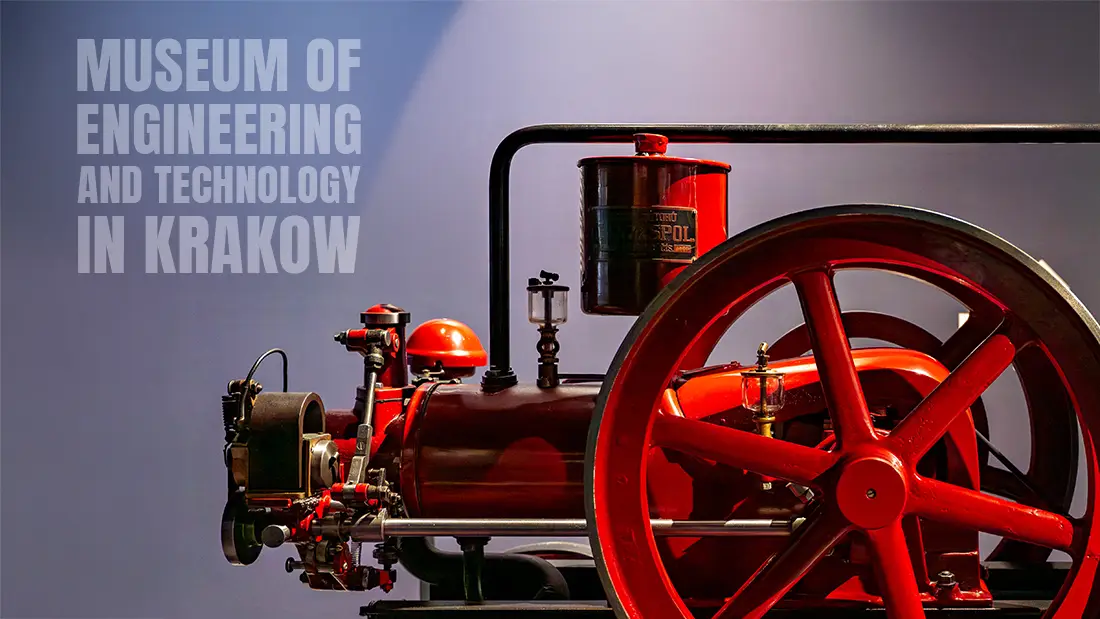
The Museum of Engineering and Technology in Krakow is a place where you can take a journey through the centuries in the footsteps of ever-changing technologies.
Krakow and its surrounding area are full of attractions. You’ll find beautiful monuments, palaces, castles like a Wawel Royal Castle, expansive parks, and of course, museums. One of them is the Museum of Engineering and Technology, and that’s what I’ll be talking about today. The museum is located in the oldest tram depot in Kraków, as well as in numerous buildings and corners that once was its.
In this article, I’ll tell you about the museum itself and why it’s worth dedicating a few hours of your stay in Kraków to visit it. You’ll also learn about the history of the institution and get a brief glimpse of what awaits you in the museum’s showcases.
Museum of Engineering and Technology in Krakow, visiting the old tram depot

I must admit that we ended up at the museum completely accidentally. We were strolling through Kazimierz, and the weather was rather miserable, even for November. Since the morning, clouds had been chasing the wind across the sky, and the rain applauded them in their dance. So there we were, walking through Kazimierz, where pleasant, warmly lit restaurants alternate with neglected buildings, complaining about the awful weather, when suddenly we found ourselves in front of the wide gate of the former tram depot. Inside, we noticed a glass-walled room with a ticket office and posters encouraging visitors to enter the Museum of Engineering and Technology in Kraków. Although that wasn’t our plan for the afternoon, we decided to go in—and the rain dripping down our collars certainly helped persuade us. Today, I’m glad we made that decision because the museum turned out to be interesting and well worth the time we spent there.
The Museum of Engineering and Technology in Kraków is divided into several sections, the main one being the depot, housed in a historic tram depot. As the museum’s website states, it is a unique monument, as no other tram depot in Europe has survived to this day in such good condition and almost entirely intact. It’s easy to understand this once you walk through the beautifully restored halls and technical rooms of the museum. The buildings have been renovated, and some of them, as shown in archival photographs, were nearly rebuilt from scratch. The tracks and technical facilities where old rolling stock was once repaired and serviced have also been restored.
Your visit begins in the ticket hall and cloakroom, where you can leave unnecessary baggage and outerwear. Then you simply scan your ticket and move on to the first part of the museum, where you are greeted by old photographs and a wealth of information about the tram depot. The following exhibitions tell the story of Kraków’s development and the technological innovations that gradually appeared in the city. Below, I’ll list the exhibitions that I particularly enjoyed and which, I believe, you will also find appealing.
Museum of Engineering and Technology in Krakow – permanent exhibition City-Technosensitivity
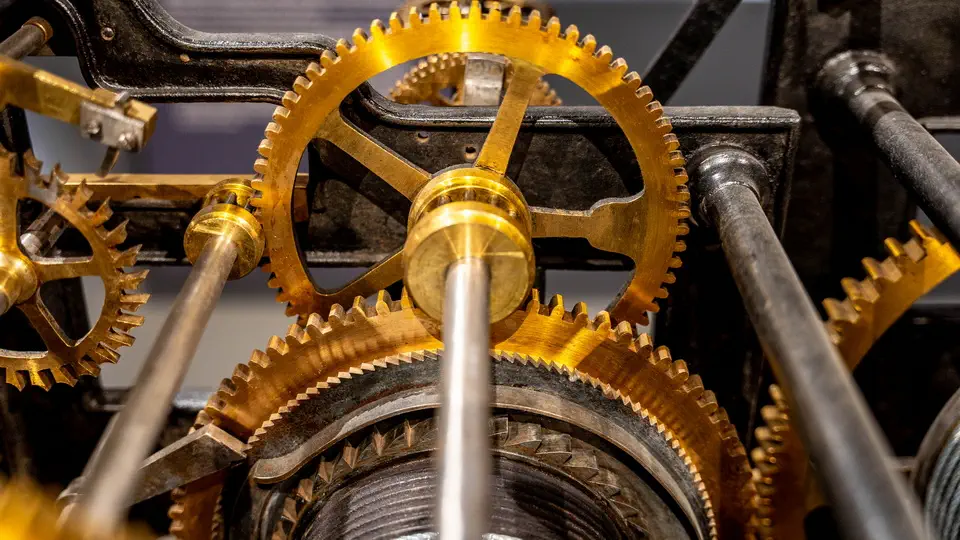
The museum’s main permanent exhibition is called City–TechnoTenderness and presents the technical side of the city along with engineering solutions we often have no idea even exist. Here, you’ll learn how individual elements of the complex, vibrant organism that is a modern city function. Each exhibition showcases a different field of engineering and technology, without which the city would be impossible to imagine. These include, among others: energy, hydrotechnics, heating systems, gas infrastructure, mobility, and architecture. For me, however, the most important question I tried to answer while exploring the Museum of Engineering and Technology in Kraków was how this entire interconnected system works, what changes occur within it, and how the city will function in the future. I must admit that I found answers to some of these questions, but not all.
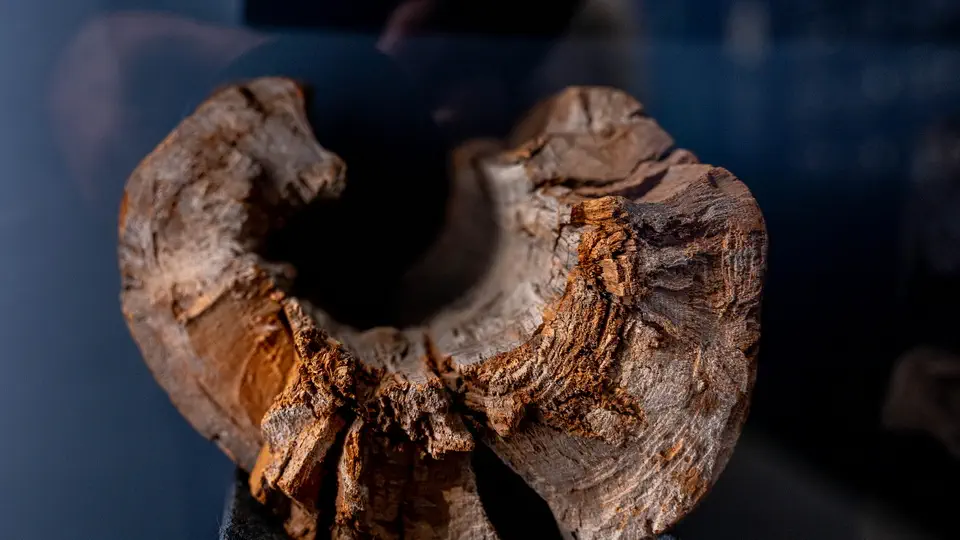
In several spacious halls, hundreds of technical artifacts from various eras are displayed, including many that replaced earlier solutions. Examples include wooden sewer pipes from medieval Kraków and the later clay ones that took their place. In the display cases, you’ll find inventions such as early city electrification equipment, Edison’s phonograph, and later gramophones powered first by a spring and then by an electric motor. There are radio and television receivers that even our parents no longer remember. Right next to them stand mechanical calculating machines that could give the result of a simple operation, and in the hands of an experienced operator could turn into efficient mathematical units. I’ve always had a soft spot for typewriters, especially the early ones built entirely on gears and mechanical linkages. The Museum of Engineering and Technology in Kraków has quite a sizeable collection of them. I even found gems such as the American Hammond from the late 19th century and the world’s first typewriter designed for writing in Braille.
Exhibition of old computers
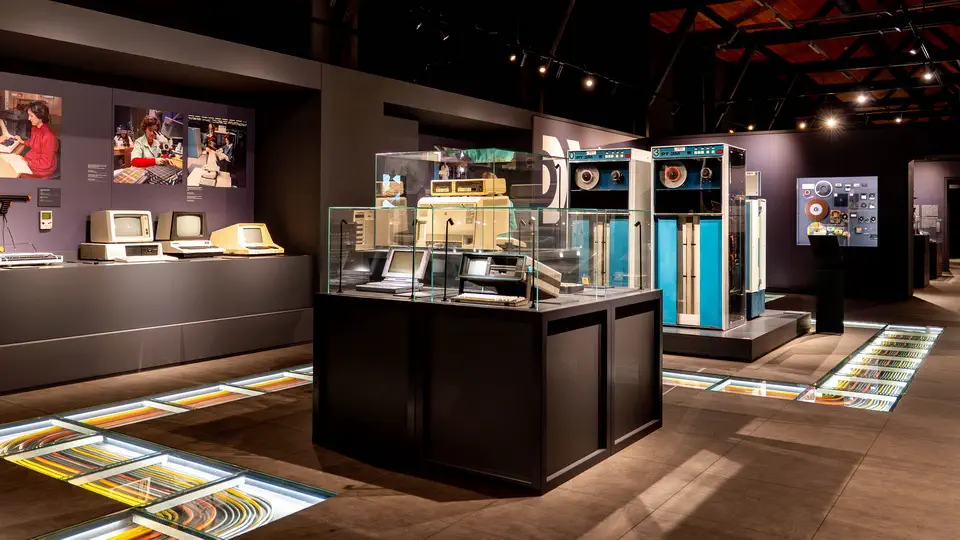
An interesting highlight is the exhibition of early computers, including the famous Polish Odra 1305 from 1973. It is not a computer in the modern sense of the word. The Odra is a giant cabinet connected to several others, each equipped with large reels of tape that served as the equivalent of today’s hard drives. It’s easy to imagine the hum of the mechanisms reading data from those massive rolls and the flickering of dozens of indicator lights whose meanings no one remembers any more. Just think: the phone in your pocket has computing power thousands of times greater than this giant. The progress we’ve made in computer development is staggering, and it has taken us only a few decades.
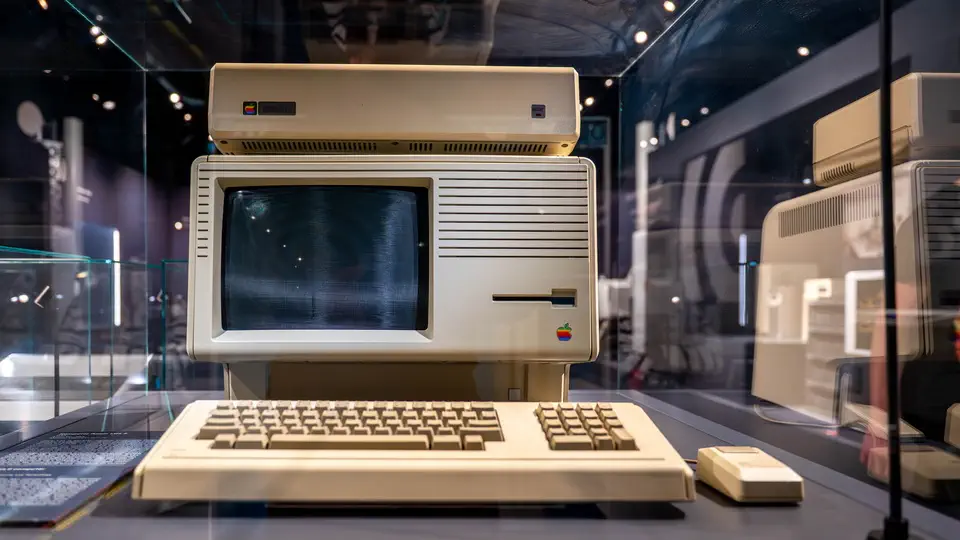
Against one of the walls, the display cases hold computers that feel a bit more familiar. I saw an early Mac and several Amiga models. The latter is especially close to my heart, as I began my computing journey with the Amiga 500 and later the Amiga 1200. That adventure would probably have continued to this day if not for the poor decisions of Commodore, which allowed PCs to take over most of the market. I enjoyed this part of the museum very much. In addition to the computers, you’ll find long-forgotten data storage mediums, early processors, and a clear presentation of how peripheral devices such as keyboards and mice evolved.
Museum of Engineering and Technology in Krakow – historic trams in the depot
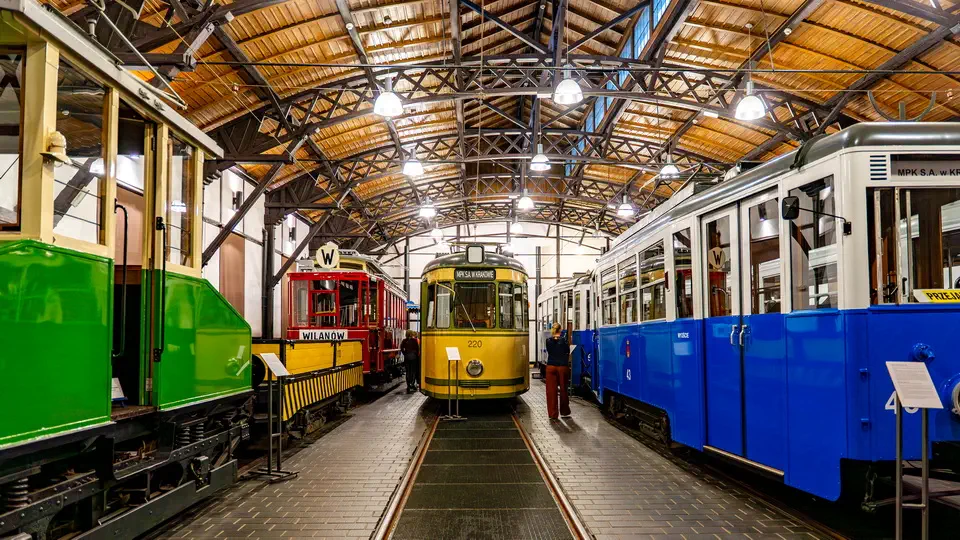
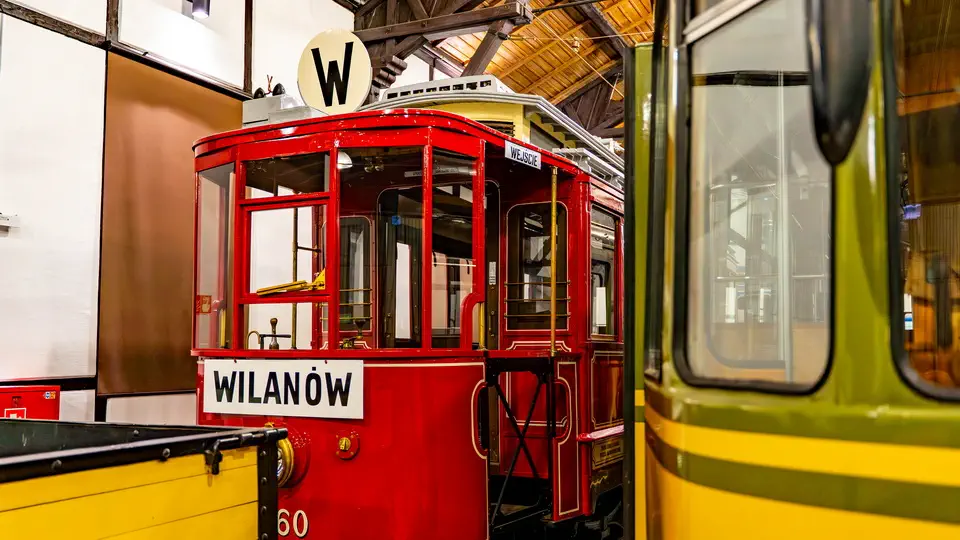
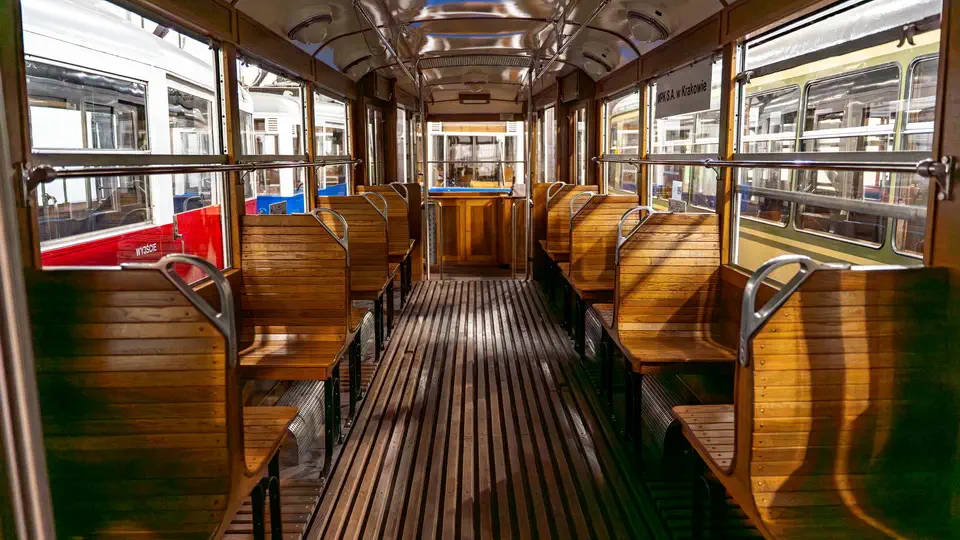
In one of the halls, known as Hall F, you’ll have the chance to see beautifully restored historic trams and carriages. This is where the enormous amount of work invested in the restoration and modernization of the old tram depot is most visible. The hangar looks fantastic, the carriages, and trams shine with fresh paint, and even the tracks appear brand new — bravo, Kraków. As you walk between the vehicles, remember that the goal was to preserve this place as close as possible to what it looked like over 100 years ago.
The collection includes over a dozen vehicles, among them several that once powered Kraków’s early tram system. One noteworthy example is a 1925 tramcar marked number 260 (type C). It was fully manufactured in Poland shortly after the country regained independence. If you look closely, you’ll find photos showing this exact tram travelling through the ruins of Kraków just after the First World War. The appearance of fully Polish technology on the city’s streets was a major event, bringing hope for rapid industrial development. Type C trams operated in Poland until 1956, though only two have survived to this day.
Right next to it stands an interesting BT-1 towing car, marked G-051, built in Wrocław in 1920. You’ll also find gems such as the German T4 motorized tramcar and the ND trailer car produced in Chorzow in 1952. However, in my opinion, the most fascinating item in the entire collection is the summer horse-drawn tram — PW1-112 from 1882, which looks as if it came straight out of an old Western. These are just a few of the machines standing inside the former depot hall, and I highly recommend spending extra time here.
The Museum of Engineering and Technology in Krakow — an island of the wonders of Polish automotive industry
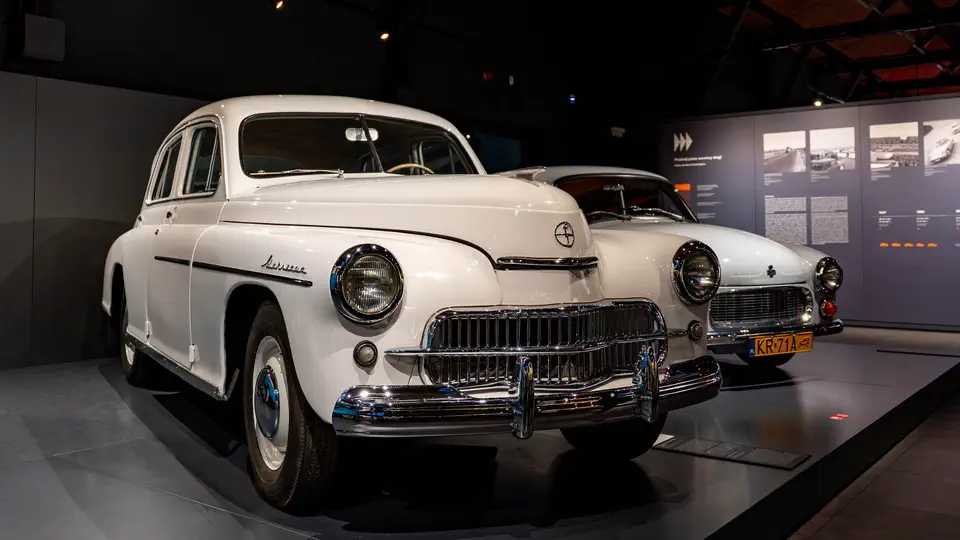
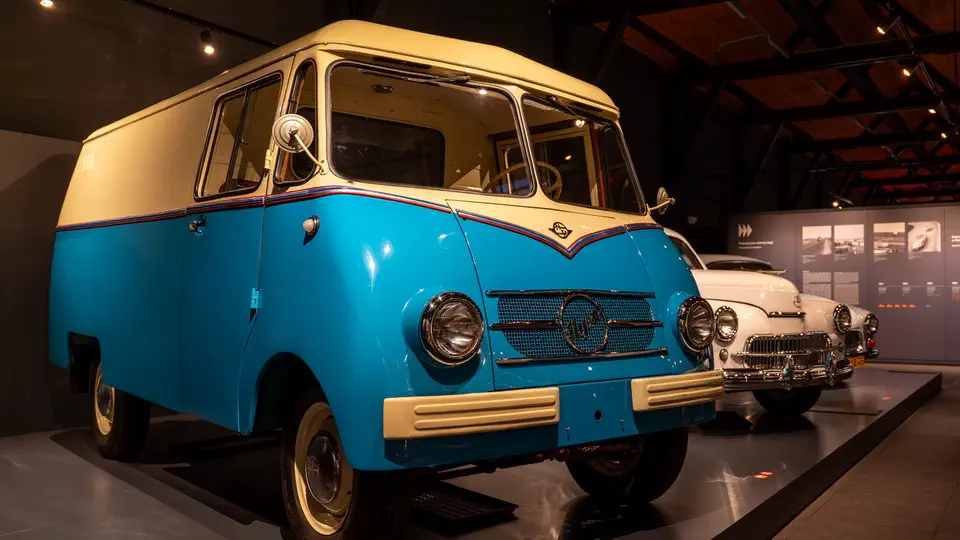
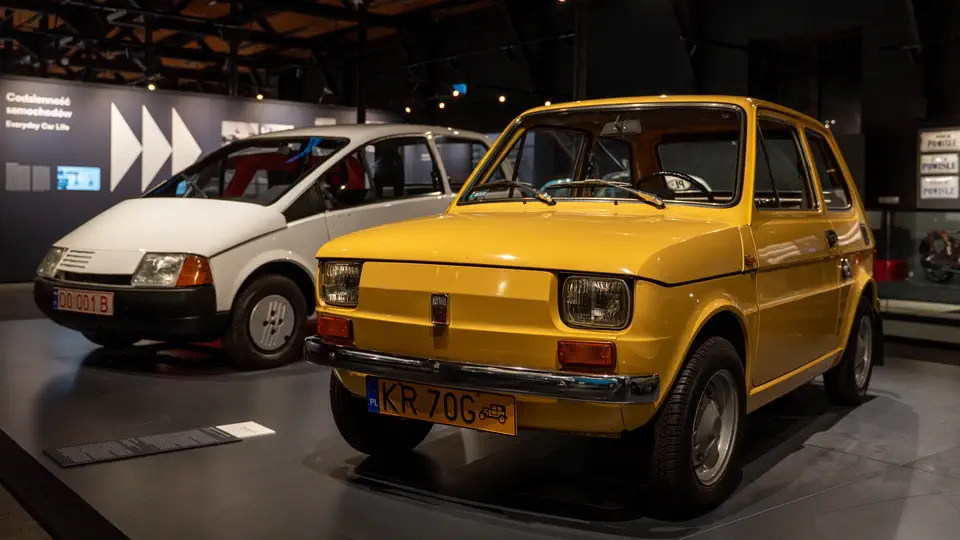
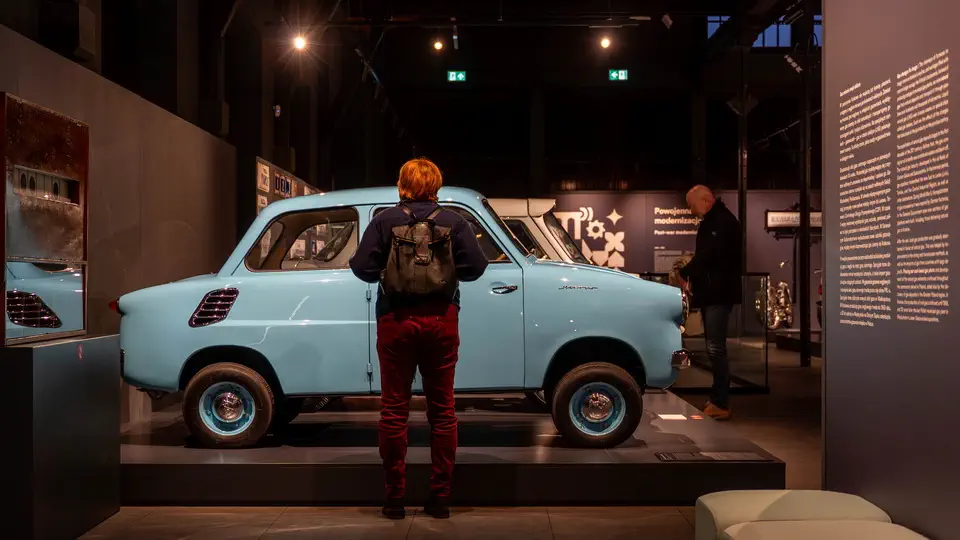
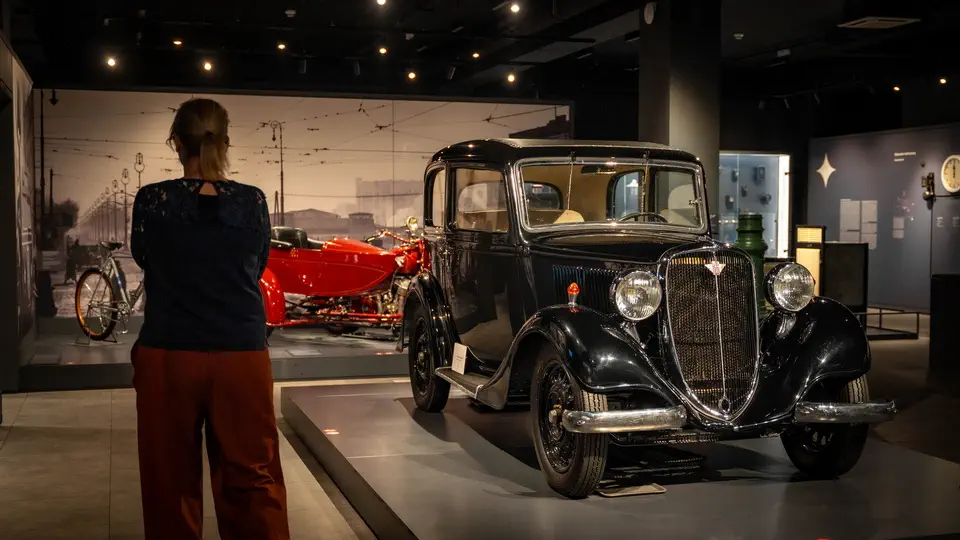
It’s worth spending more time in the area, where the marvels of Polish automotive history are displayed. You’ll find cars that were produced in Polish factories over the years, and although most of them were built under licence, they were often modified and improved by Polish engineers. You’ll see the beautiful Warszawa M20, which was the Polish version of the Soviet GAZ M-20 limousine. It was the first post-war car produced in Poland and available for retail sale. Unfortunately, production lasted only a few years, which is why today these cars are extremely valuable to collectors.
Right next to it stands the famous and very popular Syrena 105, produced at the Small-Capacity Car Factory in Bielsko-Biała from 1953. A total of nearly 400,000 of these vehicles were made, commonly referred to as “skarpetas” (socks) because burning a mixture of petrol and oil produced a characteristic blue smoke with an unpleasant smell. Other popular cars you’ll see on display include the Polish Fiats 125p and 126p, as well as the Polonez and the Nysa N59-F van. Among the rarer exhibits, you’ll find the Beskid 106 prototype, the Smyk B30, and the Mikrus MR-300. The oldest vehicle is probably the Polish Fiat 508 from 1936.
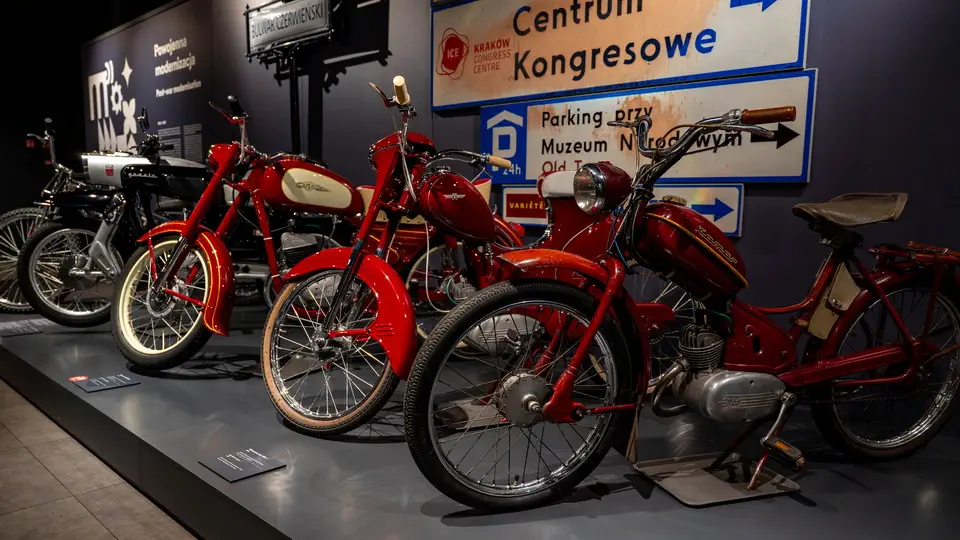
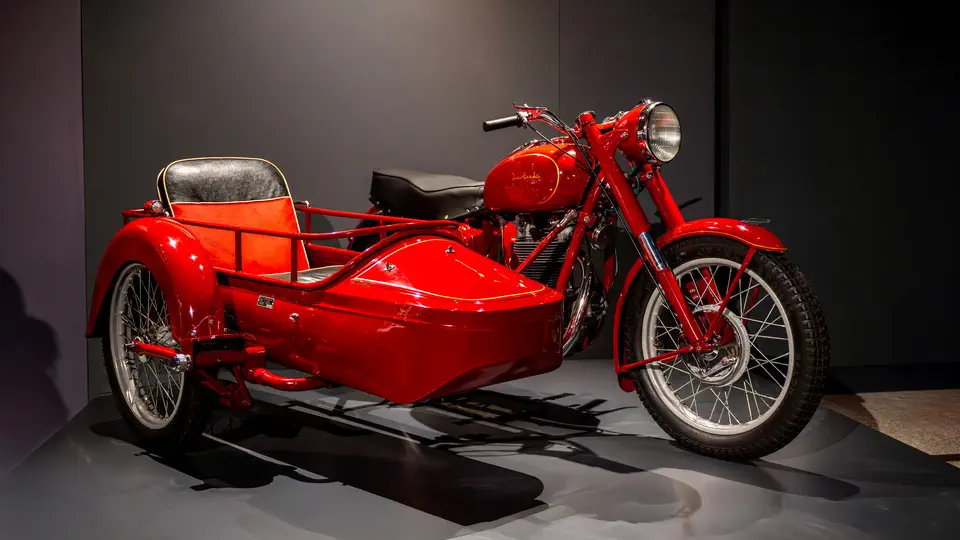
In addition to the cars, numerous motorcycles and mopeds produced in Poland are displayed. I found a beautiful CWS M 111 motorcycle with a sidecar, the WSK M21W2 known as “Perkoz,” and a prototype of the Osa M52 scooter. The latter would surely cause a sensation on today’s market—it looks fantastic. This is one of the most interesting sections of the Museum of Engineering and Technology in Kraków, and of course, there are many more fascinating exhibits.
Other branches of the Museum of Engineering and Technology in Krakow
The old tram depot in Kazimierz, Kraków, is not the only part of the Museum of Engineering and Technology. In addition to the complex of buildings on Świętego Wawrzyńca Street, you can also visit the Stanisław Lem Experience Garden. It is a collection of outdoor installations that you can touch, set in motion, push, spin, and use to carry out all sorts of fascinating experiments. The available installations cover fields such as optics, magnetism, mechanics, and many others. In my opinion, it’s a dream place for kids, sparking curiosity and a desire to learn.
Another relatively new branch of the museum is the Czyżyny Hangar, operating since 2021. It is a vast space inside an old aviation hangar, intended for exhibitions, shows, and cultural events. Currently, you can view a collection of old buses, motorcycles, and cars there.
Museum of Engineering and Technology in Krakow practical information
The Museum of Engineering and Technology is located in Krakow at ul. Św. Wawrzyńca 15 in the famous Kazimierz district. Getting there from anywhere in Krakow is easy and hassle-free. Just take trams 6, 8, 10, or 13 and get off at the Plac Wolności stop. Other lines will also take you close to the museum; if you take trams 3, 19, or 24, get off at the Św. Wawrzyńca stop and head towards Plac Wolnica. The museum does not have its car park, so I strongly advise against driving around Krakow due to traffic jams and the lack of parking spaces, which are also expensive.
The second branch of the Museum of Engineering and Technology in Krakow is the Czyżyny Hangar, located at 2 Pułku Lotniczego Street 26a. To reach the museum, you should take bus lines 138, 153, 178, 183, or 283. If you prefer to travel around the city by tram, take lines 4, 5, 9, 10, 52, or 75 and get off at the “Stella-Sawickiego” stop. I also don’t recommend driving here, especially during peak season, as the Czyżyny Hangar shares a car park with the popular Polish Aviation Museum.
Unfortunately, dogs are not allowed in the museum, unless they are service animals.
The Museum of Engineering and Technology in Krakow, both the Zajezdnia and Hangar Czyżyny branches, have all the facilities for people with disabilities, the elderly and families with small children.
The museum is open Tuesday through Sunday (closed Mondays) from 10:00 a.m. to 6:00 p.m. Last admission is at 5:00 p.m., and remember that the ticket office is closed from 2:10 to 2:30 p.m. (I have no idea why all the ticket offices close then).
Ticket prices and opening hours can be found on the museum’s official website.
The history of the Krakow museum
The Museum of Engineering and Technology in Kraków is located on the site of a former tram depot. The history of this place dates back to 1882, when the first building was constructed to serve as a horse-drawn tram depot, as well as a stable and storage facility. Since then, the depot expanded with additional buildings and technical structures, evolving along with technological progress.
Over time, horses were replaced by electric motors, and in place of the stables, workshops, and a modern—at that time—power station were built to supply energy to the trams heading into the city. Around the same period, the tram gauge was changed from narrow to standard, which required reconstruction of the depot buildings. This time, instead of wooden walls, a construction method known as “Prussian wall” was used. The next major expansion took place in the 1920s, when the tram depot also became the main terminal for newly purchased city buses. Several buildings were demolished, and many new ones were constructed.
Unfortunately, the era of trams departing from the depot on Święty Wawrzyńca Street in Kraków’s Kazimierz eventually came to an end. The last tram left for the city at the turn of the 1950s and 1960s, and the depot buildings were abandoned. As you can imagine, the historic complex began to deteriorate and fall into ruin. Nothing would likely have survived had it not been for the efforts of enthusiasts and people who remembered the days when colourful trams left the depot every day. Finally, in 1985, the entire depot complex in Kazimierz was added to the register of historical monuments, and the process of reconstruction and restoration began—resulting in today’s Museum of Engineering and Technology.
A few words of summary
As I mentioned at the beginning, our visit to the Museum of Engineering and Technology in Kraków was completely accidental and unplanned, yet I’m glad that the weather and the chill persuaded us to visit this esteemed institution. We strolled through the museum with great pleasure, having a lot of fun. The interactive installations and devices that you can touch and explore are an excellent idea. Unfortunately, many of them were out of order or damaged, which slightly diminishes the overall experience. I hope this was an exceptional situation and that, on a regular day, everything works properly and delights visitors. I highly recommend a trip to the museum—not only on cold, rainy days.
Museum of Engineering and Technology in Krakow information and interesting facts
- Establishment of the Museum: The Museum of Engineering and Technology was established on October 1, 1998, by the City of Krakow as the “Museum of Municipal Engineering.”
- Number of exhibits: The museum’s collection includes over 2,900 items and over 3,300 objects, spanning a wide range of technical fields.
- New permanent exhibition: The museum hosts a new exhibition, “City. Technosensitivity,” which showcases the development of cities through technology—from antiquity to the present day.
- Thematic scope of the exhibition: The “City. Technosensitivity” exhibition showcases the development of hydraulic engineering, energy, heating, gas engineering, urban architecture, and public transportation.
- Restored exhibits: Over 300 objects were restored for this exhibition, including historic tram cars (e.g., G-051 from around 1901) and motorcycles.
- A Unique Tram Depot: The museum is located in the tram depot at 15 Św. Wawrzyńca Street – one of the few depot complexes in Europe that has been preserved practically in its entirety.
- Depot History: The oldest depot buildings date back to 1882 – initially, they housed a horse-drawn tram depot.
- List of Historic Monuments: The depot complex was listed in the register of historic monuments in 1985 as a significant part of the industrial heritage.
- Revitalization Stages: Renovation and revitalization of the depot halls began in the 1990s and continued for many years – including the renovation of the narrow-gauge hall, which lasted until 2021.
- Depot Building Structure: The depot houses various historical halls: a narrow-gauge hall, a tram power plant, a horse-drawn tram depot, mechanical workshops, and a tram dispatch centre.
- Museum Vehicles: The museum features old trams (even narrow-gauge ones), buses, motorcycles, and prototypes of cars, including Polish brands.
- The Pope’s Car: The collection includes a Star truck, which was used during John Paul II’s visit, making it a unique exhibit.
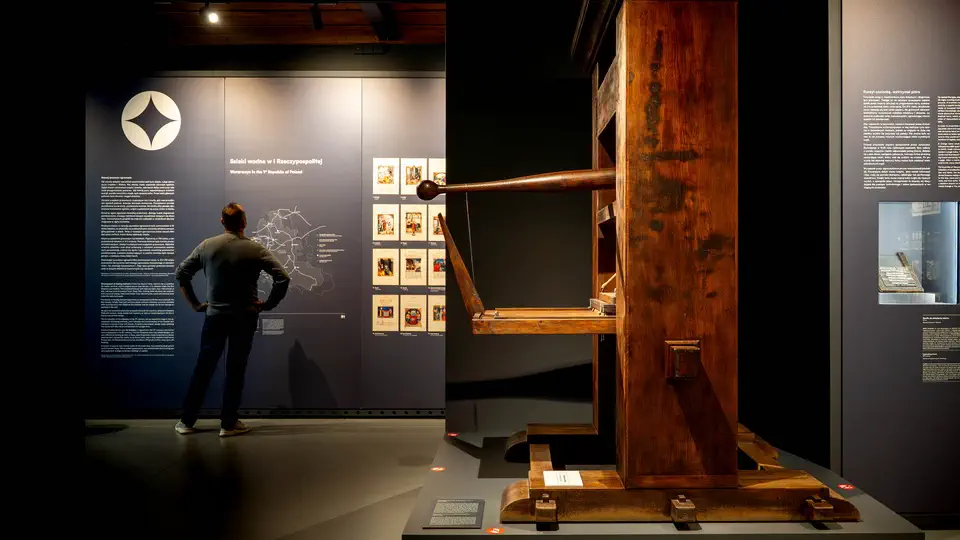
- Printing Exhibition Space: One of the depot buildings (the oldest building) houses an exhibition of printing machines, from Krakow printing houses to 20th-century technology.
- Museum Branches: MIT has two branches outside the depot: the Stanisław Lem Garden of Experiments and the Czyżyna Hangar.
- Interactive Learning: The Garden of Experiments is an outdoor space featuring interactive physical installations – education through experience.
- Education and Workshops: The museum regularly organizes activities for children, including summer workshops, interactive games, and learning physics through play.
- Planetarium and Additional Attractions: The Garden of Experiments features a planetarium and attractions such as a gyroscope and a toboggan run.
- Investment Cost: The expansion of the museum and the new exhibition cost approximately PLN 46.5 million net, a significant portion of which came from EU funds.
- Discounts and Tickets: The museum offers discounts (e.g., for families, holders of the Krakow Family Card, Krakow Card) and season tickets.
- Visiting Time: According to visitor reports, a tour of the museum depot lasts on average about 1.5 hours.
- Depot in Kazimierz: The depot housing the museum is located on St. Wawrzyńca Street, on the edge of the historic Kazimierz district.
- Polish Aviators Park: One of the museum’s branches – the Garden of Experiences – is located in Polish Aviators Park, which covers approximately 43 hectares.
- Green Revitalization: The pond in Polish Aviators Park was designed as a retention reservoir filled with rainwater, including from the roof of the nearby Arena Krakow.
- Environmental Award: Polish Aviators’ Park was recognized in the “City with Climate” competition for its ability to retain stormwater in the city.
- Park Flora: The park’s trees are very diverse – deciduous trees dominate, including poplars, oaks, maples, and birches, but there are also fruit trees and conifers.
- Monuments in the Park: Monuments commemorating Polish pilots stand in the Polish Aviators’ Park, including the “Glory to the Aviators” monument and another honouring those who died between 1939 and 1945.
- History of the Area: The park was built on the ruins of the former Pszorna Fortress, which defended the road to Krakow.
- Name Change: The park was previously called the “Park of Culture and Recreation” – in 1989, the name was changed to Polish Aviators’ Park.
- Public Space Design: The park was revitalized, including the construction of walking paths, a pond, a food pavilion, benches, and deckchairs.
- Numerous recreational features: The park includes a skate park, a pump track, picnic areas, and playgrounds, making it a popular recreational area.