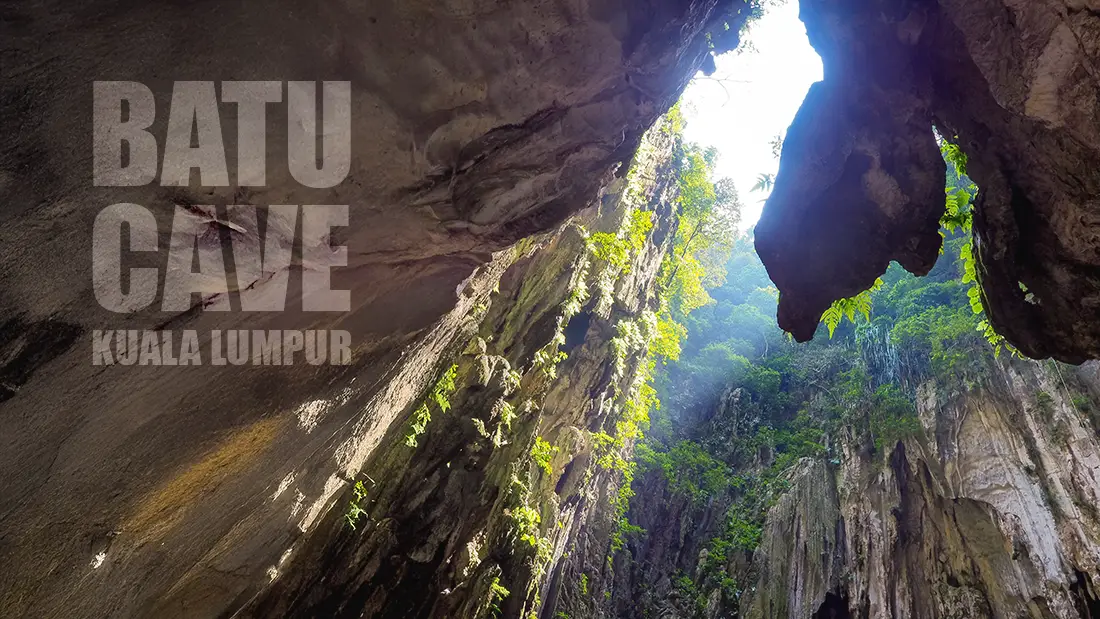
Batu Caves are giant caves located in the mountains near the capital of Malaysia, Kuala Lumpur.
While travelling in Malaysia — and especially around Kuala Lumpur — you’ll surely come across information about the Batu Caves, one of the country’s most famous attractions. This impressive complex of caves was discovered only about 130 years ago, hidden within limestone hills just a few kilometres from the capital. Quite surprising, isn’t it? Such massive caves lying so close to a big city, yet remaining unknown for centuries.
You should know that Batu Caves are not just some holes in the ground, but an impressive system of chambers and passages, with enormous shafts reaching up into the dense jungle covering the surrounding hills. I tried to find information about their discoverer, but couldn’t come across any solid details. It’s easy to imagine, though, that it was one of those European explorers who, in the 19th century, roamed this part of Asia with great enthusiasm.
The largest of the caves — vast and majestic — rises about 100 meters high. Like Cambodia’s Angkor Wat, the Cameron Highlands, or even the tomb of Tutankhamen in Egypt, it waited for thousands of years until someone finally revealed its existence to the world. Who knows — maybe one day, during our wanderings, we’ll stumble upon something truly extraordinary, something that will forever inscribe our names on the list of great explorers?
How to get to Batu Caves from the capital Kuala Lumpur
Getting to the Batu Caves from Kuala Lumpur is simple and well-organized. You can take city bus number 11, a taxi, or the very popular — and much-hated by taxi drivers — Uber. There’s also a modern commuter train, the KTM, which we decided to use. The advantage of taking the train is that you avoid the city’s notoriously congested streets. Traffic jams are, undoubtedly, the biggest problem in Malaysia’s capital.
So, we hopped on the train at KL Sentral and, after a bit of confusion while changing trains along the way, we finally reached our destination. Earlier, however, while sitting in the carriage, we met a very friendly lady who, although she had never been to Poland, knew our country thanks to Fryderyk Chopin. It turned out she was a pianist and a music teacher, and one of her dreams was to visit Poland during the Chopin Concerts held in Warsaw’s Royal Park.
I have to admit, I felt a little awkward at that moment — I’ve never actually been to one of those concerts myself, even though I easily could have. And yet, people from the other side of the world dream about it. As we say in Poland: You praise the foreign, but don’t know your own.
How to get to Batu Caves in Kuala Lumpur
The train station at Batu Caves is only a few hundred meters from the caves themselves. The path leading there is lined with stalls and vendors selling all sorts of goods — a typical tourist market. I have a sweet tooth, so I immediately noticed a group of children crowding around one of the stands. A man in a turban was holding and turning colourful, probably rice-based balls in his hands. Unfortunately, because of the language barrier, he couldn’t explain to us what they were. Still, the surrounding kids were happily munching away, so I decided to give it a try.
The white ball had a rather ordinary taste — something coconut-like inside, lots of sugar, and another flavour I couldn’t quite identify. The red one, on the other hand, tasted like oranges instead of coconut. Magda didn’t like either of them, so I ended up eating both.
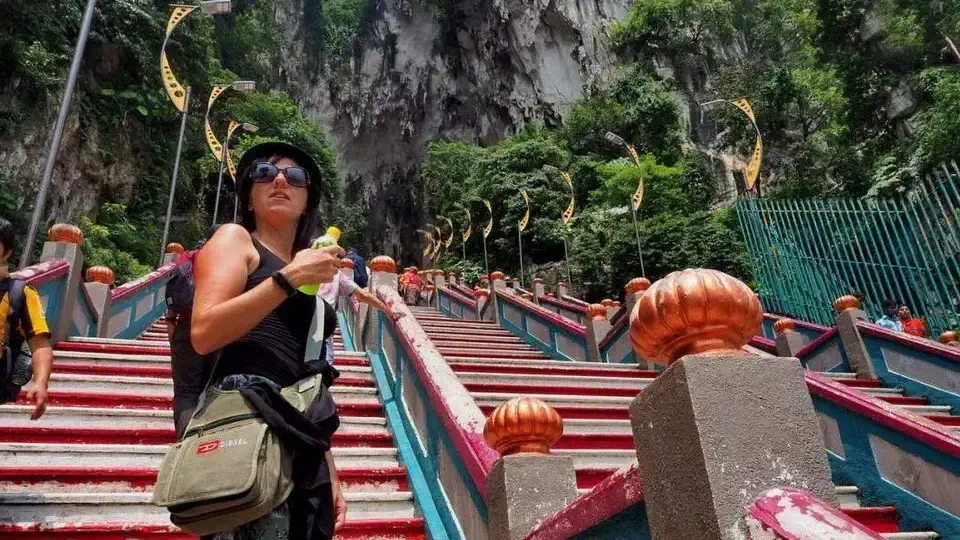
Fuelled by sugar, I looked optimistically at the 272 steps that needed to be climbed to reach the caves nestled halfway up the hill — including the largest one, called the Cathedral Cave. There were quite a few steps, the heat felt like an oven, and the climb wasn’t easy, but we made it.
Before we began our ascent, though, a guard gave our outfits a careful inspection. He focused mainly on Magda — firstly, because she’s far better looking than I am, and secondly because women entering Hindu temples must adhere to fairly strict dress rules. Clothing must be modest and neat, covering the legs and shoulders — and a bare midriff is absolutely out of the question. The guard seemed satisfied with our appearance, so we continued on our way.
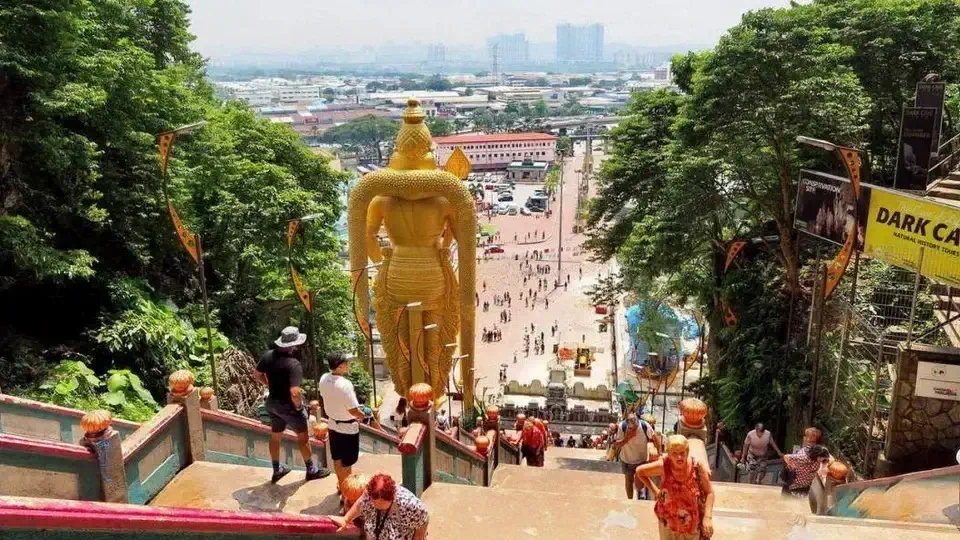
A huge statue of the war god Murugan in front of the steps leading to the caves
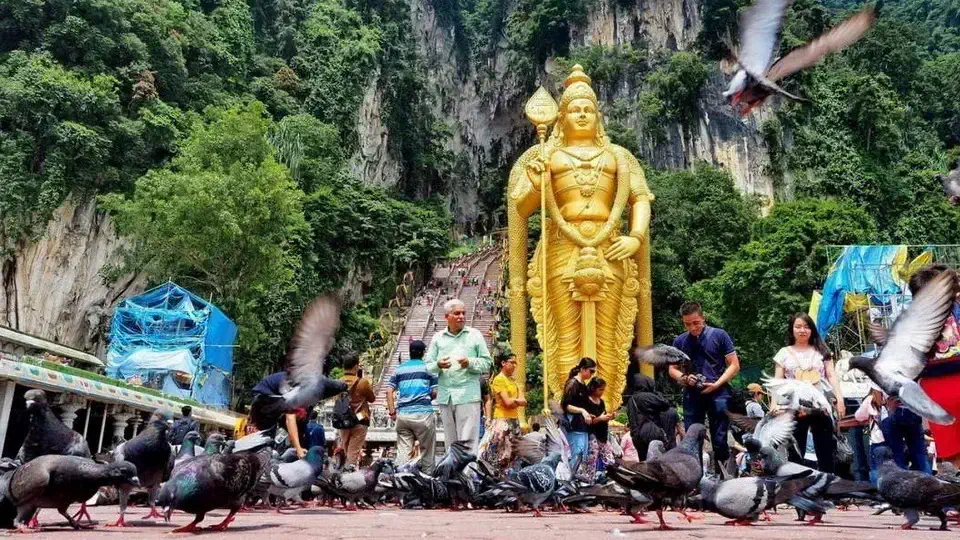
We passed a massive golden statue of the deity Murugan — the god of war, who, according to myth, defeats chaos and restores divine order, much like Archangel Michael in Christianity. I learned that one of Murugan’s extraordinary deeds was showing the god Shiva the sacred syllable Om, whose sound is said to heal the universe. Now you know why all the monks chant ommm. This syllable is considered the most important mantra — the sound that accompanied the creation of the universe itself.
As we climbed the stairs, we passed many older people — some quite overweight — which made our steady pace look like a sprint in comparison. Interestingly, Magda reached the top first, while it took me a bit longer. I excused myself by saying I stopped to take pictures, but the truth is, I was barely alive by the time I got there.
A little tip: when you climb the steps to the caves, try not to touch anything. The railings are sticky, and the stairs are littered with rubbish, leftover food, and monkey and bird droppings. No one seems to clean it! This is the most significant Hindu temple complex outside India, visited by several thousand people every day — and tens of thousands during Hindu festivals — yet the whole place looks like a dump. The sheer amount of waste and general disorder was honestly the most disappointing part for me. Sadly, it wasn’t the first time I’d seen such neglect in Asia. Here is a place where Mother Nature has done an incredible job — and then people came along and spoiled it.
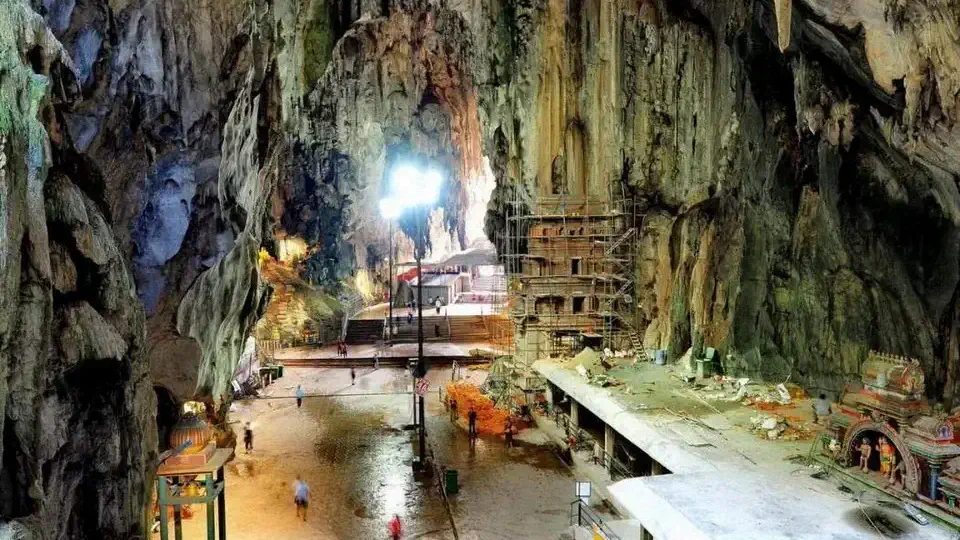
So here we were, finally at the top. Behind us — a panoramic view of the city, with hundreds of sweaty tourists slowly making their way up the stairs we had already conquered. The view of Kuala Lumpur below, with its distant skyscrapers, was stunning. The sight of overheated, mostly overweight tourists — a little less so. In front of us lay the caves, transformed by Hindus into a grand temple. Though not entirely — the caves are so vast that inside, several smaller shrines and temple buildings have been constructed (and some are still being built). In such an enormous space, those structures simply disappear.
The Batu Caves are very impressive.
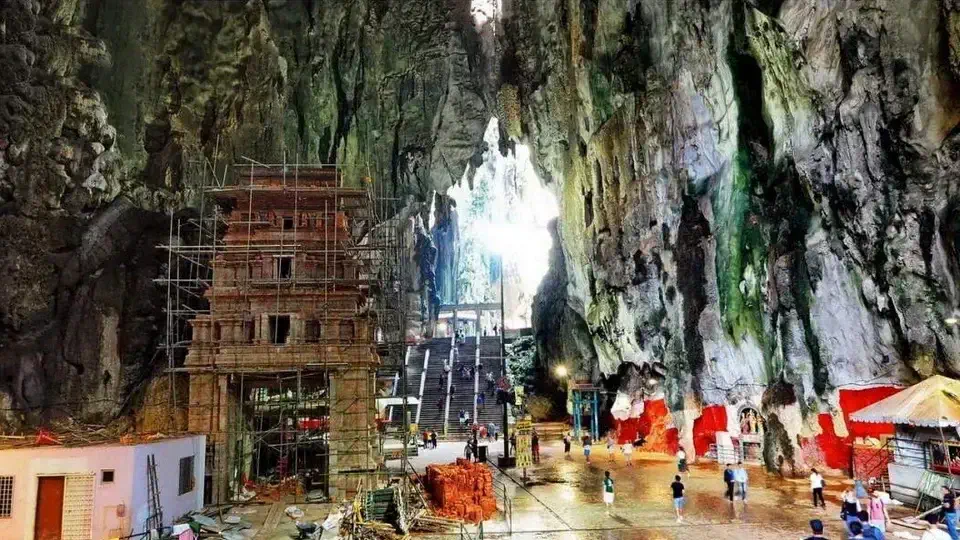
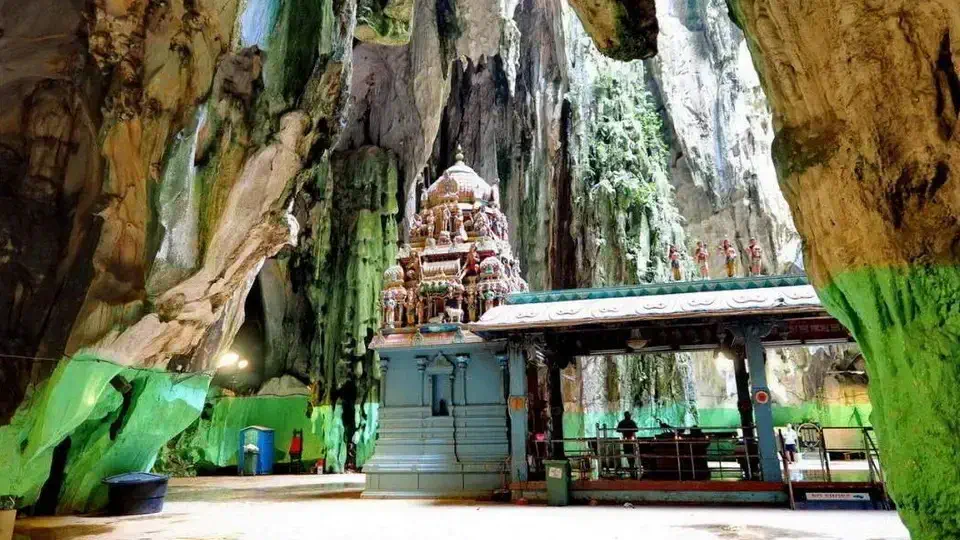
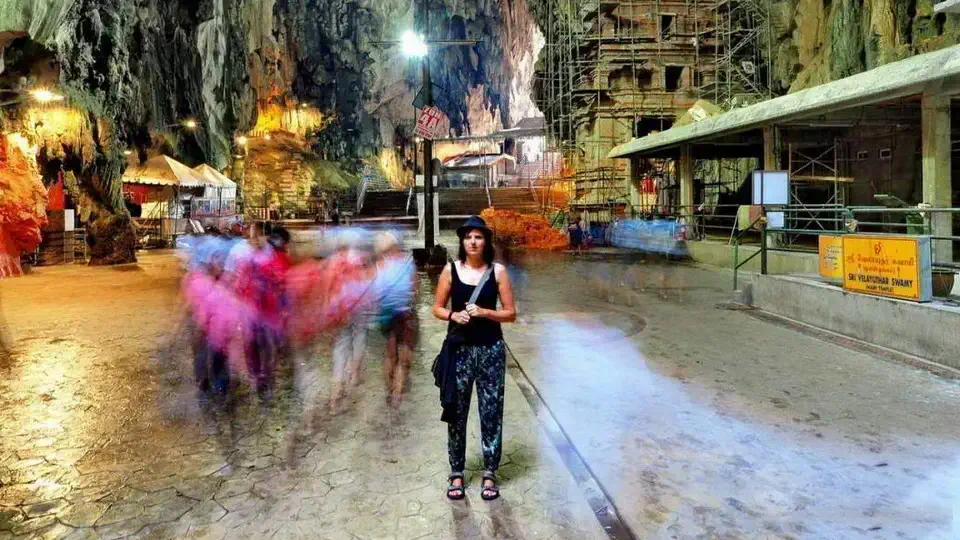
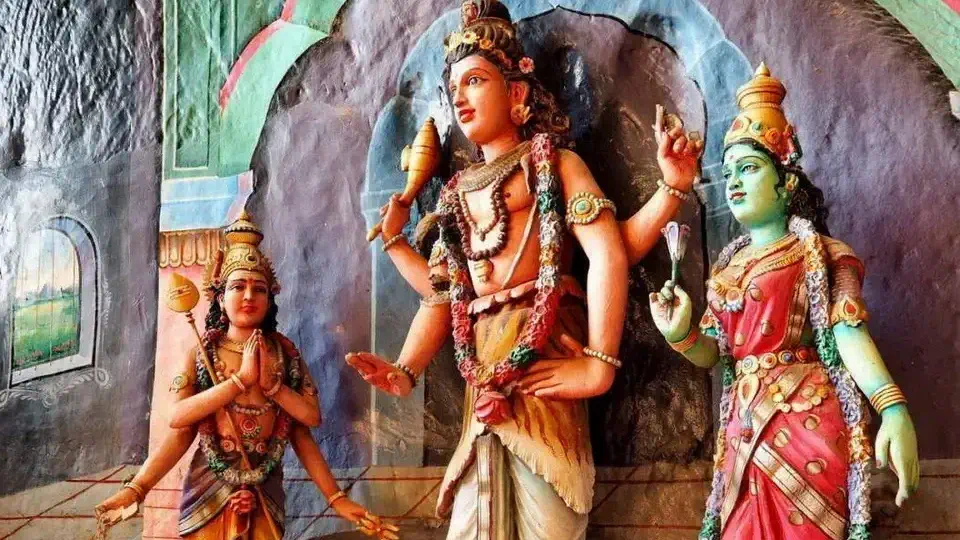
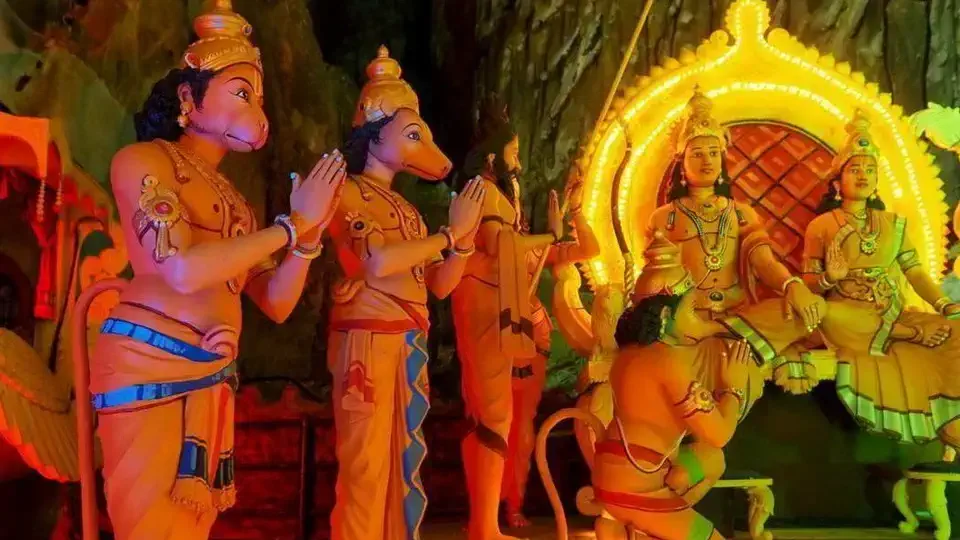
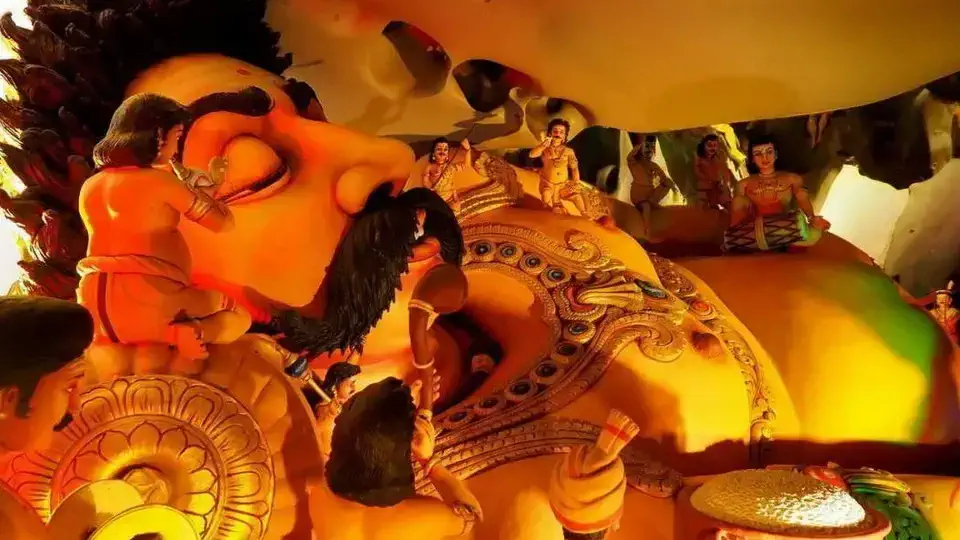
The enormous caves are breathtaking — their ceilings rise dozens of meters high, adorned with sharp stalactites hanging far above. The deep echo of footsteps and the hushed voices of tourists moving about create an atmosphere of grandeur and reverence for nature itself. We wandered through the caverns, passing shrines filled — as is typical in Hindu temples — with vividly coloured figures from their mythology.
From every corner, we were watched by characters with the heads of monkeys and crocodiles, and somewhere deeper inside, hidden in the shadows, stood a statue of the mischievous god Ganesha. He is a man with four arms and the head of an elephant, symbolizing prosperity and financial success. Quietly, and pretending to do so accidentally, I drifted toward him — just to brush against him for a bit of good luck.
At the very end of the chain of caves lies the most spectacular chamber. High in its ceiling there’s a giant opening through which sunlight pours in. The other end of the hole must reach deep into the jungle because thick, lush vegetation spills into the interior. The impression is magical — sunlight streaming through, greenery all around, and shifting patterns of light — as if one of the Hindu gods was peeking inside. Fortunately, this part of the caves is the least developed, allowing you to forget about the noise and clutter left behind and simply enjoy the awe-inspiring beauty of the place.
Mixed feelings at the end of my visit to Batu Caves
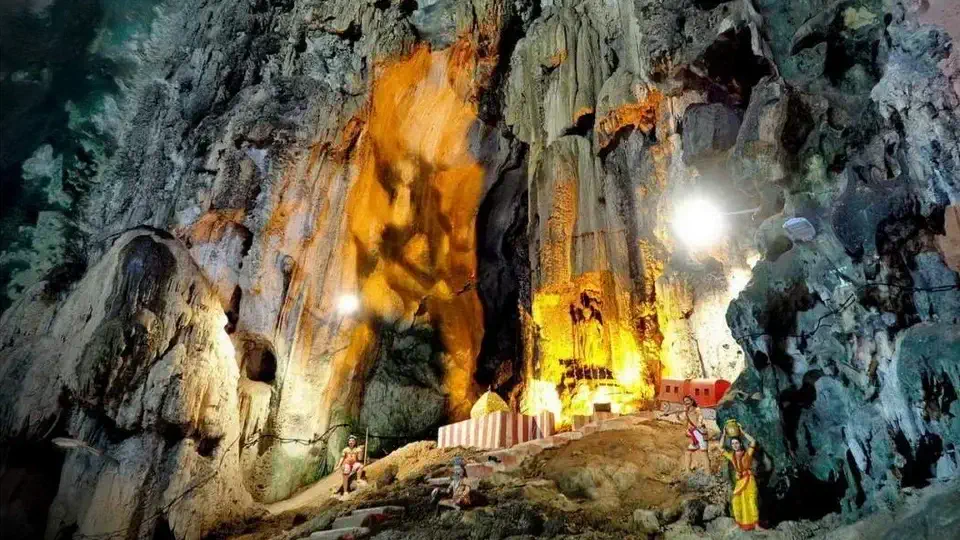
We left that great natural cathedral with mixed feelings. On one hand, these beautiful caves are nature’s masterpiece, and the people who live here have every right to do with them as they please. On the other hand, it’s a pity we can’t see the mountain’s interior through the eyes of those who discovered it 130 years ago.
As we descended, we passed a smaller cave called the Dark Cave. There, you step into a world of eternal darkness — home to some truly fascinating creatures. Bats, insects, and countless rodents inhabit this underground realm. You can join them for just 35 ringgits. The narrow tunnels and small chambers stretch over two kilometres deep into the mountain. As for the animals, you should know that all the caves are full of them — but most will avoid you, as they’ve learned to stay away from humans. All except one species — monkeys — who greatly enjoy people, or rather, what people bring with them.
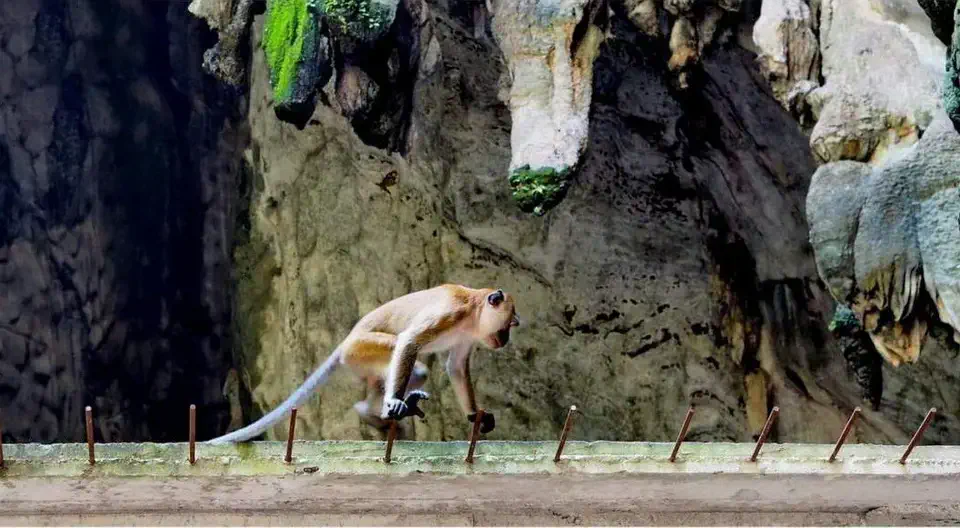
The macaques living in the nearby forests often pop into the caves, and being both mischievous and greedy, they wait for the perfect chance to rob tired and unsuspecting tourists. I saw with my own eyes two monkeys snatch a man’s drink and sandwiches, while another pair ran off with someone’s camera tripod. So remember: keep everything close and well secured. These little thieves won’t take their eyes off you for a second — and they won’t miss a single opportunity to grab what’s yours.
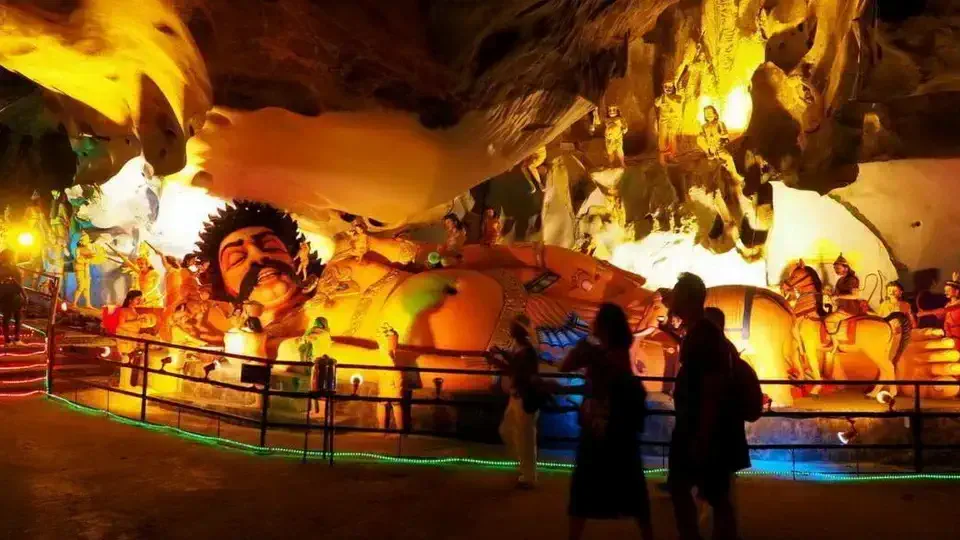
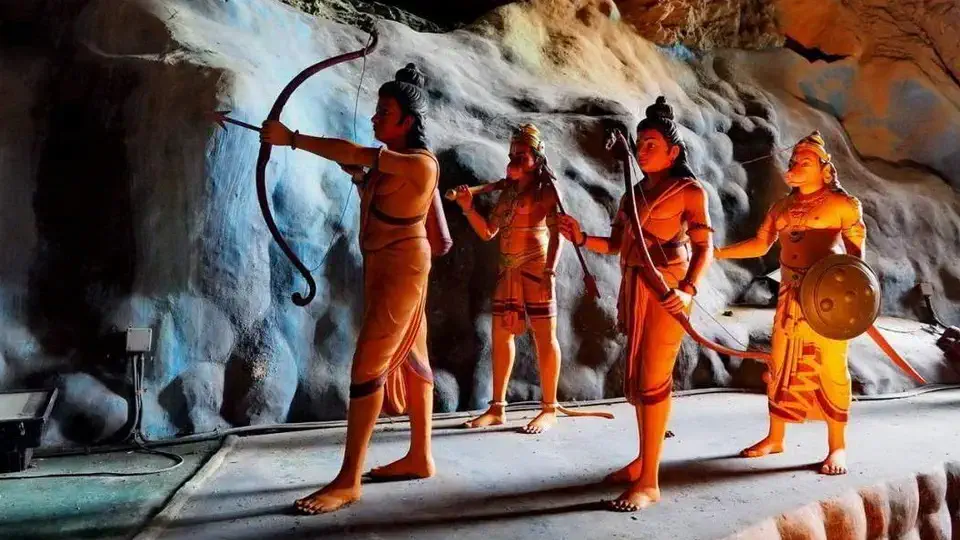
Beneath the hill, there’s yet another cave — the entrance guarded by a 15-meter statue of Hanuman, the monkey helper of the god Rama. The temple inside, called the Ramayana Cave, is dedicated to him. The entrance fee is 5 ringgit, and inside you can admire colourful scenes from the adventures of heroes and mythical creatures from Hindu legends. We truly enjoyed it — it was cool inside, and incredibly vibrant. You can sit down, rest, and if you were smart enough to save some food from the monkeys, you can even have a little picnic.
I should also mention that at the base of the hill there are plenty of restaurants and food stalls serving Indian cuisine — you’ll definitely find something to your taste. There are fruits, sweets, and if you like fresh coconut milk straight from the shell, you’ll be delighted. For us, this was the last cave and temple of the day.
And finally, to answer the question many people ask — would I recommend visiting Batu Caves? Absolutely. I didn’t like the dirt and general neglect of this otherwise extraordinary place, but it’s still worth seeing — if only to later complain about the mess the locals have made of it.
Practical information from Batu Caves in Kuala Lumpur
- Batu Caves near Kuala Lumpur address: Batu Caves, Sri Subramaniam Temple, Kuala Lumpur.
- Batu Caves Opening Hours: Daily, 6:00 AM – 9:00 PM
- Five ringgit is approximately one euro, so the conversion is simple.
Interesting facts about Batu Caves in Kuala Lumpur
- Batu Caves is located approximately 13 km north of central Kuala Lumpur.
- The name comes from the SungaiBatu River (“Sungai” = river, “Batu” = stone).
- The limestone formation in which the caves are located is approximately 400 million years old.
- The staircase to the largest cave has 272 steps.
- Beneath the staircase stands a massive, gold-painted statue of the deity Murugan, standing 42.7 m (approx. 140 ft) tall—the tallest such statue in Malaysia and one of the tallest in the world.
- The largest cave—often called “Temple Cave” or “Cathedral Cave”—has a ceiling reaching approximately 100 m high.
- The complex also contains other caves, including DarkCave, a system of narrow passages (over 2 km long) and unique fauna.
- For example, the web of the Liphistiusbatuensis trapdoor spider was discovered in Dark Cave—a very rare species known as a “living fossil.”
- In 1891, the Indo-Tamil community built a temple in the cave, and a year later (1892), the first Thaipusam ceremony was held there.
- The caves and their surrounding area are a significant natural habitat—including 366 species of vascular plants, some of which are endemic to the site.
- The Batu Caves complex is also a popular rock climbing destination—there are over 160 climbing routes on the limestone walls.
- For many years, the complex was a popular picnic spot during the British era, before becoming a mass temple.
- Fossils of marine organisms (corals, trilobites) have been found in the caves, indicating the area’s ancient geological history.
- Local long-tailed macaques (Long-tailed macaques) are very active near the stairs and can steal food or belongings from tourists.
- Dress code: Entry to the cave temple requires modest clothing—shoulders and legs must be covered for women. (Users confirm).
- Traveling by train to Batu Caves station is a popular way to travel—the train to the station is operated by KTMKomuter.
- Due to the very high humidity and the uplift of the limestone, the caves form a distinctive geological formation called “tower karst”—rising almost vertically from the ground.
- Native limestone plants are endangered in the cave zone—including as many as 27 species listed as endangered.
- Admission to the main cave (Temple Cave) is free, but fees and guides may apply for additional caves or special routes (e.g., Dark Cave).
- Within the hill (Bukit Batu), where the caves are located, there are approximately 20 identified caves—not all of them are open to tourists.
- In two small caves at the base of the hill—Cistern Cave and Swamp Cave—teeth and bone fragments of extinct mammals, including orangutans, have been found.
- In Dark Cave (part of the complex), the trapdoor spider Liphistius batuensis lives, which is considered a “living fossil”—its lineage is very ancient.
- The flora of the Batu Caves limestone hill is unique—366 species of vascular plants have been recorded, 59 of which are endemic to Peninsular Malaysia, and 5 of which are known only from this area.
- Around the hill are former quarry pits and quarries—some caves were damaged by limestone extraction in the mid-20th century.
- The cave system is an example of a “tower-karst” formation—an uplifted limestone block that grows almost vertically due to valley erosion.
- Fossils of marine organisms, such as trilobites and corals, are found in and around the caves, indicating that the area was once underwater.
- The main cave (“Temple Cave”/“Cathedral Cave”) is naturally lit, allowing light to enter through a large opening in the ceiling, creating a spectacular effect (your observations confirm this).
- Less well-known than the “272 steps” is the information that entry to Dark Cave occurs after approximately 200 steps—that is, before reaching the top of the stairs.
- While the main cave is free, entry to Dark Cave (when it was open) required a guide and a fee—emphasizing that it is more of a natural area than a tourist attraction.
- The hill also houses the Ramayana Cave – lesser known, but with interesting mythological dioramas and a temple dedicated to the god Hanuman.
- The cave system was “discovered” to the Western world only in the late 19th century – although local tribes knew about them much earlier.
- The caves have unique microclimates – in deep, dark places, species exclusively adapted to cave conditions (darkness, moisture) live.
- This is rarely written about: caves constitute a significant part of nature conservation budgets – for example, local organizations fight to protect the limestone formations and vegetation.
- A railway line (KTM Komuter) runs through the base of the hill, making it easily accessible, but also vulnerable to the impacts of urbanization.
- During the Thaipusam festival, the number of pilgrims can exceed one million – significantly changing the character of the site compared to a normal day.
- Spider