Bovington Tank Museum, located in the south of England, is a dream come true for any enthusiast of war machines, military equipment, and armoured vehicles. Although I don’t consider myself the biggest fan of military hardware, my visit to The Tank Museum left a lasting impression on me.
In the article below, I’ll tell you about The Tank Museum in Bovington and share some tips to help you plan your visit. I’ll also highlight what, I believe, are the most interesting exhibits in the museum and include plenty of facts, information, and curiosities about The Tank Museum in Bovington.
Bovington Tank Museum — practical information to help you visit
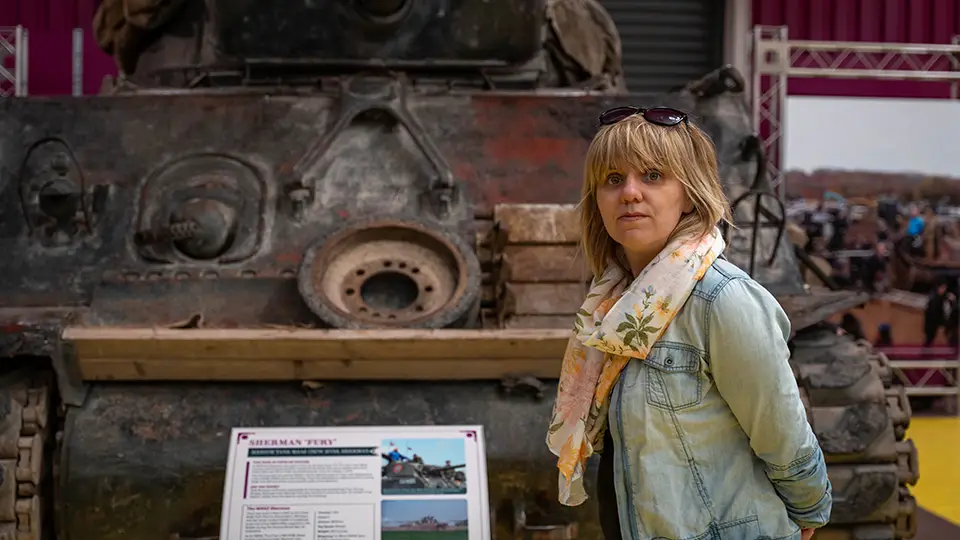
While it’s not necessary to purchase tickets in advance, it’s worth purchasing them online, as they’re 15% cheaper than at the museum ticket office. Plus, during peak season, you’ll avoid the sometimes-long queues. Tickets currently cost around £20 for adults and £10 for children under 15. Please note, however, that prices are subject to change, so consider this price as a guide, not a guarantee. For a detailed price list, please visit the official Bovington Tank Museum website.
The Bovington Tank Museum is located at Linsay Rd, Bovington, Wareham BH20 6JG. The easiest way to get there is by car, heading towards Dorchester, Weymouth, and Poole. There’s ample free parking on-site. If you’re planning to travel by train, that’s no problem either. We once travelled from London Waterloo Station to Weymouth, and then it was just a short walk from the station to the museum. Trains run frequently, making the whole trip pleasant and hassle-free. You can find the timetable on the official South Western Railway website.
The Bovington Tank Museum is vast and very intriguing, so it’s worth dedicating more than one day to it. If you’re planning a longer stay, find accommodation nearby. This will give you time to visit one of the nearby attractions besides the museum. I recommend Durdle Door, a natural limestone cliff arch on England’s Jurassic Coast.
If you forget to stock up on provisions before your departure, don’t worry; there’s a large restaurant on site serving truly excellent local food. I enjoyed the traditional sausage rolls, fragrant meat baked in crispy pastry. The café is open from 10:00 a.m. to 5:00 p.m. There’s also a café on the museum grounds, serving good coffee and various snacks.
You can easily complete a tour of the museum in four hours, but that’s a significant underestimate. We spent six hours at the Bovington Tank Museum, and there was still plenty left for another visit. Free tours of the museum’s exhibitions are offered throughout the day, led by experienced guides, often retired soldiers. Such a tour is truly captivating and allows you to hear real stories firsthand.
The museum has a well-prepared educational trail for children. In addition to the traditional playground, young military enthusiasts can explore the trail of Commander Basil, a character who draws children on a journey full of puzzles and riddles. Interactive elements, games, and other attractions are scattered throughout the museum. I literally envied the children because no one had taken me to such a place when I was their age.
Bovington Tank Museum Tour
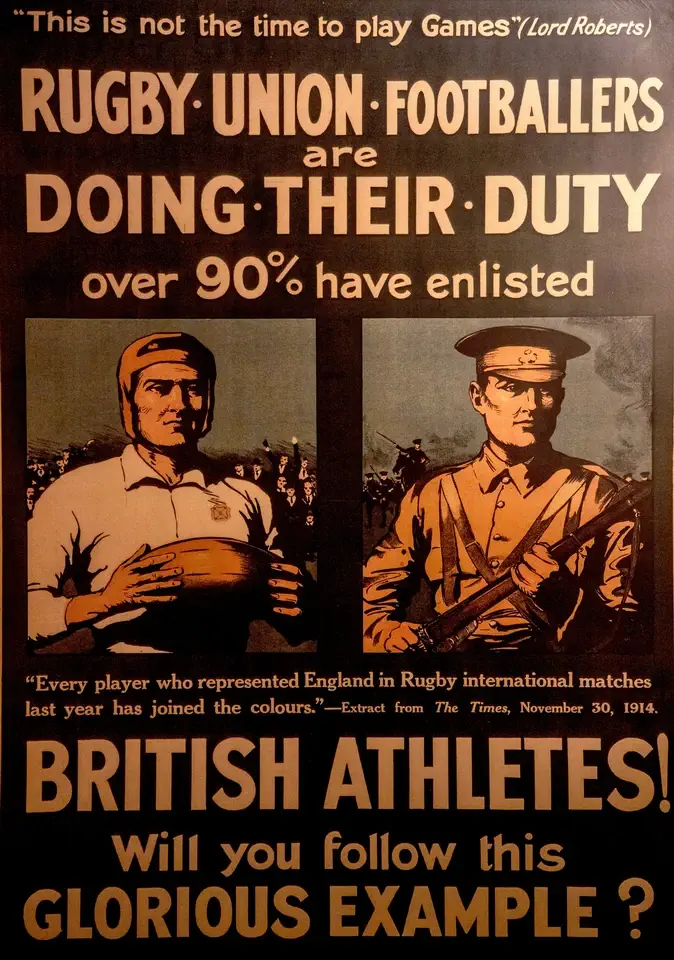
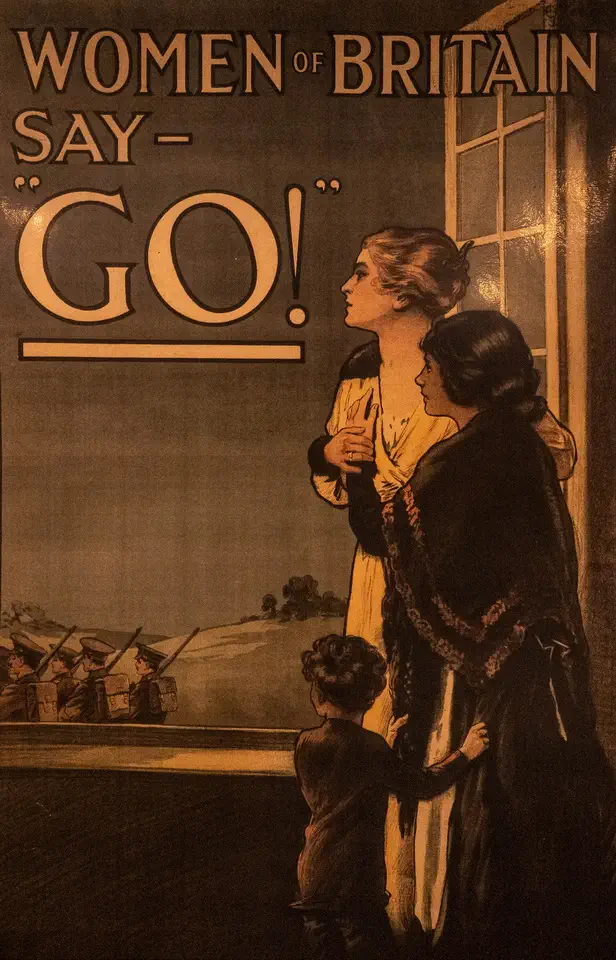

Recently, the museum has undergone many changes — some exhibitions have been expanded, others renovated. Each hall is equipped with a wide range of interactive devices and interesting information presented in a clear and engaging way.
Right at the beginning, before you even enter the main museum, you must pass through a recruitment hall. You step into the role of a volunteer eager to become a soldier and head to the front lines of the First World War. In a large room sits a veteran who records the details of the brave recruits and sends them off to the quartermaster to collect their uniform and weapon. The walls are adorned with propaganda posters, suggesting that going to the front is a great adventure and the duty of every young man.
In the next room, you’ll find a reconstructed train station and carriages used to transport soldiers to the front. Here, the illusion and romanticism of war — presented in the first room — quickly vanish. On the platforms lie wounded soldiers with missing limbs, covered in blood, their faces filled with terror as if they’ve returned straight from hell. Nurses and nuns tend to them, and in the corner, a mustachioed carpenter hammers together simple coffins from raw planks. By the time you leave this section of the museum, you already know that war is neither pleasant nor romantic.
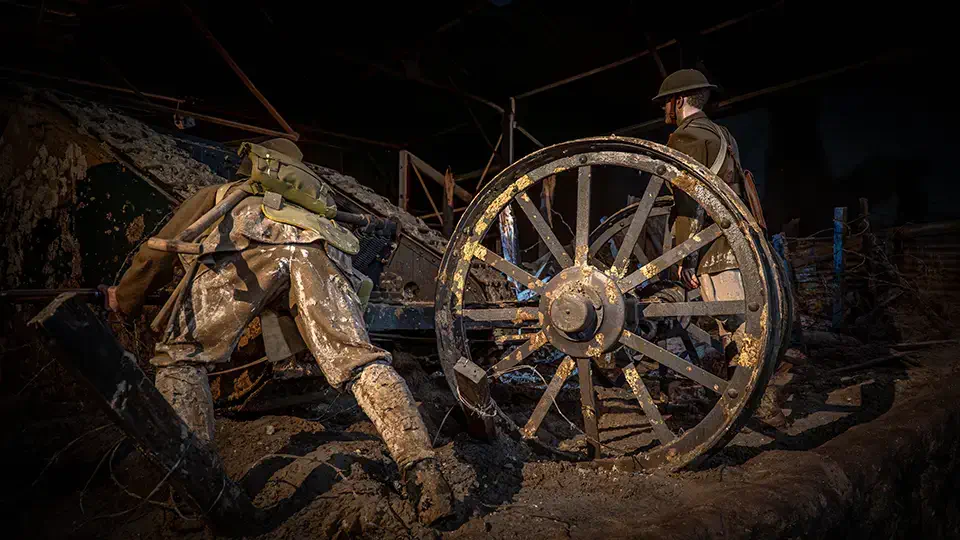
In the next room, things get even worse. You’ll walk through a recreation of the trenches of World War I: a bomb-scarred landscape, terrified soldiers huddled together for comfort or hiding in the tightest corners. Every patch of ground is covered in barbed wire entanglements, with human and animal corpses hanging from them. And in the midst of this nightmare, a massive Mark VIII tank — also known as Liberty or The International — rumbles through the muddy terrain. The overwhelming sense of hopelessness and the horrors of war is deeply haunting.
An interesting feature of one of the exhibitions at the Bovington Tank Museum is a real tank cut exactly in half. This allows you to see the conditions tankmen operate in and how limited the space they have at their disposal. One thing’s for sure: my claustrophobia wouldn’t allow me to spend even a few minutes there, let alone inside a tank in combat conditions.
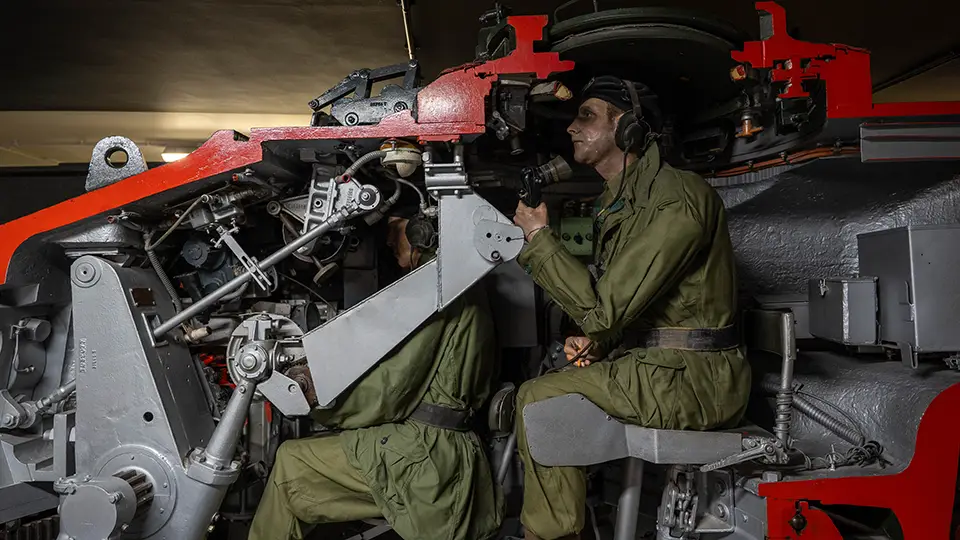
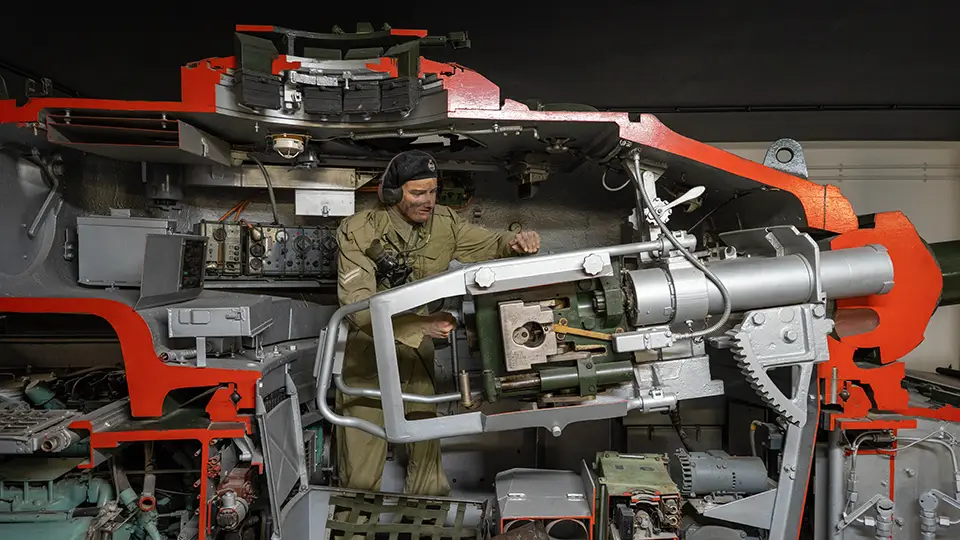
Below you will find a brief description of other rooms and exhibitions at the Bovington Tank Museum that particularly interested me, and I am sure will interest you too.
An exhibition dedicated to World War I and the tankmen who served in the still primitive machines.
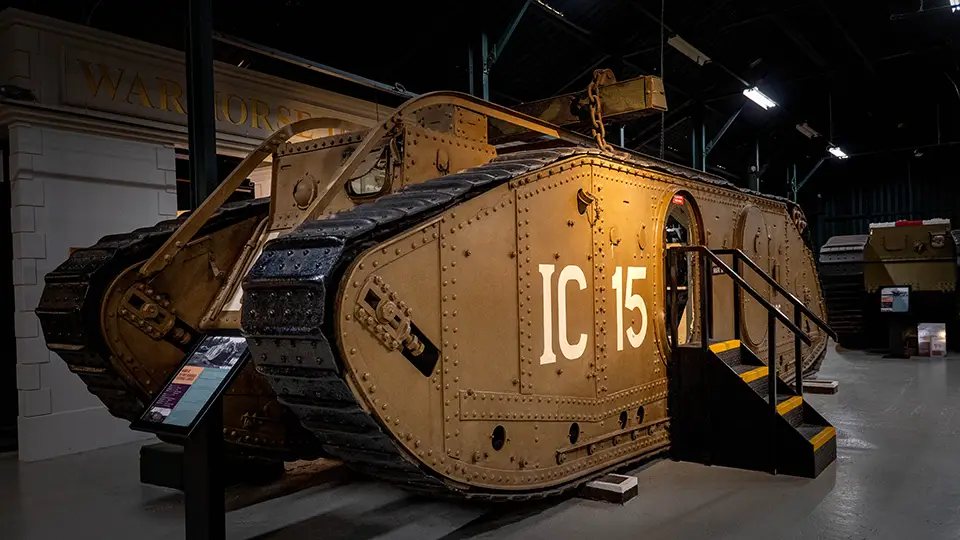
In this part of the museum, you’ll follow in the footsteps of World War I soldiers. You’ll learn how and why the first tank was created, and thanks to wartime propaganda films, you’ll witness the first tank assault in history on enemy lines. The entire space in this section is filled with machines developed in the early 20th century.
The vehicles displayed here date from 1916 to 1918, and the information provided on numerous monitors and information boards tells the story not only of the tanks themselves, but also of their crews. All those who worked tirelessly to ensure these powerful machines could fight.
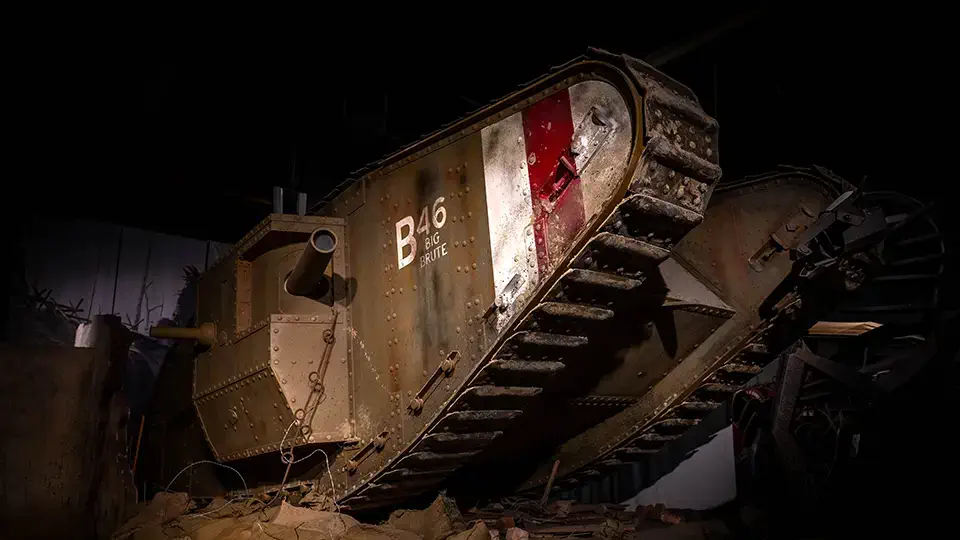
You’ll see marvels such as the Mark I tank and its successors, the Mark IV and Mark V. The latter is one of the very few World War I tanks still in working condition today. You’ll also find the enormous British Mark IX tank and the formidable Mark VIII Liberty, a groundbreaking design developed through British-American cooperation.
The exhibition is incredibly engaging, and many of the vehicles are presented in a way that allows you to peek inside — or even climb in. In addition to the tanks themselves, you’ll also see weapons, ammunition, engines, tank components, and many other machines and devices essential to keeping the armoured fleet battle-ready.
The exhibition is called War Hall — From War Horse to Mechanical Horse
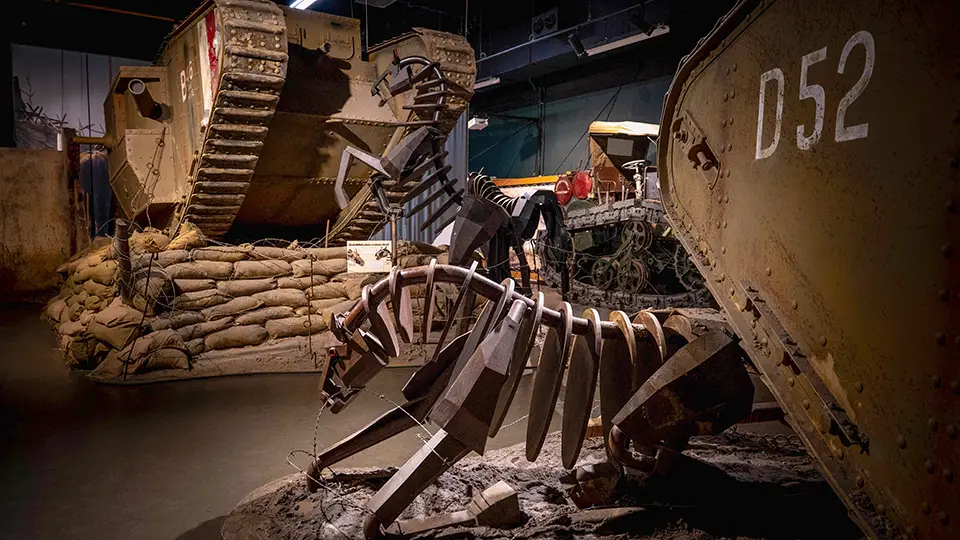
This is one of the most controversial sections of The Tank Museum in Bovington — sad and terrifying at the same time. The materials and exhibits here tell the story of the beginnings of armoured warfare, which pushed cavalry and horses as draft animals out of battle. Imagine that transitional period when massive, fire-spitting steel vehicles appeared on the front lines alongside horse-drawn wagons and cavalry units trying to operate in all that chaos.
As you can imagine, horses were so terrified that they often froze in fear, unable to move until they were hit by a bullet or a shell fragment. A real nightmare. What’s worse, in the early days of armoured development, cavalry units still fought alongside tanks on the battlefield — a situation where the outcome was tragically predictable.
In this part of the museum, you’ll see unique machines such as the Vickers A1E1 Independent, the Peerless armoured car, and the Vickers Mark II light tank. The oldest vehicle on display is the Hornsby–Little Caterpillar steam-powered tracked tractor — a precursor to future armoured vehicles later used by the British Army.
Exhibition devoted to World War II
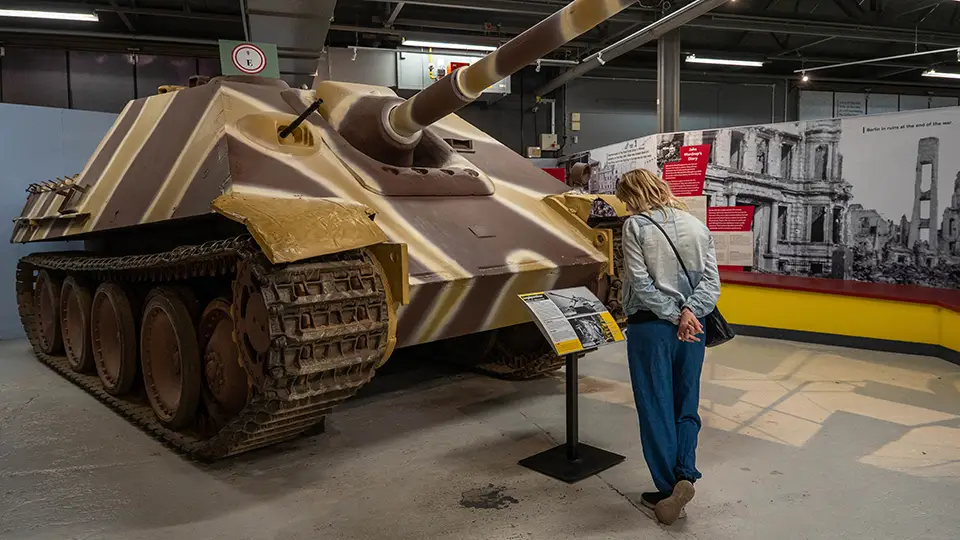
World War II greatly accelerated the development of armoured warfare, which is why this section of The Tank Museum in Bovington is particularly extensive. It features vehicles from nearly all the countries involved in the Second World War. You’ll see Soviet, German, British, and American tanks — in many configurations. One of the most fascinating exhibits is the massive Tiger I, a German heavy tank captured by the British Army in Tunisia toward the end of the war. It is currently the only operational Tiger I tank in the world.
In addition to the Tiger I, this section includes rare gems such as the Panzer I, III, IV, Stug III, and Tiger II. You’ll also find the Jagdpanzer 38, Somua S35, Comet I, M24 Chaffee, the iconic American M4 Sherman, and the M48 Patton — and that’s just the beginning of a long list of tanks, tank destroyers, combat vehicles, and all kinds of equipment that appeared during the largest military conflict in history.
A major highlight of this exhibition is the British Hamilcar assault glider, as well as the experimental tank Black Prince, named after Edward, the Black Prince — son of Edward III and heir to the English throne. Beyond military equipment, you’ll also walk through a recreated village and learn how British society functioned during the war. You can peek into a shop with almost empty shelves, as most food was sent to the front lines. There’s also a small cinema showing wartime propaganda films. This is a rich and detailed section — we spent the most time here.
British Armoured Forces in Afghanistan
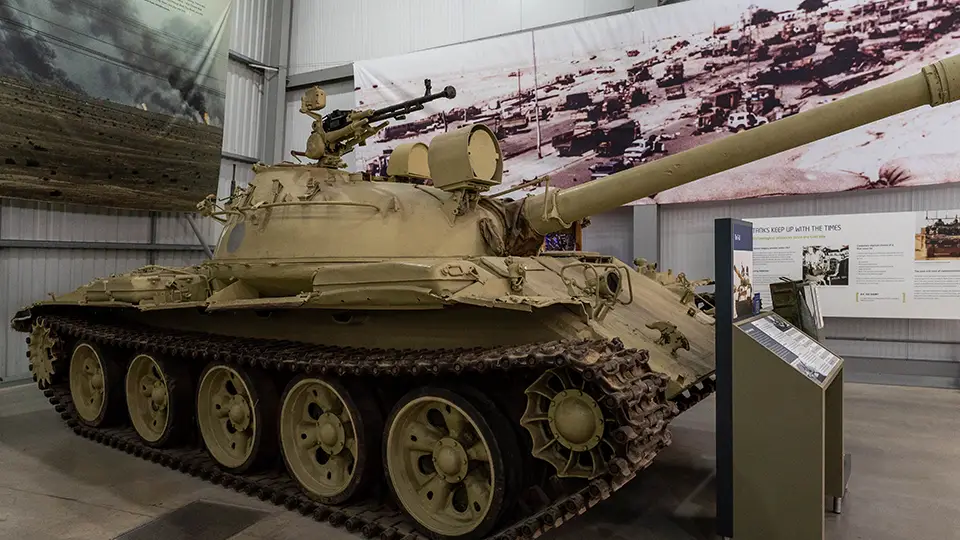
The exhibitions in this part of the museum really surprised me. I had no idea how deeply the United Kingdom was involved in the war in Afghanistan. Here you’ll see a range of relatively modern equipment, including vehicles like the Conqueror — a British heavy tank developed in response to the Soviet IS-3. You’ll also find the intimidating FV4030 Challenger, the British Army’s main battle tank, which remained in service until 2001.
From what I learned in this section of The Tank Museum in Bovington, the conflict in Afghanistan was, for the British — and especially for the soldiers of the Royal Armoured Corps — the greatest combat challenge since World War II.
The Cold War period
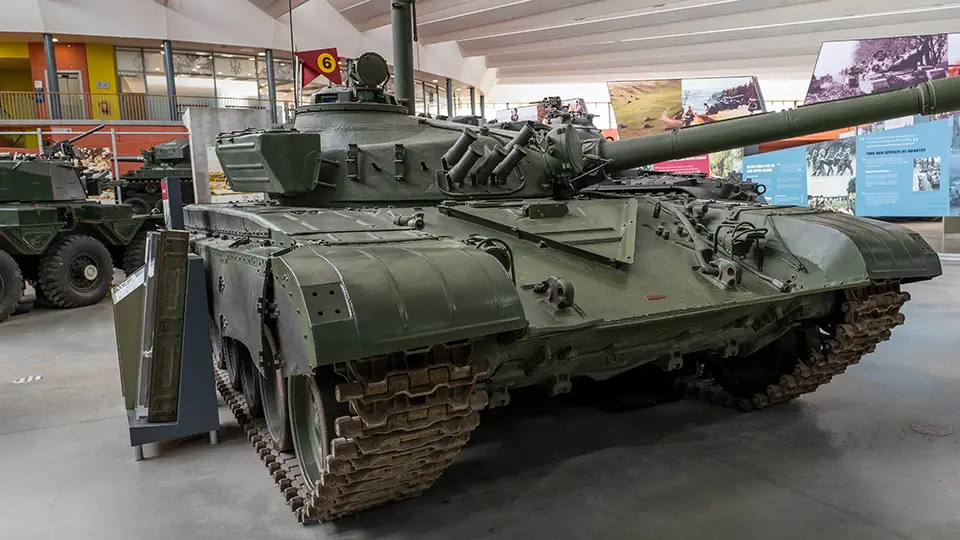
The Cold War was a period of frantic weapon development on both sides of the conflict. The British Army also did everything possible to keep up with the changing conditions on the battlefield. Military equipment, including tanks, became increasingly sophisticated, with the emergence of complex electronics and entire combat systems in which the tank was only a small component. You’ll see machines like the FV4201 Chieftain and the FV4007 Centurion main battle tank.
The Great Tank Story
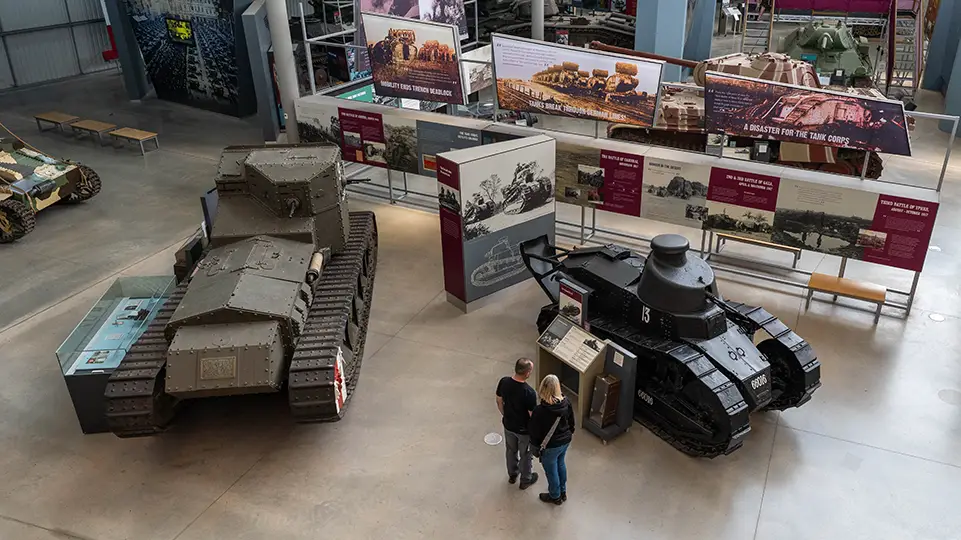
The last major section of The Tank Museum in Bovington is a vast hall filled with the most important tanks in the entire history of armoured warfare. Every vehicle displayed here is thoroughly described, along with the stories of the tank itself and the crews who served aboard it. The exhibits cover the full history of the tank — from its invention in 1915 to the 21st century.
We spent the most time in this area, as the vehicles at the heart of the exhibition are truly fascinating, and their history is captivating. On the upper level, there is a restaurant I mentioned at the beginning of the article. You can enjoy a coffee while looking down at all the equipment gathered in the great hall.
To simplify things, I’ll just name a few of the vehicles you can see here. These include Little Willie, the forerunner of British tanks; the Whippet, a light tank from World War I; and the Renault FT, a French light tank considered one of the most revolutionary designs in history. You’ll also see the famous M3 Lee, the Soviet T-34 medium tank — the backbone of the Red Army during World War II. Over 80,000 T-34s were built, making it the second most produced tank of all time, surpassed only by its successor, the T-54. You’ll also find modern tanks still in service with many armies around the world, such as the FV4034 Challenger 2, which serves in the armed forces of the United Kingdom, Oman, and Ukraine.
Many of the tanks displayed here have appeared in films and TV productions. For example, the tank featured in the movie Fury is part of the collection. I truly enjoyed this part of the museum and would happily return just to once again see — and touch — these remarkable examples of the world’s most iconic tanks.
Bovington Tank Museum Warehouse, Repair, and Maintenance Workshop
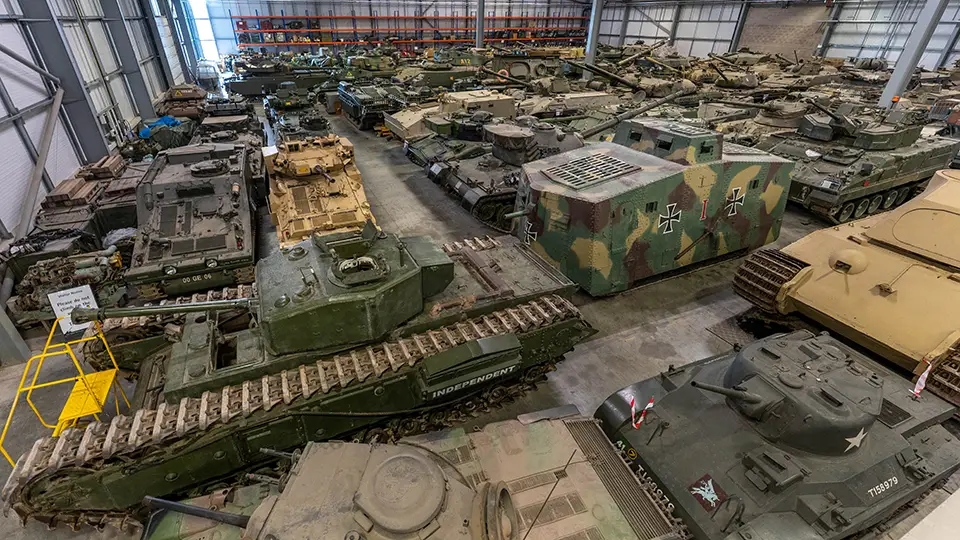
The last place I have to mention — and one that is often overlooked by tourists visiting The Tank Museum in Bovington — is the workshop where the vehicles brought to the museum are repaired, restored, and preserved.
It’s a giant hangar filled with tanks and other machines brought in from all over the world. Here you’ll find the oldest vehicles, as well as ones recently decommissioned or damaged in combat. This incredible graveyard of armoured vehicles stands as a powerful symbol of how quickly the modern battlefield evolves — where each new generation of vehicles replaces the last, even those not that old.
Just think — if all the money, resources, and effort poured into this endless cycle were instead devoted to solving the problems that truly plague us as a society, we would be far happier and safer.
Bovington Tank Museum: The History of the Largest Armoured Weapons Museum in England
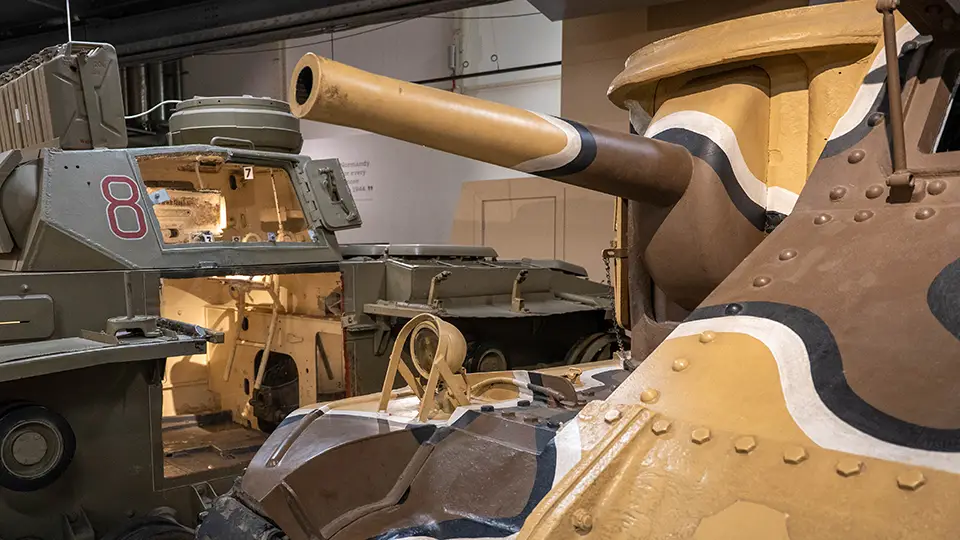
The Tank Museum in Bovington is located at Bovington Camp, a British military base in Dorset. It’s an active-armored forces base, so on your way to the museum, you might come across tanks and armoured vehicles rumbling through the surrounding terrain. Be sure to stay alert — in this area, tanks always have the right of way, as the numerous warning signs clearly state.
The history of The Tank Museum in Bovington began in 1923, thanks to British writer Rudyard Kipling (best known as the author of The Jungle Book), who came to view military equipment that had been brought to Dorset after the end of World War I. The sheer amount of deadly machinery — and the excellent condition of some vehicles — gave Kipling the idea to gather them in one place to help people understand the tools with which modern wars are fought. Hundreds of vehicles were reviewed, and the most valuable and best-preserved examples were selected. They were placed in an old shed, which became the seed of what would eventually grow into Britain’s largest museum of tanks and armored vehicles.
The museum officially opened as a public institution in 1947, and ever since, it has sparked great interest and strong emotions among military history enthusiasts from around the world. Interestingly, several of the museum’s directors were known for their deep passion and extraordinary dedication to its growth. This is reflected in the fact that two of them were awarded the Most Excellent Order of the British Empire (OBE) upon retirement — a prestigious honour recognizing outstanding service to the United Kingdom.
Bovington Tank Museum facts, information, and trivia
- The World’s Largest Tank Museum — The Bovington Museum boasts one of the world’s largest and most important tank collections—over 300 armoured vehicles from over 25 countries.
- Established in 1923, the museum’s history stretches back almost 100 years, initially as a small training collection for the British Army.
- Located on Active Military Ground — The museum is located near Bovington Camp, where tank training still takes place.
- Home of the “Male“—the world’s first battle tank — The museum houses the Mark I, the first tank used in combat during World War I in 1916.
- Unique Vehicles — The museum possesses the only working example of a World War II Tiger I tank—a German vehicle renowned for its formidable firepower.
- Tiger 131—A Movie Star—The Tiger 131 was used in the film “Fury” starring Brad Pitt—it is the only fully operational Tiger I in the world.
- Not Just British Tanks — The collection includes vehicles from the USA, Germany, Russia, France, Poland, and many other countries.
- Regular Live Shows — The Museum organizes spectacular tank demonstrations, known as Tankfest, which attract thousands of spectators from around the world.
- Interactive Exhibitions — Visitors can see the interiors of tanks, watch videos from the battlefield, and touch selected exhibits.
- Unique Soundscape — In many rooms, you’ll hear the sounds of engines, gunfire, and military communications, creating an incredible atmosphere.
- Educational Museum — Part of the exhibition is devoted to the technical aspects of tank operation—from armour to drive systems.
- The Evolution of the Tank — The “Tank Story” exhibition takes you through the history of armor development from World War I to the present day.
- Tanks from 20th and 21st Century Conflicts — You can see vehicles from the Persian Gulf, Iraq, and Afghanistan, among others.
- Military Merchandise Shop — An on-site shop sells replicas, books, tank models, and military-style clothing.
- Tank Simulators — Visitors can try their hand at piloting a tank in realistic simulators.
- Tank Graveyard — Next to the museum is the “Vehicle Conservation Center” a hangar housing over 100 tanks being restored or stored for research.
- Recognized by Historians — The museum regularly collaborates with military historians and scientists, with many of its exhibits being used for research.
- Tanks on the Move Year-Round — In addition to Tankfest, smaller events such as Tiger Day are held, during which selected tanks are launched.
- Family-Friendly — The museum offers educational programs and activities for children, such as quizzes, play areas, and mini tanks.
- Inspiration for Gamers — The museum collaborated with the developers of World of Tanks, and some exhibits have been given a second life in the virtual world.