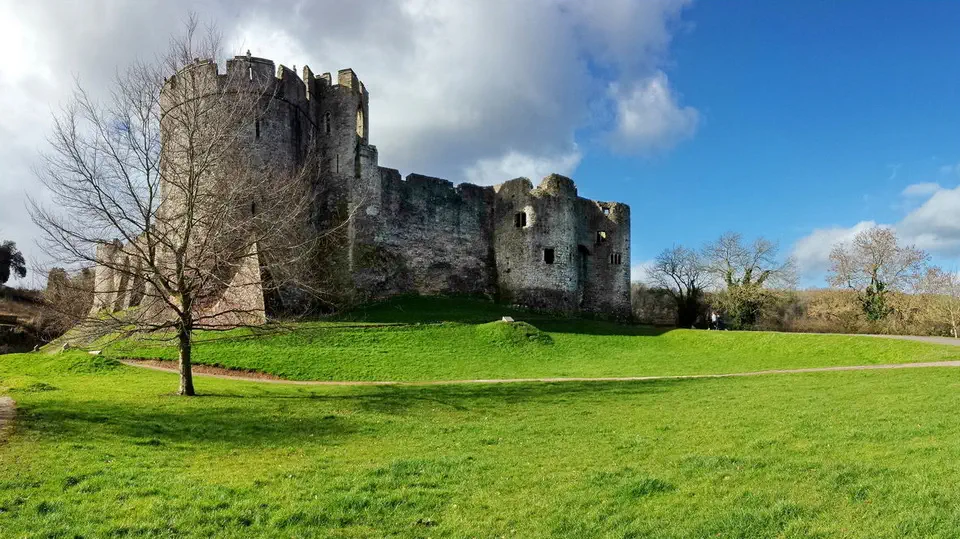
Chepstow Castle is a Norman fortress that stands on the River Wye on the border between England and Wales.
The monumental ruins of Chepstow Castle, like all ancient castles, have a fascinating and rich history, with its origins dating back a thousand years. The castle stands on the border between Wales and England and is huge. It is also considered one of the oldest fortifications in Wales. Today, only fragments of the defensive walls, a few crumbling towers, and a massive gate have survived. However, it is easy to imagine its former might while walking through the vast courtyards and along the remaining walls. In the article below, I will tell the story of the castle, its inhabitants, and share plenty of information and interesting facts.
Chepstow Castle history and the history of the old fortress
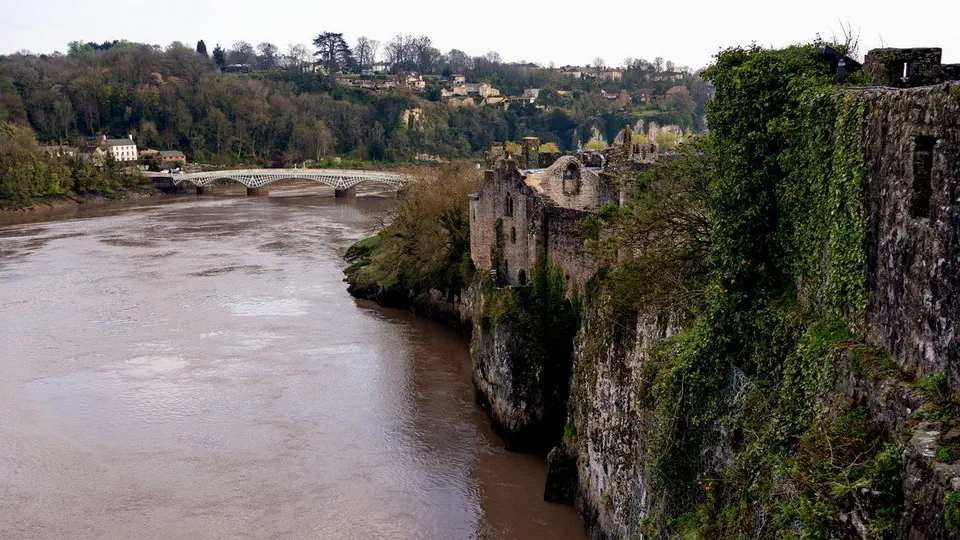
It is impossible to talk about a place like the Welsh Chepstow Castle without first summarizing its history. And that history is particularly vivid, as the castle was built on the border between two spheres of influence: the newly arrived Normans in Britain and still-independent Wales. It all began when William the Conqueror, having taken control of England and gradually consolidated his power, turned his attention to the western part of Britain.
For many years, the Welsh repelled the attacks of the powerful Normans, clad in steel armour. They were not passive either and often launched successful counterattacks against the invaders attempting to fortify the border. Fearing the raids of the “angry peasants,” as the Welsh were then called, the idea arose to build castles and fortifications along the English-Welsh frontier.
Chepstow Castle and the origins of the castle
The first plans and the beginnings of construction on the defensive walls of Chepstow date back to the year 1067. By the order of William the Conqueror himself, William FitzOsbern – the first Earl of Hereford – took on the responsibility of overseeing the fortress’s construction. FitzOsbern held the noble title of lord in old Normandy. He came to Britain as both a friend and distant relative of William the Conqueror. Thanks to his organizational skills and talent for bringing the king’s ideas to life, he became the king’s right-hand man in the newly conquered lands.
Chepstow Castle was not the only site where fortification work began. Almost simultaneously, several other castles were being built on the Welsh side of the River Wye, for which William FitzOsbern was also responsible. The defensive walls of Chepstow Castle, as well as the first of many towers—which still stands today—were completed after thirteen years of construction. At the same time, the castle became the residence of William’s family.
Many very modern construction techniques were used during the building process, marking the beginning of an entirely new approach to castle building. The most important of these was the use of stone—rather than wood—for the construction of fortifications, walls, towers, and all the key parts of the castle. Over time, a village grew around the fortress, which eventually developed into a town, bearing the same name as the castle.
Unfortunately, FitzOsbern did not live to see the completion of the stronghold. He died in a minor and insignificant battle near the town of Cassel, in what is now Germany. His son, on the other hand, lacked his father’s foresight. He sided with the losing faction in a failed coup against William the Conqueror. After the rebellion failed, he was exiled, and all his lands were claimed by the Crown. Over time, the FitzOsbern family disappeared from history. Only the beautiful Norman castles scattered across Britain remain as their legacy.
Chepstow Castle and Practical Information
- Chepstow Castle is open to visitors daily from 10:00 AM to 6:00 PM, with a one-hour break from 1:00 PM to 2:00 PM (the ticket office is closed during this time, but visitors already inside the castle can enjoy the full tour).
- Ticket prices vary depending on the season and events taking place at the castle. Generally, expect a nominal fee of £3.45 for adults and £2.40 for children.
- The castle houses a small gift shop, and dog owners are also welcome.
- The castle is also accessible to visitors with disabilities, for whom a special tour has been prepared.
- Unfortunately, drones are not permitted within the castle grounds.
- Chepstow Castle is one of the places on our list of attractions near Bristol that we visit with friends and family. This is a critical recommendation.
- Chepstow Castle address: Chepstow Castle—Bridge St, Chepstow NP16 5EY.
- The castle’s official website, where you’ll find current opening hours, prices, and all the latest information about upcoming events at the castle.
Visiting Chepstow Castle
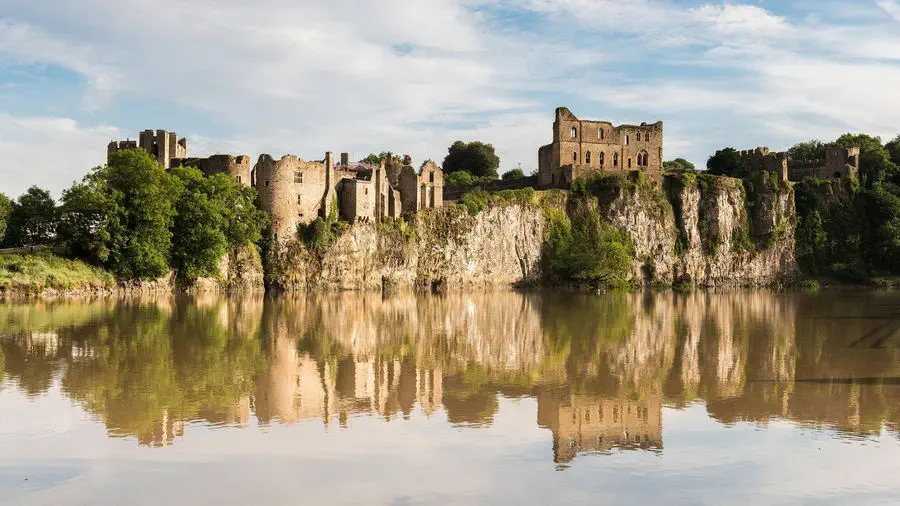
Chepstow Castle is gorgeous and makes a strong impression. This is largely thanks to its extraordinary location. It was built on a high, rocky cliff above the River Wye, and from its walls, there is a fantastic panorama of the flowing water below and the town that surrounds the castle. When the weather is good, it’s well worth climbing to the accessible walls and towers. From above, the castle looks even more impressive than when exploring its lower levels. It is precisely from this vantage point that one understands why Chepstow was considered an impregnable fortress for centuries.
On one side, the structure ends at a steep cliff, beneath which flows the fast-moving river. This made that part of the fortress especially difficult to capture. The side of the castle that faces the town is protected by high, thick walls and battlements, which made the defence of the stronghold both easy and effective. Today, visitors can wander through all accessible parts of the ruins—just remember to stay safe. The old walls, galleries, passageways, and steep staircases can be quite treacherous.
Chepstow Castle and its nooks and crannies
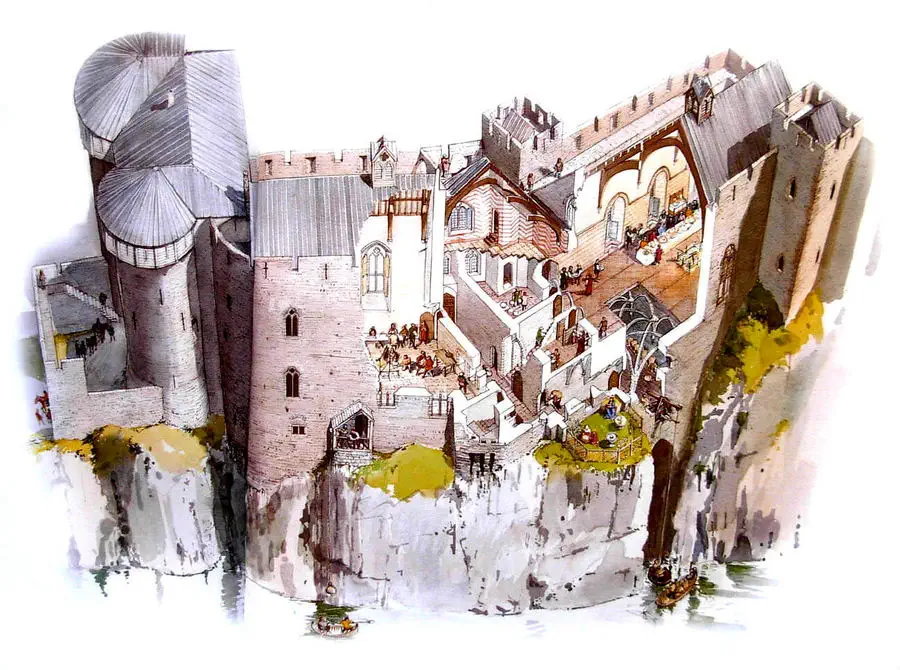
Although little remains of the original chambers and rooms, it’s still worth paying attention to the various parts of the castle. One particularly interesting feature is the great gatehouse. At the time of its construction, it was the most advanced structure of its kind in all of Britain. Two large towers, connected by an iron portcullis and a complex system of counterweights and pulleys, are still impressive to this day. The same goes for the remaining keeps. In the past, their tops were fitted with massive ballistae—formidable weapons that would have struck fear into anyone approaching the castle uninvited.
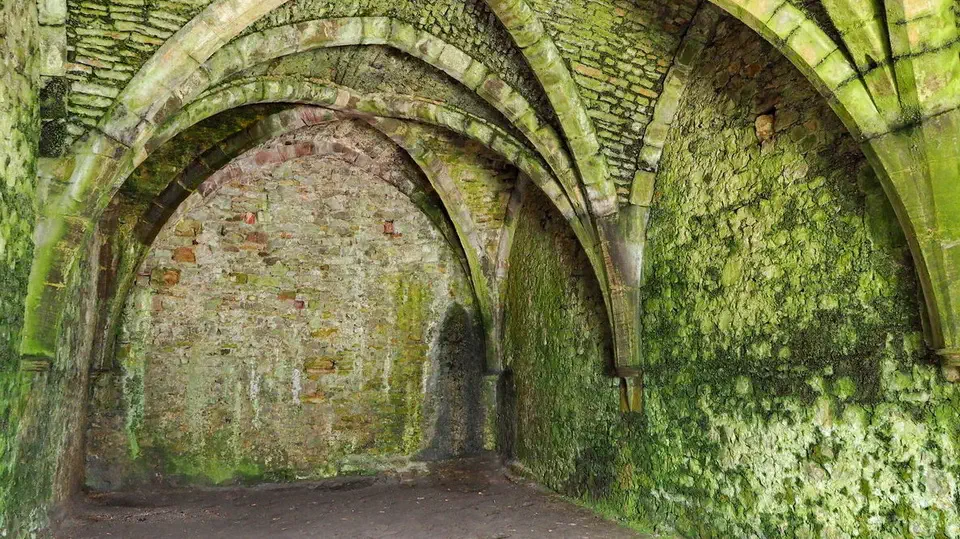
By following the descriptions displayed on the walls and near the entrances to different sections of the castle, you can explore the castle kitchens, the armories, the great halls, the lord’s quarters, and various utility rooms. Among the latter, the cellars and storerooms are especially interesting. They were once equipped with gates and massive winches used to haul goods directly into the fortress from the river. There you’ll find rooms that once stored grain, vegetables, and—of course—wine.
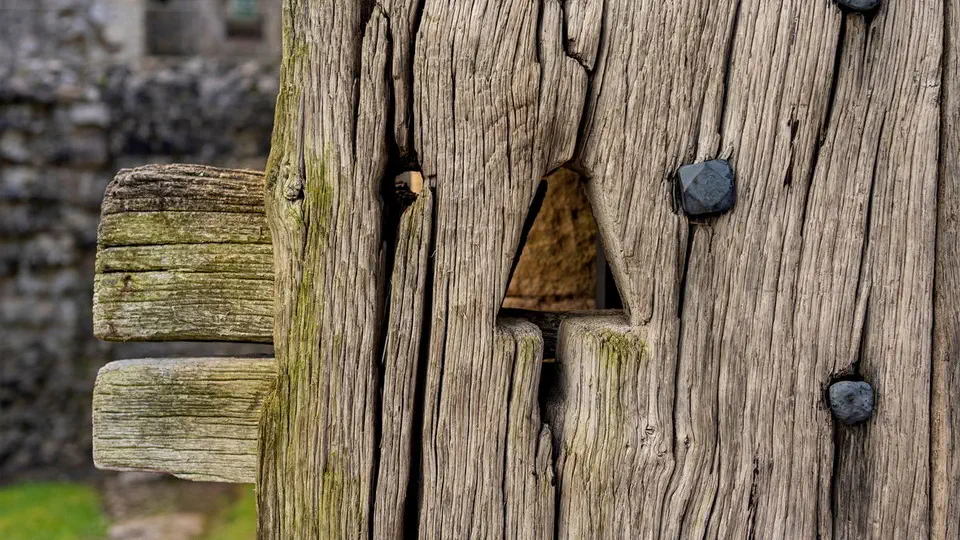
In my opinion, the most fascinating historical relic that has survived at the castle almost since its founding is the enormous oak gate. These iron-reinforced doors protected the castle for nearly 800 years. Only a few years ago were they finally removed from their hinges and replaced with new ones.
Na zakończenie naszej wizyty w zamku Chepstow
Chepstow Castle is a remarkable place, inextricably linked to the history of Wales and England. If you’re planning a trip to this part of the island, I suggest starting your journey from Chepstow Castle.
The history of Chepstow Castle and interesting facts about it
- 1067 Construction of Chepstow Castle begins.
- 1081 William the Conqueror and his army visit Chepstow Castle in person.
- 1090 The main tower (keep) of the castle is completed.
- 1189 Chepstow Castle falls into the hands of William Marshal’s family. He expanded and enlarged Chepstow Castle. It is to him that the castle owes its enormous, two-towered gatehouse.
- 1228 The next lord of the castle received a gift from the king: ten of the largest oaks in southern England. These were among the sources of the enormous oaks that can still be admired at the castle today. Interestingly, these gatehouses, despite being almost 800 years old, were still in use until recently. They are believed to be the oldest fully preserved wooden doors in all of Europe.
- 1284 Another major expansion of the castle. New towers were built, on which enormous ballistae were mounted, capable of firing projectiles over long distances.
- From the 14th century, when peace was established between England and Wales, Chepstow Castle’s importance declined dramatically. It was manned by only 20 knights and 500 archers.
- In 1455, during the civil war known as the Wars of the Roses, the castle served as a refuge for Richard Woodville. His adversary, Earl Warvick, nicknamed “Kingmaker,” besieged the castle for only a few days. Although the keep was considered impregnable, the garrison inside surrendered without a fight, and the Woodville family hiding there were executed.
- In 1508, the castle’s then-owner, Sir Charles Somerset, rebuilt the castle in the Tudor style. The keep became a comfortable residence with beautiful gardens and numerous ponds and fountains.
- In 1645, during the subsequent English Civil War, Parliamentary forces besieged the castle, bombarding its impregnable walls with massive cannons. The Parliamentary forces were commanded by Thomas Morgan (we wrote about the Morgan family in the article about their Welsh estate, Tredegar House, owned by the National Trust). It is unknown how the battle would have unfolded if the castle garrison had not surrendered again after only a few days of fighting. Unfortunately, those few days were enough for Chepstow Castle to suffer extensive damage.
- In 1680, King Charles I was imprisoned in the castle and remained in its dungeons until his death.
- In 1682, Chepstow Castle was abandoned and fell into ruin. Another renovation did not take place until the early 20th century.
- In 1984, the castle came under the care of the Welsh government organization responsible for protecting and promoting Welsh heritage – CADW.