National Air and Space Museum in Washington D.C.
One of the most fascinating places we visited in Washington was the National Air and Space Museum, which I’ll tell you about today. As I often say, we’re giant fans of museums because that’s where the dust of history gathers — and with it, the memory of everything worth remembering. So just imagine our excitement when we arrived in the magnificent city of Washington! The capital of the United States is well-known for the fact that most of its museums are free to enter, and many of them rank among the very best of their kind in the world.
National Air and Space Museum in Washington, D.C. history
The National Air and Space Museum in Washington is old enough that its original name was simply the National Air Museum. It was founded in 1946, at a time when no one had yet imagined travelling into space. The museum was established by the then–President of the United States, Harry Truman, as part of the Smithsonian Institution, which had been founded a century earlier, in 1846.
James Smithson, a British chemist and remarkable scientist, left his entire fortune after his death to support scientific research and promote knowledge in all its forms. The network of museums created with the help of the institution bearing his name today includes most of the museums in Washington, D.C.
The words “and Space” were added to the museum’s name in 1966, when space travel became a reality and began to be considered the natural next step in humanity’s progress. Along with the name, the museum’s location also changed. In the early 1970s, a modern and much larger building was opened — the one that still houses the National Air and Space Museum today.
National Air and Space Museum attractions and sightseeing
To accommodate its enormous collection, a second part of the museum had to be created. It is located at Washington Dulles International Airport, where some truly extraordinary aircraft are displayed — including the massive B-29 Enola Gay, the plane from which the atomic bomb was dropped on Hiroshima. Right next to it stands the legendary Space Shuttle Discovery, which joined the U.S. shuttle fleet in 1984, regularly travelling into space. It was Discovery that carried the Hubble Space Telescope into orbit, allowing humanity to look deep into the cosmos.
Accompanying these two iconic flying machines is the sleek Concorde, the fastest passenger aircraft ever built. We had already seen this remarkable plane during our visits to the Intrepid Sea, Air & Space Museum in New York and the Technik Museums in Speyer and Sinsheim in Germany.
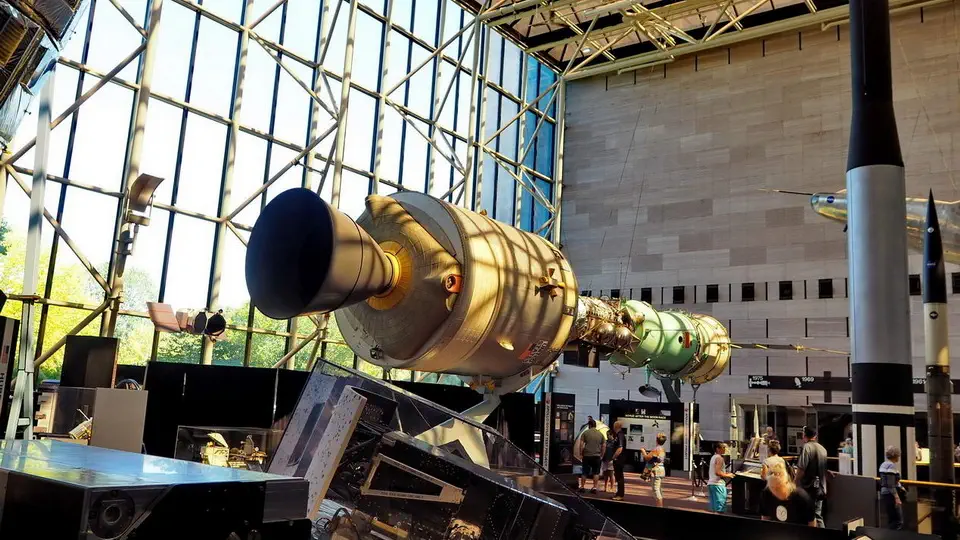
In addition, visitors can explore equipment used to manage a large airport, as well as hangars where aircraft are maintained and repaired. However, the main exhibition in the nation’s capital is no less impressive. Inside its vast halls, all sorts of flying machines are displayed or suspended from the ceilings, along with equipment used in space missions.
The exhibitions at the National Air and Space Museum are updated occasionally, each change following a specific theme. During our visit, the main topic was the exploration of space and celestial bodies of the Solar System, divided into several fascinating sections.
The National Air and Space Museum and Human Expeditions to the Moon
Right after entering the museum, we were greeted by the Lunar Module from the successful Apollo 11 mission of 1969. Nearby display cases contained other memorabilia from that historic event, along with a wealth of information about the American presence on our natural satellite.
After a brief discussion, Magda and I concluded that the conspiracy theories circulating around the world about the sudden end of lunar missions do make you think — and they do have some factual grounding. Quite unexpectedly, in 1972, the lunar project was shut down, and all further missions were cancelled. What’s even more intriguing is that during the six American landings on the Moon, nearly 400 kilograms of rocks and lunar minerals were collected and brought back to Earth — along with thousands of samples of soil, dust, and various sediments.
The most fascinating part, however, is that most of these materials were sealed away in NASA’s vast underground storage, and more than half of them have never been opened or analysed to this day. Quite curious, isn’t it?
Back to reality — besides the spacecraft, rockets, and equipment used for lunar landings and exploration, visitors can also see the training areas and lunar simulators built for astronauts. In the 1960s, artificial craters, canyons, and other obstacles were created in Arizona to help prepare future astronauts for their missions. The lunar section of the National Air and Space Museum is absolutely fantastic — it tells the entire story of humanity’s journey to the Moon. I can highly recommend visiting this part of the museum!
National Air and Space Museum in Washington, D.C. – Aviation History
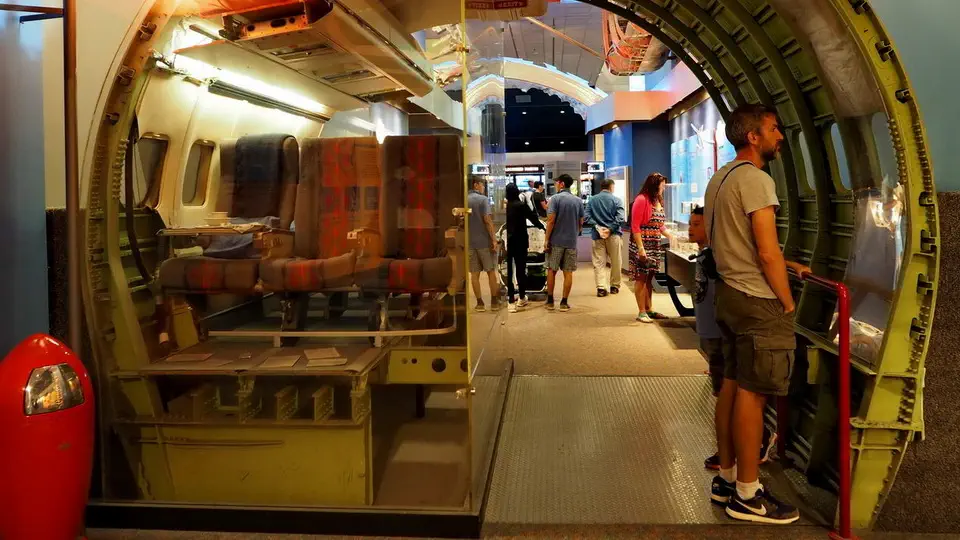
The aviation history section at the National Air and Space Museum in Washington is truly impressive. In addition to an enormous collection of informational materials, demonstrations, films, and interactive games, visitors can see up close the first flying machines used by early pioneers who dared to rise above the ground and fulfil their dreams.
This part of the museum is called the Boeing Milestones of Flight Hall — a name that perfectly reflects its purpose: to showcase the milestones of aviation history.
Spirit of St. Louis – First Flight Over the Atlantic Ocean
High overhead, the famous Spirit of St. Louis was suspended. It was on this inconspicuous piece of sheet metal and a few tubes that Charles Lindberg flew from New York to Paris in 1927. Lindberg’s machine then went into mass production, where it was called the Ryan M2.
Wright Flyer – The Wright brothers’ first aeroplane
In a special room stands an even older machine – the famous Wright Flyer. Created by the Wright brothers, this aircraft was the first to possess its engine and take off from the ground. It’s frightening to think, looking at the intricately interconnected pieces of wood covered with thin silk, that anyone dared to take to the air in such a thing. And although the Flyer I only covered 36 meters on its first flight, it signalled to the world that an era had begun in which humans would soar like birds.
Bell P-59 Airacomet – America’s first jet fighter
This marvel, now 80 years old, first took to the air in 1942. It looks beautiful and menacing. Although the Airacomet never saw combat, it was a remarkable achievement, and its flights contributed to the development of subsequent jet fighter models.
Bell X-1 – The sound barrier has been broken
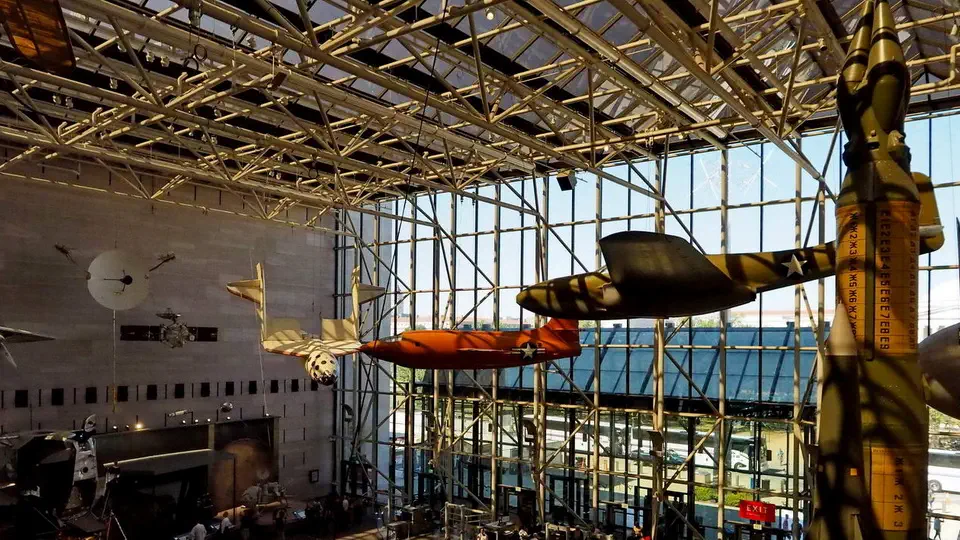
From the very beginning, the Bell X-1 was designed as a purely experimental aircraft. Its purpose was to help humans break the sound barrier, which until then had seemed impossible to overcome. That belief was shattered by Charles “Chuck” Yeager, the American test pilot who made history by flying the XS-1 — the abbreviation standing for Experimental Supersonic. The specific aircraft used in the experiment was named “Glamorous Glennis,” and it’s the very one you can see today at the museum in Washington.
In 1947, Yeager reached a speed of 1,126 kilometres per hour, which corresponds to Mach 1 — the speed of sound.
To this day, there’s still a dispute between the United States and Germany, as the Germans claim that one of their pilots in a Messerschmitt Me 262 had broken the sound barrier just days before Yeager did. Unfortunately, there is no solid evidence to support that claim.
In the Milestones of Flight Hall, alongside aircraft that pushed the limits of aviation, visitors can also admire space equipment from the very dawn of humanity’s ventures into space.
Mercury Capsule MA-6 Friendship 7 – John Glen, the first American in space
The first living creature that the Americans sent into space was a chimpanzee named Enos. He completed his first orbital flight, which lasted more than three hours, and safely returned to Earth in 1961. Just a month later, NASA launched the Mercury spacecraft with astronaut John Glenn on board.
The Mercury-Atlas 6 mission was a complete success — both the astronaut and the Friendship 7 spacecraft performed flawlessly. This historic flight paved the way for further space missions, ultimately leading to the Moon landing.
The Friendship 7 space capsule can now be seen at the National Air and Space Museum. Although it was considered a true technological marvel at the time of its flight, today it’s difficult to imagine anyone daring to climb into such a tiny capsule and be launched into space.
Pioneer Probe – Exploring the Moon
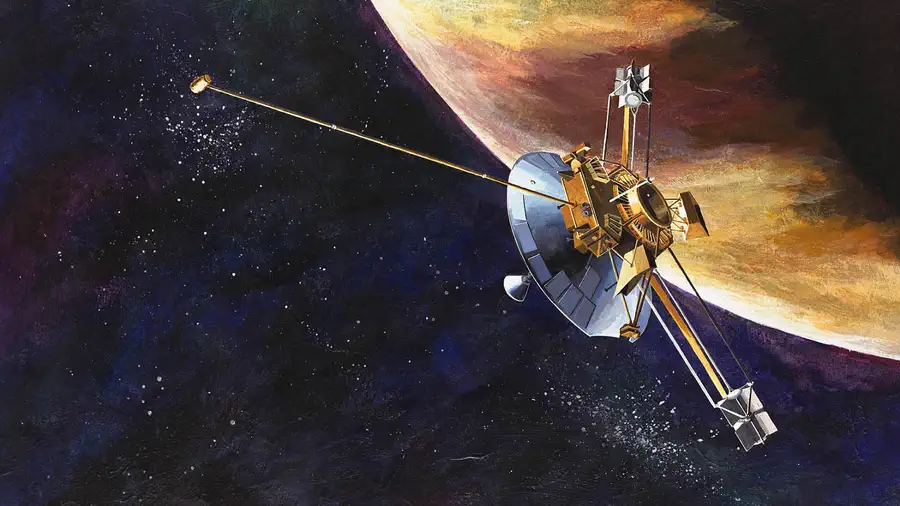
The Pioneer space program was the first major project of the newly established NASA. The probes built for this program were designed to study our natural satellite. Although the program experienced many setbacks, it contributed a vast amount of scientific data.
From 1965 onward, the Pioneer program was expanded, and subsequent satellites were sent much farther, beyond the Moon’s orbit. Pioneer 10 and Pioneer 11 became the first human-made spacecraft to reach Jupiter, and the first to achieve the velocity necessary to leave the Solar System. Later stages of the program included sending probes toward Saturn and Venus, with the Venus missions even managing to collect samples of its atmosphere.
At the museum in Washington, visitors can see a Pioneer satellite that was built but never launched into space.
Mariner Space Probes – The First Earth-Based Machines to Orbit Alien Planets
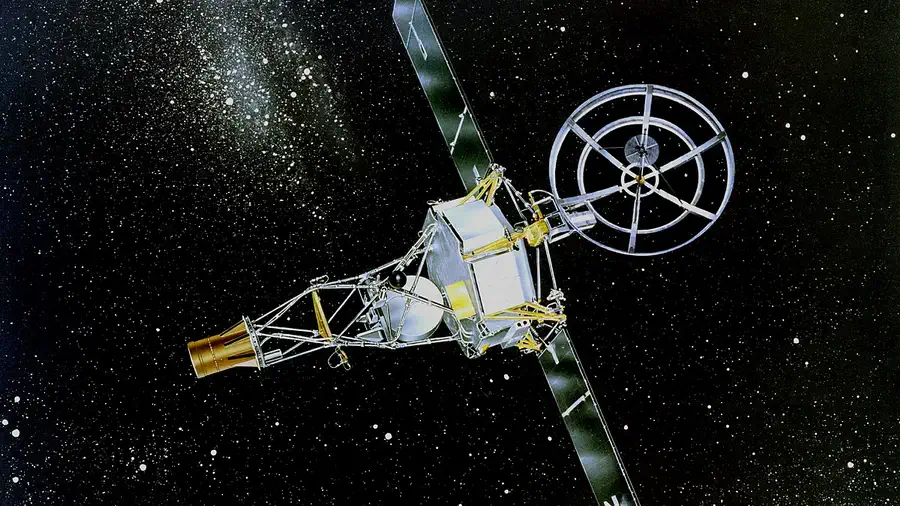
The Mariner program was a massive undertaking, and even today, the missions carried out as part of it remain incredibly impressive. Between 1962 and 1973, the United States launched seven spacecraft to explore the Solar System. Originally, ten were planned, but three were lost early in their missions.
The Mariner satellites achieved numerous discoveries and overcame many challenges. They made it possible to study planets such as Mercury, Venus, and Mars. Among their most important accomplishments were: flybys of Venus, flybys of Mars, and the milestone of Mariner 8 becoming the first artificial satellite to orbit another planet. In addition, the probes performed multiple flybys of Venus and Mercury, greatly expanding humanity’s knowledge of our neighbouring worlds.
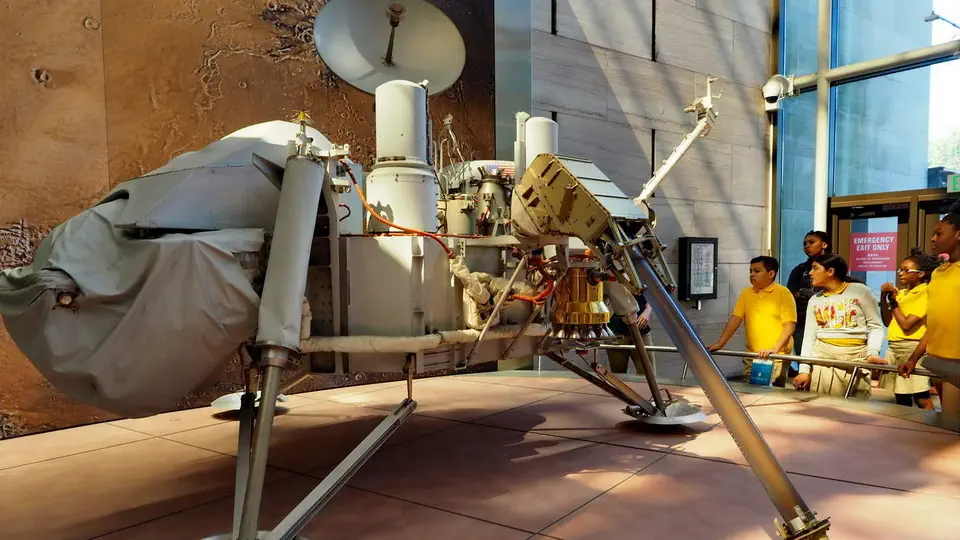
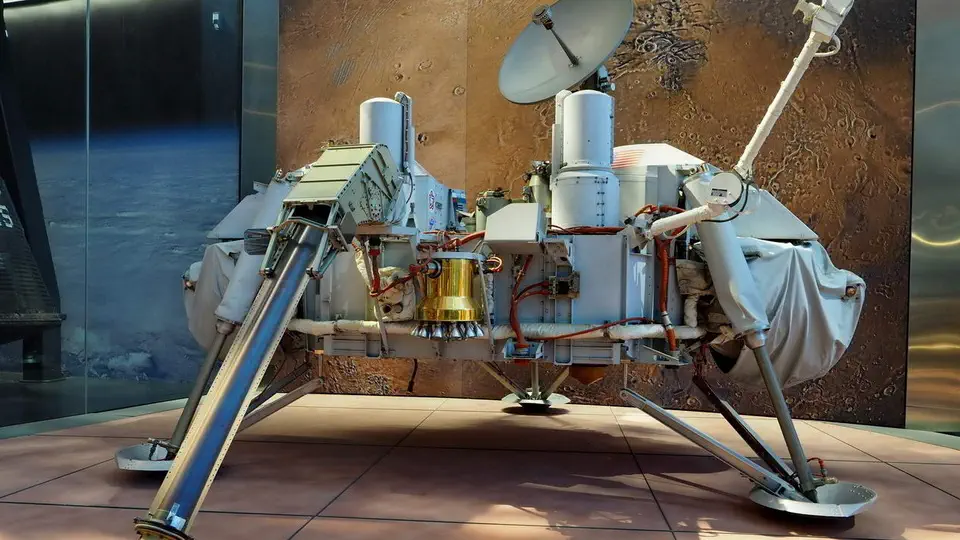
The Viking Mars Exploration Program has begun
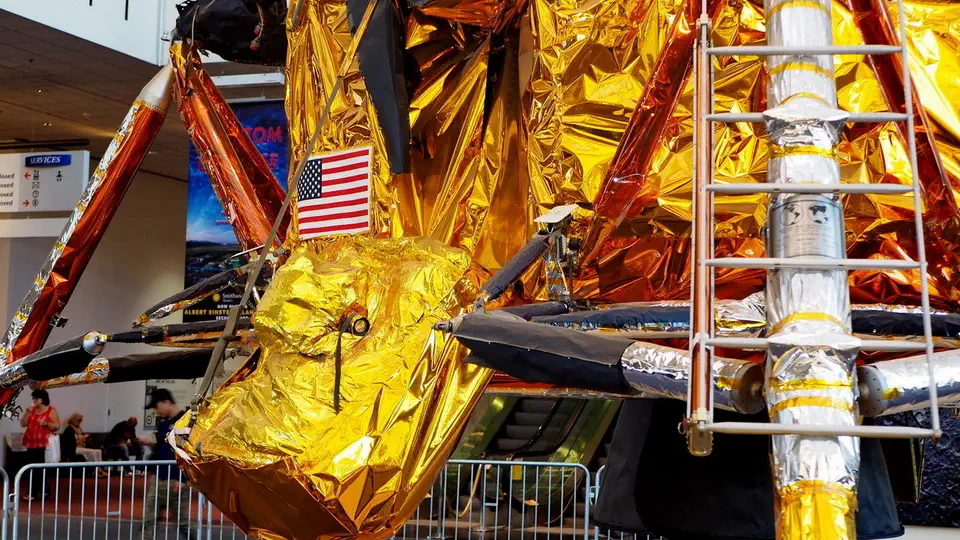
A particularly fascinating section of the National Air and Space Museum is dedicated to the Viking program. This involved two spacecraft sent to Mars — Viking 1 and Viking 2. The complexity of these machines is striking when you consider that the first Mariner satellites weighed only 200 kilograms, whereas the Viking probes tipped the scales at over 3.5 tons, with the Mars lander alone weighing more than a ton.
Both spacecraft had very specific missions. Their primary goal was to conduct experiments to determine whether life as we know it on Earth could exist on Mars. They also performed extensive analyses to answer whether life ever existed or currently exists on the Red Planet. Additionally, the automated probes measured atmospheric pressure, composition, and temperature, as well as soil temperature.
Thanks to the Viking program, our understanding of Mars expanded in ways that were previously unimaginable. It was during this era that the idea of sending humans to Mars was born — a plan that, unfortunately, has yet to be realized.
SpaceShipOne private business launches into space
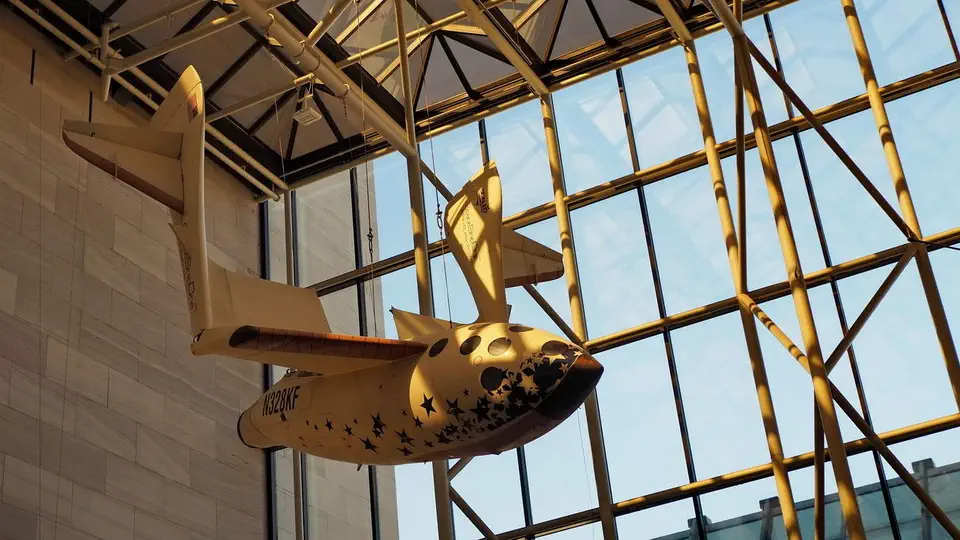
The SpaceShipOne was the first entirely private venture aimed at conducting commercial space flights. The spacecraft was built by Scaled Composites, a company renowned for designing extraordinary aircraft. You may have heard of their Rutan Voyager project, which produced an aeroplane capable of flying around the world without refuelling.
The SpaceShipOne completed several commercial spaceflights, winning the Ansari X PRIZE in the process — a $10 million award sponsored by the X PRIZE Foundation. The purpose of the prize is to encourage and stimulate people to tackle extremely challenging goals. The competition stipulated that the winner would be the first private company to send at least three people into space. Announced in 1996, the prize was claimed by SpaceShipOne in 2004.
National Air and Space Museum 50th Anniversary of the Moon Landing
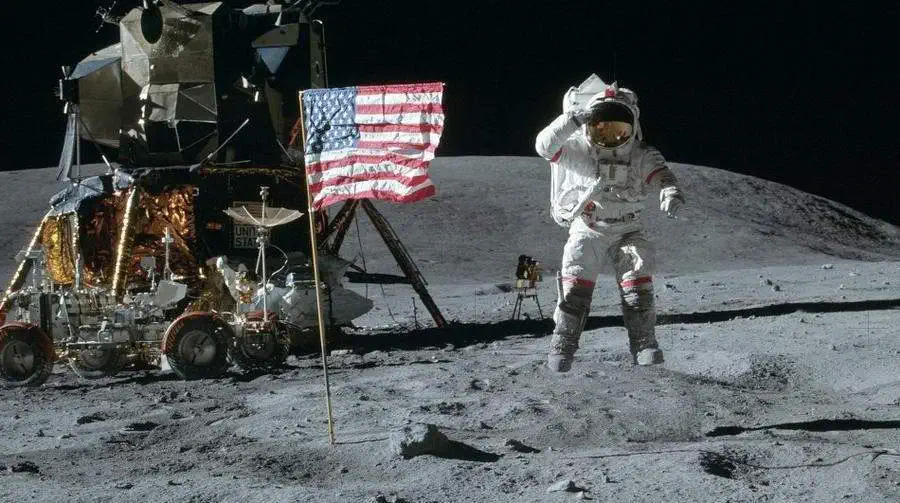
A special temporary exhibition is dedicated to the astronaut who was the first human in history to set foot on another celestial body. When Neil Armstrong descended the ladder of the Eagle lunar module onto the Moon’s surface, he spoke the famous words:
“That’s one small step for man, one giant leap for mankind.”
The exhibition allows visitors to follow the history of the Apollo program, its preparations, and listen to interviews with the people who worked on it. Many personal artifacts from astronauts and their families are on display, along with a vast collection of photos and films documenting humanity’s time on the Moon.
During our visit, Magda noticed how unfair history can be. The Apollo mission included three astronauts: Commander Neil Armstrong, Lunar Module Pilot Buzz Aldrin, and Command Module Pilot Michael Collins, who remained in orbit. Yet in public memory, only Neil Armstrong is widely remembered — the contributions of the other crew members are largely overlooked.
One of the highlights of the exhibition is a piece of lunar rock displayed in a glass case — a tangible fragment of human history on the Moon.
National Air and Space Museum Cold War Aviation
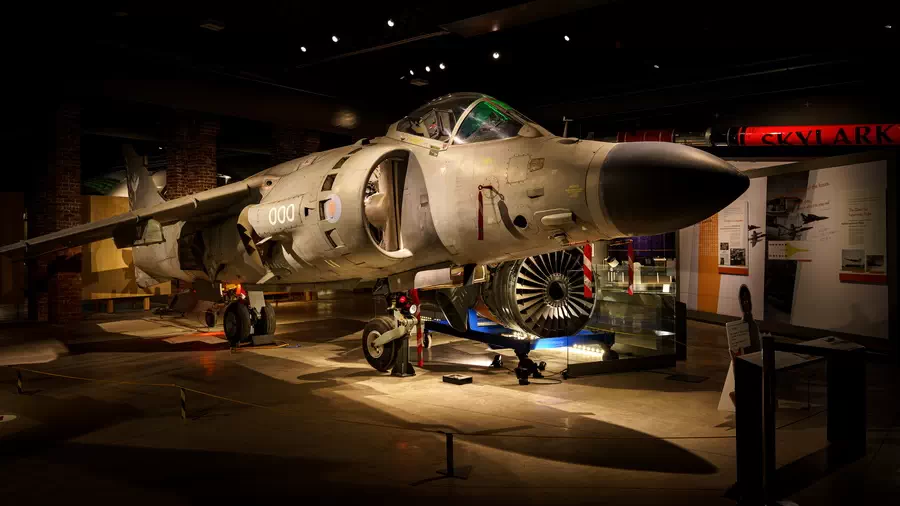
Another fascinating section of the museum is the collection of military aircraft produced during the Cold War. The machines on display participated in the Vietnam War, the Korean War, and many other conflicts around the world. We were particularly impressed by the war exhibit at the Washington museum.
The aircraft here are true masterpieces of military engineering — deadly, fast, powerful, and aggressive, exactly as machines designed for combat should be. The collection ranges from the world’s fastest spy plane, the SR-71 Blackbird, to Soviet fighter jets and missiles. It’s an incredibly extensive section, with so many remarkable pieces that it’s hard even to list them all, let alone describe them. A real treasure trove for enthusiasts of lethal flying machines.
National Air and Space Museum – Exploring the Universe
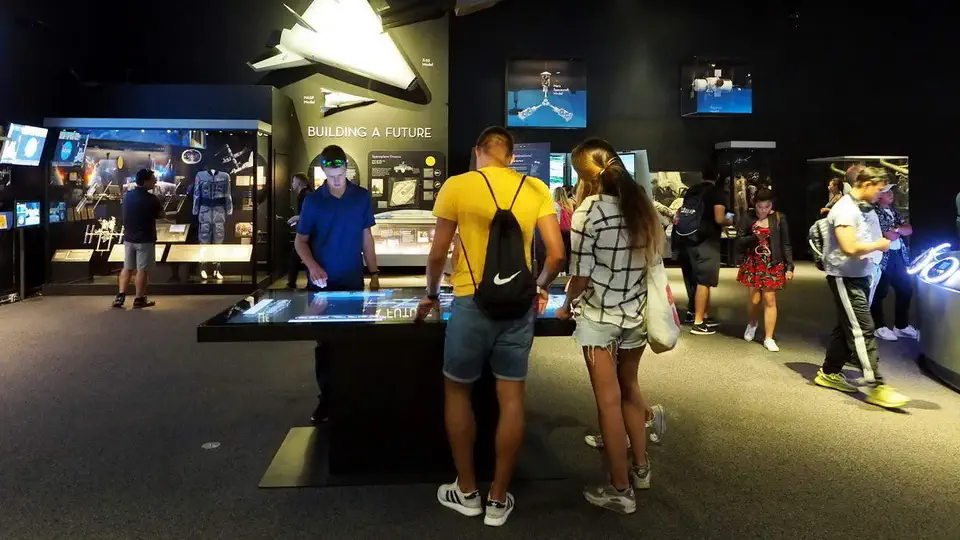
The surrounding universe is full of mysteries and enigmas. A part of the National Air and Space Museum is dedicated to the science that seeks to unravel these secrets. Humans have always loved puzzles, and our curiosity pushes us further, never allowing us to stop. And where could there be more mysteries than in the star-studded sky? Even the ancients gazed upward, trying in their own way to explain what they saw. That’s why Stonehenge and other early tools and instruments were built — to help understand the laws that govern the cosmos.
The exhibition on scientific space exploration is a tribute to human curiosity. It showcases observational and research instruments, from the oldest telescopes, spyglasses, and hourglasses to modern radio telescopes and microwave sensors capable of detecting the tiniest particles that make up our world. Visitors can see how a jet engine works, learn the principles behind lasers and radio waves, and explore the workings of a huge disassembled telescope, whose twin model orbits Earth to observe distant galaxies.
Here, the progress of science and the knowledge it brings are visible firsthand. Models of measurement instruments allow visitors to understand their function and witness the extraordinary harmony of the universe. Yet the sheer number of questions that remain unanswered reminds us that we are still at the beginning of our journey toward knowledge.
What else awaits us at the National Air and Space Museum
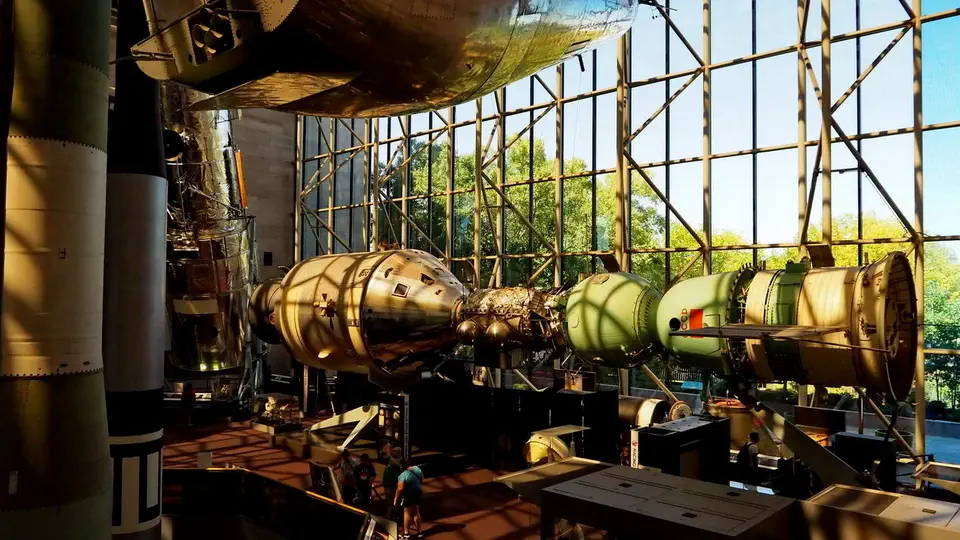
The Washington Museum is enormous. It boasts exhibitions and thematic sections that would take days to explore, or even just visit. Let’s briefly explore what else this extraordinary place has to offer.
Commercial aviation
In addition to the exhibitions mentioned above, you’ll find a commercial aircraft exhibit at the Washington museum. The oldest aircraft, used to carry the first passengers, share space with beautiful and expensive jets. Some were built for specific individuals with all their whims. Here, you’ll find a beautiful Embraer Legacy 600 and a luxurious Hawker Beechcraft Premier. There’s also a mysterious aircraft where celebrities and the wealthy used to party during long flights.
Sports aviation
The exhibitions, which tell the story of sports aircraft, feature models of ancient biplanes, which were used to learn the difficult art of aerial acrobatics. Right next to them are modern aerobatic planes, essentially a giant engine with a small cockpit and wings attached. There are also delicate, airy gliders that can soar in complete silence. I’ve always wanted to try this noble sport… maybe someday?
Man in space
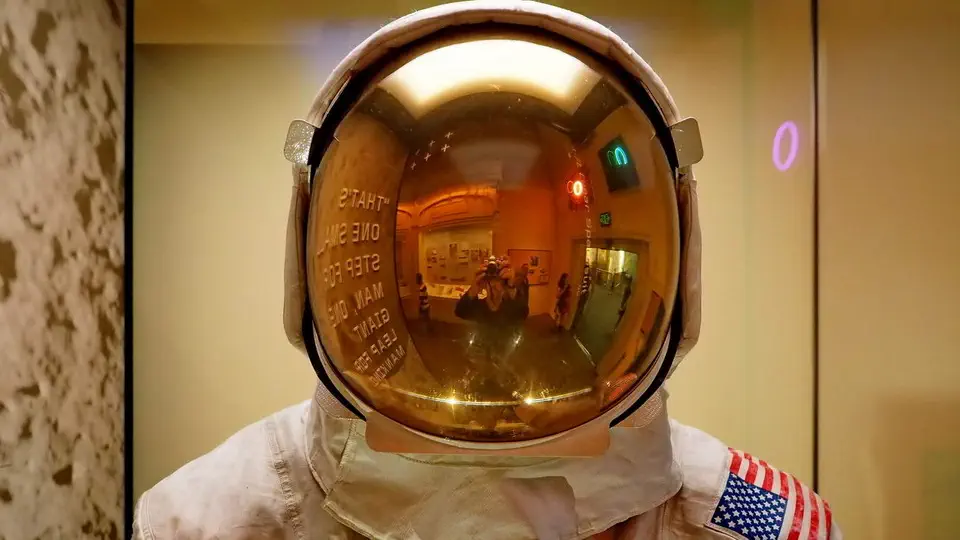
A special exhibition focuses on humans in space. Here, you can see spacesuits, jet backpacks that allow astronauts to move in zero gravity, and the tools used for work in space. Visitors can get a glimpse of how time passes for people aboard the space station, including the toilet and shower astronauts use, and even sample the food prepared in the onboard kitchen.
Visiting this part of the museum opens your eyes to the many challenges and dangers humans face in space — things we often never think about. The museum also frequently hosts meetings with NASA staff, scientists, and even astronauts, offering a unique insight into life beyond Earth.
Science exhibition for children
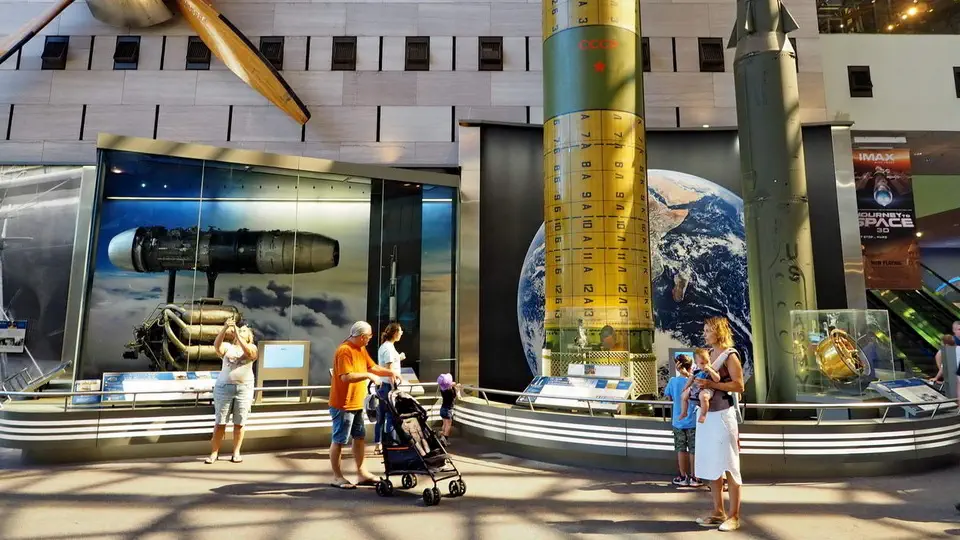
It’s funny, but Magda and I both had a great time exploring the children’s science section of the museum. Here, you can playfully learn about the operation of many of the devices and machines that surround us every day. You’ll learn how a microwave oven, a television screen, or a complex processor works. You’ll also find answers to questions about the laws of physics, chemistry, and many other sciences whose principles help us in our daily lives.
Jet planes and rockets
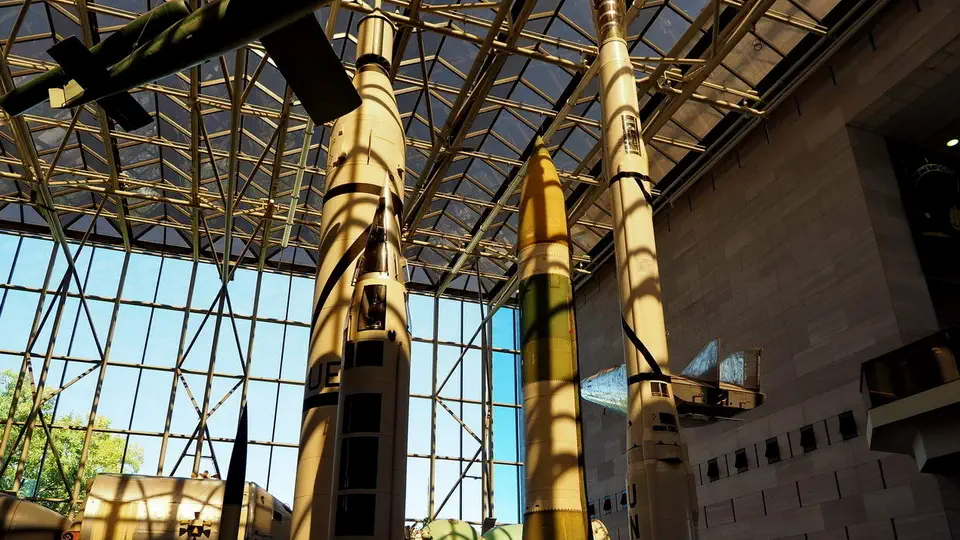
This is a real treat for rocket enthusiasts. A wealth of military equipment is on display, as well as civilian-use missiles. Here, we’ll learn about the first jet aircraft and missiles. Of particular interest is the mythical German Wonder Weapon, which, fortunately, the Nazis never saw coming. We can trace the development of the famous Tomahawk missiles and others in service with the U.S. Army. There’s also a wealth of equipment from the former USSR and China. We’ll discover that a rocket isn’t just a tube stuffed with fuel. Operating it requires a wealth of electronics, sensors, and radars. All of this is highly complex and intricate.
In addition to a wealth of aircraft, the museum boasts an IMAX theater, a restaurant, and a gift shop. There are dozens of simulators and educational trails that allow you to trace the development of various sciences and historical events. Personally, I think it’s one of the most interesting technology museums I’ve ever visited.
National Air and Space Museum practical information
The National Air and Space Museum consists of two exhibitions in two different locations.
- Washington DC Central Museum – 655 Jefferson Drive, SW Washington, DC 20560
- Washington Dulles International Airport Branch – 14390 Air and Space Museum Parkway, Chantilly, Virginia 20151
The two sites are almost 50 kilometres apart, and don’t even think about trying to visit them both in the same day. You simply won’t see either one well, and it’s better to skip the casual viewing and just sit at the Lincoln Memorial.
Both museums are free, but parking at the airport costs $15. Forget about parking in downtown Washington.
Opening hours for both museums: 10:00 AM to 5:30 PM. It’s a good idea to arrive early and plan a full day’s visit. That’s my advice.
Because the museum is so vast and holds so many secrets you’ll never discover on your own, it’s a good idea to go with a guide, which I highly recommend.
National Air and Space Museum interesting facts
- One of the museum’s exhibits is the flight suit of Polish pilot Franciszek Jarecki. He was the only defector from communist Poland to steal a fully operational MiG-15 and deliver it to the West. Jarecki was only a 22-year-old pilot when he secretly slipped across the entire Soviet sphere of influence from the Słupsk airport to Denmark. It was the first operational MiG-15 to fall into American hands. Analysis of the aircraft was crucial in the ongoing Korean War.
- The National Air and Space Museum is the third most visited museum in the world, with over 7 million visitors last year. The Louvre in Paris has been ranked first for years, and the American Museum of Natural History in New York is ranked 12th.
- The museum spent several hundred thousand dollars preserving Neil Armstrong’s flight suit, which he landed on the moon on July 21, 1969. Funds were raised from online users and donors.
- The National Air and Space Museum is only partially funded by federal funds. Most of the money for the institution’s development and maintenance comes from private donors.
- The museum has won numerous awards, not only for the size and number of its exhibits, but above all for their uniqueness.
- At one time, the newly established espionage department sparked considerable controversy. Many people were outraged by the disclosure of intelligence techniques and secrets. To all these accusations, the head of the CIA responded with a smile that there was a vast gulf between today’s techniques and those shown in the exhibition. We can only guess at how advanced espionage programs are today.
- The exhibitions at the National Air and Space Museum can accommodate over 20,000 exhibits. The museum possesses a collection more than three times larger.
- The Birth of a Legend – The museum was founded in 1946, and its original name was the National Air Museum. Initially, it focused solely on the history of aviation.
- A New Era and a Name Change – In 1966, when artifacts related to space exploration began to be added to the collection, the name was changed to the National Air and Space Museum.
- Two Massive Facilities – The museum operates in two locations – in the heart of Washington, D.C., on the National Mall and in Chantilly, Virginia, near Dulles Airport.
- Hangers Filled with Technological Marvels – The Chantilly branch, known as the Udvar-Hazy Center, opened in 2003. This space resembles enormous hangars, displaying the largest machines – aeroplanes, rockets, and space shuttles.
- An Impressive Collection – The collection houses approximately 60,000 exhibits – from the first test flight designs to the latest advances in space technology.
- Most Famous Treasures – The museum boasts, among others, the Wright Brothers’ original 1903 aeroplane, the Spirit of St. Louis by Charles Lindbergh, John Glenn’s Friendship 7 capsule, and the Apollo 11 command module.
- The Beginnings of Dreams of Flight – Exhibitions show how we moved from simple structures and human dreams of flight to the era of interplanetary flight.
- Massive Modernization – Since 2018, the museum has been undergoing a complete renovation. All galleries are being refreshed, the facade, and the building’s technical systems are being modernized.
- New Galleries and Exhibitions – The first eight new galleries will open in 2022. Additional sections of the museum are gradually opening, brimming with modern technology and interactive exhibits.
- Record-Breaking Visitorship – From the very first days after its opening, the museum has broken attendance records. The number of visitors exceeded one million after just 25 days of operation!
- An Observatory for Everyone – A public astronomical observatory operates on the museum grounds, where you can observe the sky through professional telescopes – both day and night.
- Touch the Moon! – One of the most frequently visited attractions is a fragment of lunar rock that anyone can touch. It’s the only exhibit of its kind open to the public.
- The World’s Fastest Aeroplane – Among the exhibits is the legendary Lockheed SR-71 Blackbird – the fastest jet aircraft in history, capable of flying at speeds over Mach 3.
- Controversial Exhibit – Enola Gay – In the Udvar-Hazy hangar, you can see the B-29 Enola Gay bomber that dropped the atomic bomb on Hiroshima. It’s one of the most symbolic and controversial exhibits.
- Space Shuttle Discovery – In the same hangar, you’ll also find the Discovery spacecraft, the hero of numerous NASA missions. The sight of this aircraft is truly impressive.
- Watching Conservators at Work – In a special restoration hangar, you can watch experts restore historic aircraft, restoring them to their former glory.
- New entrance and modern look – During the renovation, the museum’s main entrance was changed – it now welcomes guests from the Mall side with an attractive roof and a modern security system.
- Free Tours – Admission to the museum is free. Only the building on the National Mall requires free tickets with a specific visit time.
- A Cosmic Renovation Budget – The total cost of the museum renovation is nearly $1 billion – an investment in culture, technology, and top-tier education.
- Scientific Research Centre – More than just a tourist attraction, the museum also serves a scientific purpose. It houses the Centre for Earth and Planetary Research, which conducts research projects in space exploration and planetary geology.