Fitzwilliam Museum in Cambridge is a magnificent art gallery and museum of antiquities at the University of Cambridge in England. I must admit that this place has the most beautiful interiors of all the museums I have had the pleasure of visiting, and I am sure you will love it too. While you’re there, you can also plan a visit to other museums, such as the Cambridge Museum of Zoology, or the famous Great St Mary’s Church in Cambridge, which is a Grade I listed building and one of England’s Great Churches.
In the article below, I will tell you about the Fitzwilliam Museum in Cambridge, its history, and the exhibits and artifacts you can see during your visit.
Fitzwilliam Museum in Cambridge practical information
- The Fitzwilliam Museum is an incredibly popular place to visit, so I recommend visiting Cambridge to explore its museums and art galleries outside of the tourist season, if possible.
- Remember that although the museum is free to enter, you should book a ticket in advance, as there are limited numbers of people inside.
- As mentioned above, the Fitzwilliam Museum is free to visit, but you are welcome to make a donation of any amount you feel is appropriate. Visitors usually leave a donation of £5 or £10.
- The museum is open to groups, but remember that if there are more than ten of you, you must notify the museum.
- The Fitzwilliam Museum is located at Trumpington Street, Cambridge, CB2 1RB.
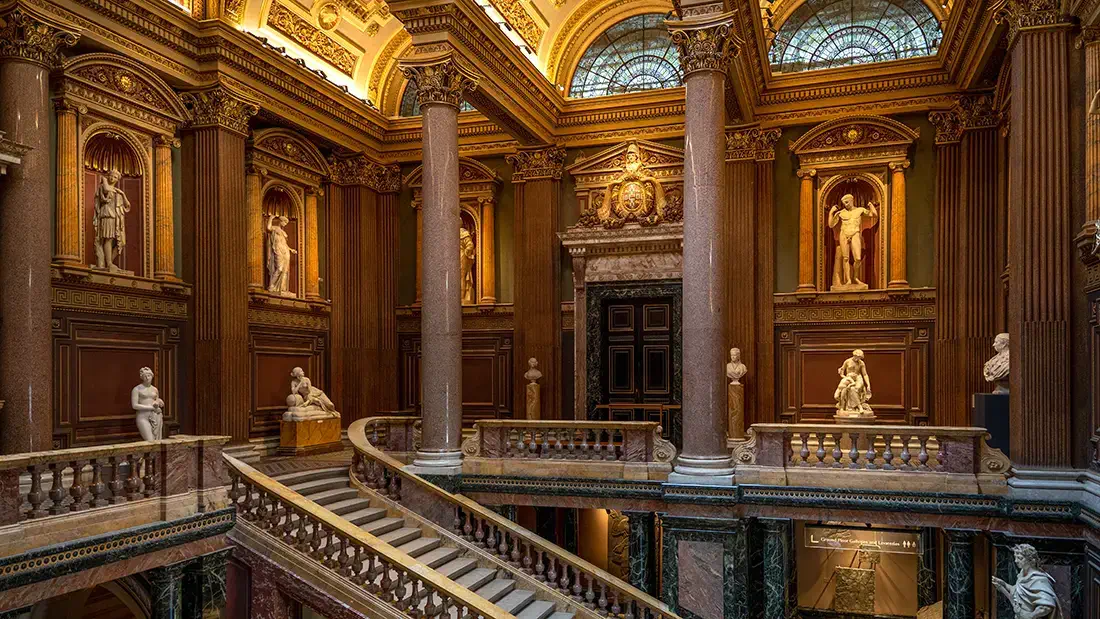
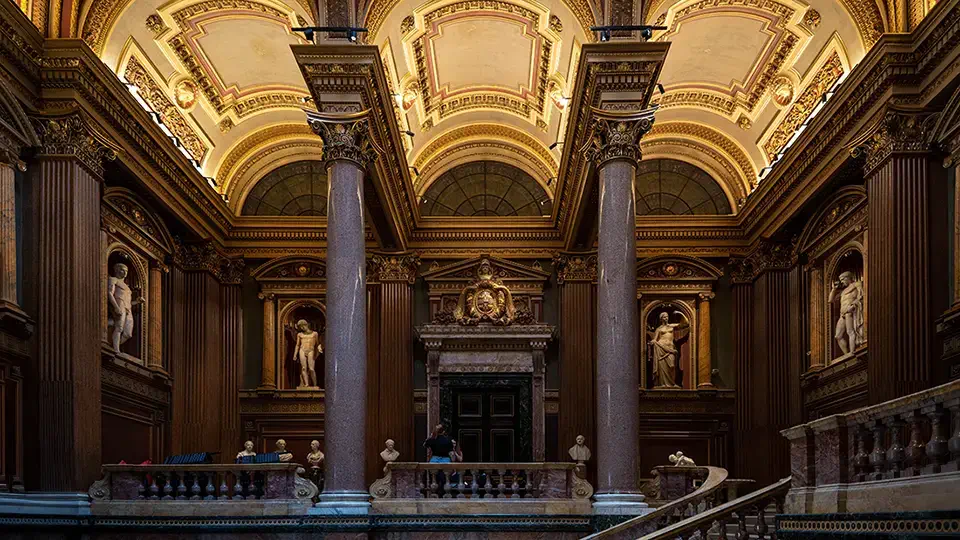
- You have two options for entering the museum, from the Founder’s Entrance (steps) and the Courtyard Entrance, which is accessible for people with limited mobility. I recommend the first entrance, the view inside the museum almost knocked me off my feet. I’m not exaggerating when I say that it’s one of the most beautiful museum interiors I’ve seen.
- Cambridge is an old city with narrow streets, so don’t expect to find parking near the museum, which is almost in the city center. I know what I’m talking about, we lived in Cambridge for over a year and our car was often parked a few kilometers away. I recommend parking in one of the suburban car parks and walking into the city, or using the good public transport, or like most students and tourists, renting a bike.
- You can take pictures in the museum, of course with the flash off. In addition, the photos must be for personal use, if you are planning a commercial session, you must inform the museum staff and obtain permission.
- The museum is large and the tour routes are complicated, which means it is easy to miss valuable and interesting exhibits. That is why I recommend getting a map of the museum exhibitions. You can find it at the main entrance or on the official website of the museum.
- The museum hosts meetings and conventions, often with the participation of famous people. If you are interested in such events, I suggest you check the museum website and see what will be happening during your visit.
- In the museum you will find a small café, I recommend strong black coffee and homemade carrot cake.
- Fitzwilliam Museum in Cambridge is open:
- Tuesday through Saturday — 10:00 a.m. to 5:00 p.m.
- Sundays — 12:00 p.m. to 5:00 p.m.
- The museum is closed on Mondays (as are many others, so plan your Cambridge visit accordingly to avoid disappointment).
Fitzwilliam Museum in Cambridge and a tour of the beautiful museum
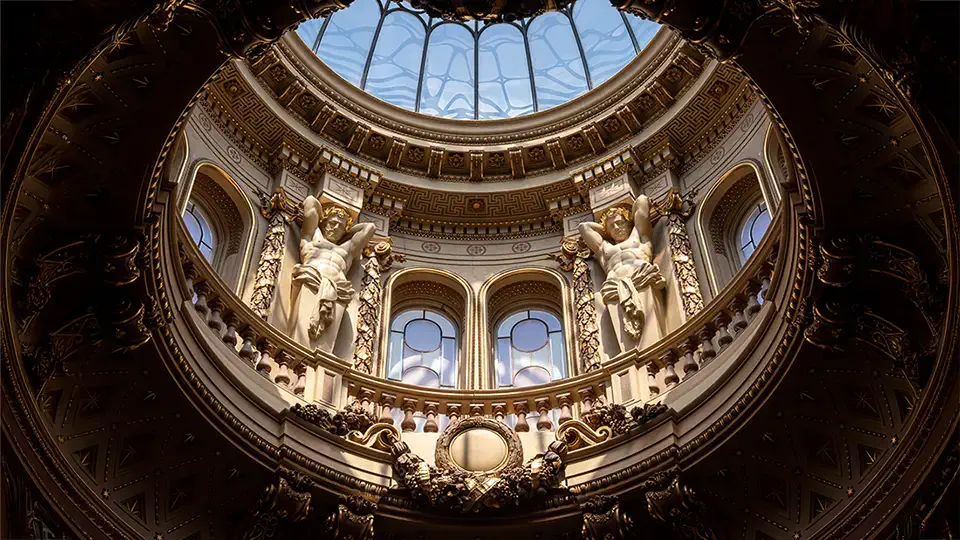
The greatest impression, every time I enter the museum, is made by the Palladian Entrance Hall, the entrance hall designed by Edward Middleton Barry. It is an incredible interior that is, in itself, one of the building’s main attractions. As you climb the stairs, take a moment to look up and admire the intricately decorated oculus, a ceiling window that illuminates the dark space filled with sculptures and columns.
Since we lived in Cambridge for over a year, I had plenty of opportunities to visit the Fitzwilliam Museum. For convenience, I always chose weekdays, preferably before noon, as that’s when the museum is the least crowded. This gives you a great chance to take good photos and peacefully enjoy the exhibits and artworks on display.
The museum is vast and houses many priceless artifacts, so planning your visit well is essential. A guidebook or a simple museum map, which you can download from our website, will be helpful. Oh, and if you’re looking for something specific, just ask one of the staff members. They are deeply dedicated to the museum and will gladly share stories about the treasures housed within.
Fitzwilliam Museum in Cambridge and the works of art it houses
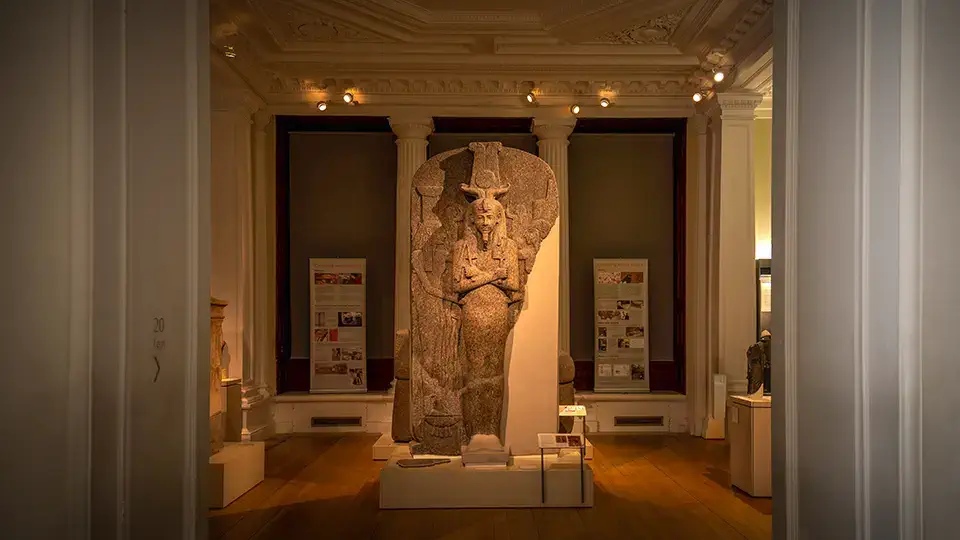
The Fitzwilliam Museum is divided into thematic departments and historical periods. I have always been fascinated by antiquity, so I had a great time exploring the section dedicated to this era. I am sure you will find a space that interests you as well. The museum houses artworks, paintings, and artifacts spanning from the ancient world to modern art, with the entire collection divided into five departments. These are: Antiquities; Art; Coins and Medals; Rare Manuscripts, Books, Documents, and Maps; and Painting, Drawing, and Prints.
The collections are displayed across three floors, and I will tell you more about them below.
The lowest level of the museum – Antiquity and the Middle Ages
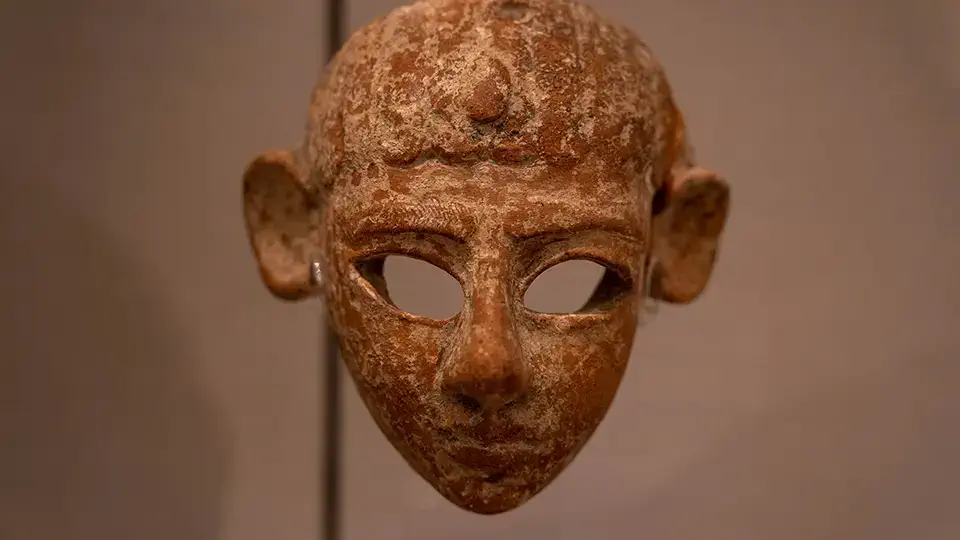
On the lowest level of the museum, you will find magnificent artifacts from ancient Rome and Sudan. Here, you will get to know the most prominent rulers of the time, as well as the artists who created their masterpieces. I loved this section so much that I was practically dragged away to explore the upper floors. I am certain I will return there many more times. This area features fascinating sculptures of gods and Roman emperors, as well as ancient vessels, weapons, and coins.
Beyond the antiquities section, this floor also houses rooms for meetings with artists and art enthusiasts, workshops, and educational studios. You will also find cloakrooms, a restaurant, and restrooms—it’s a good idea to use them before continuing your visit.
The ground floor of the museum is a real cave of treasures
On the ground floor, you will find exhibitions that tell the story of the ancient world. This level houses collections of artifacts from ancient Egypt, Greece, and Rome, as well as a rich assortment of items from the Middle East and Asia. Particularly fascinating are the displays of Japanese and Chinese ceramics, along with artworks from Korea. There is also a vast library here, though access is restricted. If you wish to visit, you must request permission from the museum authorities in advance, ideally citing academic research or material collection for a publication as your reason.
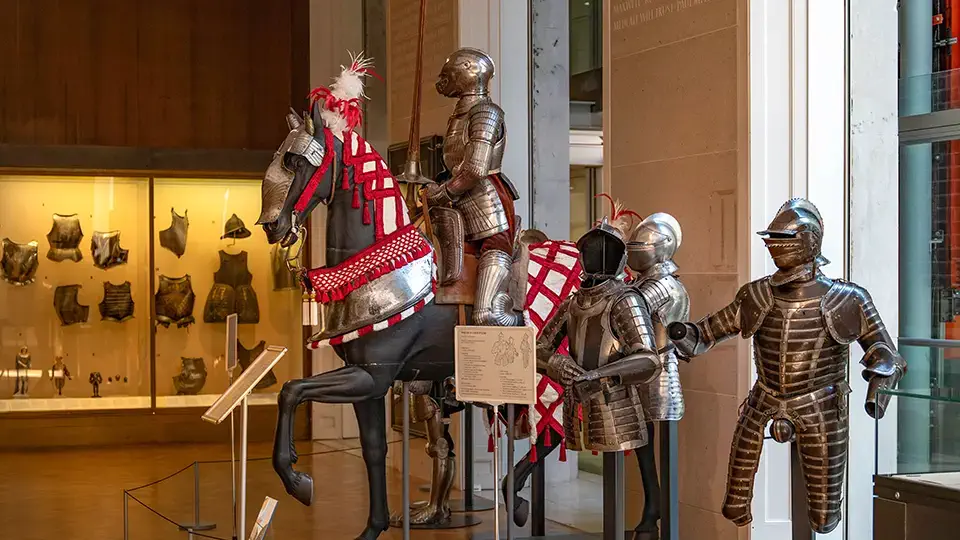
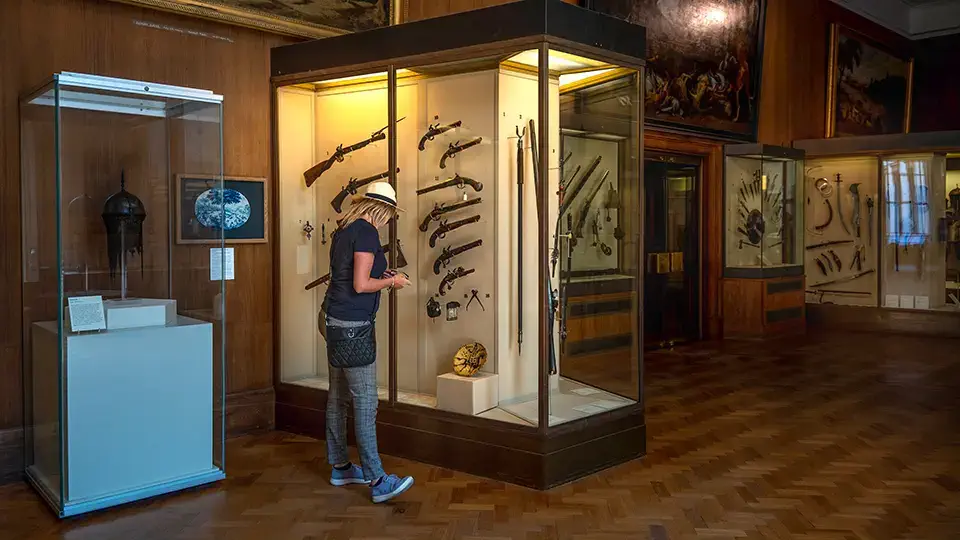
One of the most popular sections of the museum is the armory. Here, you can explore an exhibition of edged weapons, armor, and various military artifacts from different eras. Battle armor is displayed in realistic poses, while swords, rapiers, daggers, and other weapons are arranged in glass cases. Few people today realize just how vast the range of weaponry was throughout history, used to spread fear and death.
Another highlight of this level is the exhibition of European and British art from the 11th to the 16th century. As you know, the medieval period was dominated by religious and sacred art. The Fitzwilliam Museum’s collection includes paintings and sculptures filled with themes such as crucifixion, flagellation, flaying, and martyrdom. If you have an interest in this historical period, you will be captivated.
The Middle Eastern art section is another must-visit on the ground floor, located next to the medieval artifacts rooms. This area features sculptures, ceramics, coins, furniture, documents, as well as Arabic weapons and clothing. It is a truly fascinating and immersive collection.
Upper Floor of Cambridge Museum – European Art
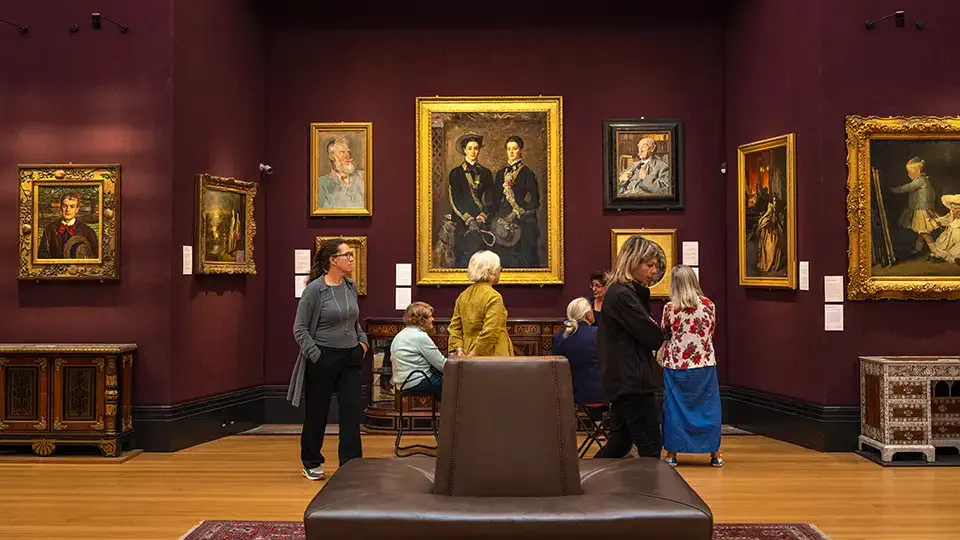
The top floor of the museum focuses on artworks from Europe spanning the 19th to the 20th century. Here, you will find paintings and sculptures by renowned artists, as well as documents and memorabilia related to them. As you walk among these masterpieces, it’s impossible not to notice the tendency of artists to seek inspiration from—or even imitate—the works and styles of ancient masters. Personally, I have no issue with this, as I greatly appreciate Neoclassicism in both art and architecture.
In separate rooms, you can explore works by Italian, French, and British masters from the past few centuries. I enjoy painting, but rather specific pieces than entire periods or styles, so I moved on fairly quickly. However, my dear friend, you are free to stay as long as you like. In the next room, you will find paintings by Spanish and Flemish masters.
On this floor, you can also visit the reading room, where you can browse the museum’s collection of antique books and documents. A user-friendly computer system makes it easy to navigate through the vast number of titles and authors. If you come across something interesting, be sure to let me know! Additionally, this floor hosts temporary and thematic exhibitions that change regularly. I recommend checking the museum’s website before your visit—you might just find something particularly exciting.
What is worth paying special attention to?
The Fitzwilliam Museum in Cambridge is very interesting, and the art and valuable objects there are worth seeing. As you wander through the beautiful, exhibit-filled interior of the museum, pay special attention to some of the works of art. Below I will list those that made a huge impression on me.
- If you are a fan of painting, be sure to seek out works by Titian, Rubens, Renoir, Vincent van Gogh or Picasso. Right next to them you will find many drawings and prints by other great masters. I am not an expert in the masters of the brush and paint, but I will remember their priceless works for a long time. One of the paintings in the collection, entitled The Last of England by Ford Madox Brown, is considered one of the eight greatest paintings created in Great Britain.
- Music manuscripts is a section full of sheet music and notes by famous British composers from the Renaissance and Baroque periods.
- My favourite section in any museum is antiquity and ancient Egypt, and in the Fitzwilliam Museum the collections on this subject are very rich and well documented. The Egyptian collection is considered to be the second best after that of the British Museum in London.
- Rothschild’s bronzes are probably the work of Michelangelo himself and are the only sculptures made in bronze by the artist. Two of the sculptures depict naked, drunk men riding panthers. It is said that Michelangelo always created what he saw, if that is the case, someone had a lot of fun at one point.
- In the section devoted to the Middle Ages, be sure to find manuscripts, including the handwritten and decorated Pontifical from 1302 and the Decree of Gratian by a monk who taught canon law at the University of Bologna. It is incredible to look at a text that is almost 800 years old.
- In the section of antiquities, pay attention to the lid of the coffin of Ramesses III and pages from the Egyptian Book of the Dead. It is also worth stopping by the coffin of Nakhefmut. Also remember the section devoted to ancient Rome, where you will find priceless coins, including the Brutus denarius, as well as a stone bust of the mad emperor Caligula.
Of course, these are just the items that impressed me; you will find dozens or even hundreds of priceless and very interesting works of art there that you will be able to talk about for years.
The History of the Fitzwilliam Museum in Cambridge
The Fitzwilliam Museum is the founder and main partner of the Cambridge University Museums network. This association also includes the beautiful Botanic Garden, which I will cover in one of my future posts. Together, they form one of the largest and most valuable museum hubs in the United Kingdom.
In 1816, the University of Cambridge received a priceless collection of artworks and antiquities gathered by Viscount Richard Fitzwilliam. In his will, he bequeathed all his possessions and a vast fortune to the university, where he had once been a student. Fitzwilliam had long believed that the university should have its own art museum, so he specified that his fortune must be used to establish a museum in his name.
His donation included his entire art collection and historical artifacts, as well as over £100,000—a staggering sum at the time. A few years later, an architect was chosen to design the new museum building (the Founder’s Building), and in 1848, the Fitzwilliam Museum officially opened its doors to visitors. Initially, the museum’s displays consisted solely of the donor’s and sponsor’s collections, but over time, new artworks were contributed by students and their families. Eventually, the museum authorities began purchasing additional exhibits using Fitzwilliam’s vast endowment.
In 1912, following the death of former Cambridge student Charles Brinsley, it was revealed that he had also donated his personal collection to the museum. His bequest included paintings, prints, rare books, and manuscripts, as well as an extensive collection of ceramics, silverware, jewelry, furniture, and various other artifacts. Suddenly, the museum found itself outgrowing its original building, necessitating an expansion. The construction took several years and was completed in 1918.
The most recent expansion took place in 2004, when a new gallery and several additional buildings were added to the original structure, enhancing the museum’s facilities for visitors today.
Fitzwilliam Museum in Cambridge information and interesting facts

- The Fitzwilliam Museum in Cambridge was established in 1848 at the initiative of Richard Fitzwilliam, a connoisseur and collector of art.
- A significant portion of Richard Fitzwilliam’s wealth came from his grandfather, Sir Matthew Decker, who amassed a fortune through the transatlantic slave trade, transporting Africans to plantations in the New World and South America.
- The collection Fitzwilliam donated to the University of Cambridge included 144 paintings, among them masterpieces by Italian Renaissance painters.
- The museum provides various services, including room rentals for meetings and conventions, consulting, and educational programs.
- The museum houses over 500,000 artifacts, most of which remain stored in the vast archives of the University of Cambridge.
- The collection at the museum is considered one of the most fascinating art collections in the United Kingdom.
- In 2006, an accident occurred at the museum when a student tripped and fell onto a display of Qing dynasty vases. The vases shattered, and the clumsy student was arrested. However, after a few days, the museum dropped the charges due to the inability to determine the exact value of the damage, as the broken ceramics were priceless. Fortunately, after months of meticulous restoration, the vases were pieced back together and can now be viewed once again. A positive outcome of the incident is that, since then, all artworks have been better secured.
- Another major incident at the museum was the theft of several Chinese jade figurines worth over £60 million. The thieves were eventually caught and are now serving prison sentences, but a significant portion of the stolen artwork was never recovered. This heist remains one of the most valuable art thefts in British history.