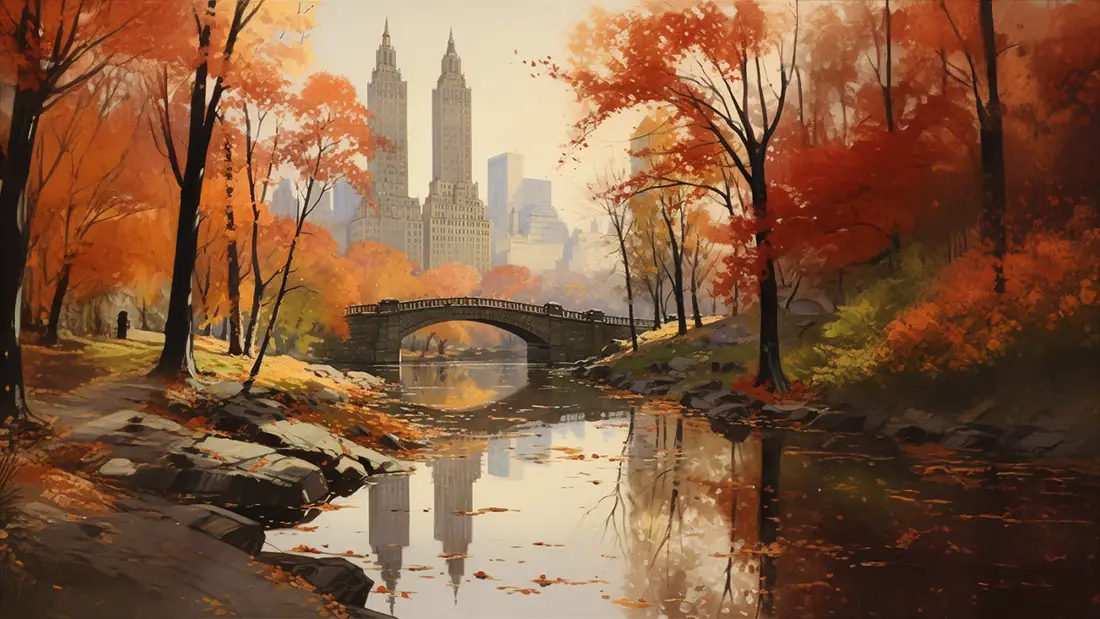
Central Park is a place that provides relief and relaxation to the residents of crowded New York City. It is the largest park in Manhattan, and while there are only a few parks in all of New York City that surpass it in size, none match its popularity.
It is also the most famous green space in the entire United States. You have surely seen it in countless movies and TV shows. Recently, Magda and I noticed that some scenes from X-Men: Dark Phoenix were filmed in Central Park. Besides, if there’s anyone here who hasn’t seen Home Alone 2: Lost in New York, I’ll be very surprised and will personally send them a copy.
Central Park in New York First Contact
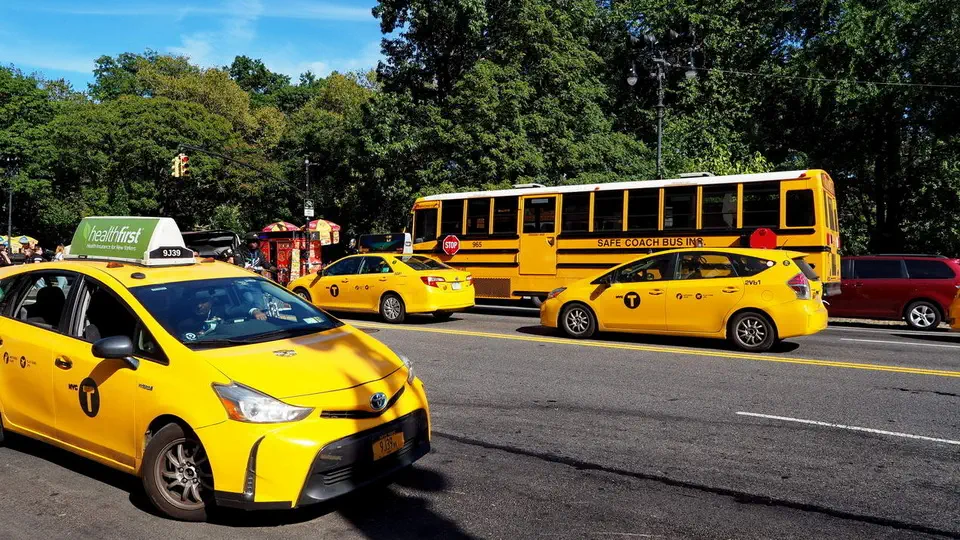
Aside from the famous Christmas attraction of the small and funny Kevin, Central Park has also appeared in movies like Madagascar: Escape 2 Africa. In this animation, the Manhattan Zoo, located near the iconic Fifth Avenue, was recreated with great accuracy.
My first encounter with the park began from the northern side of Manhattan, known as Uptown, where Central Park borders the Harlem neighbourhood. Not so long ago, this part of the island had a rather unsavoury reputation. There were incidents of theft, assaults, and even murders and kidnappings. Thankfully, those dark times are behind us, and today you can walk the streets around the clock without major issues—provided you exercise caution and common sense, of course.
Harlem is a district adjacent to Central Park in New York City.
Remember, there’s no need to fear this part of Manhattan, which is predominantly inhabited by the African American community. Harlem is the heart of New York blues, as well as the capital of gospel and rap music. The famous rapper and poet Tupac Shakur hailed from Harlem. Since the local authorities have improved street safety, stylish restaurants and music bars now attract numerous fans of great music—but that’s a topic for another article.
So, after arriving in New York, we stayed in a much safer Harlem than ever before, and that’s where our adventure and exploration of the city began. From our hotel to the edge of the park, it was just a mile, so we happily walked the distance, skipping the subway. Why not? The weather was beautiful, the streets were lively with diverse people, and those ridiculously wide avenues made the stroll enjoyable—a walk is always a good idea.
If you’d like to see Central Park from above, you can go to the top of one of the nearby skyscrapers. Personally, I recommend the Top of the Rock, the observation deck on the tallest building of Rockefeller Center. Unfortunately, you can’t see Manhattan’s largest park from the top of the Empire State Building.
The entrance to Central Park is located directly across from 110th Street. Trust me, it’s a strange feeling to leave behind the noisy, bustling, sun-drenched city and, within moments, find yourself in a forest that, by all logic, shouldn’t exist here.
Entrance to Central Park in New York
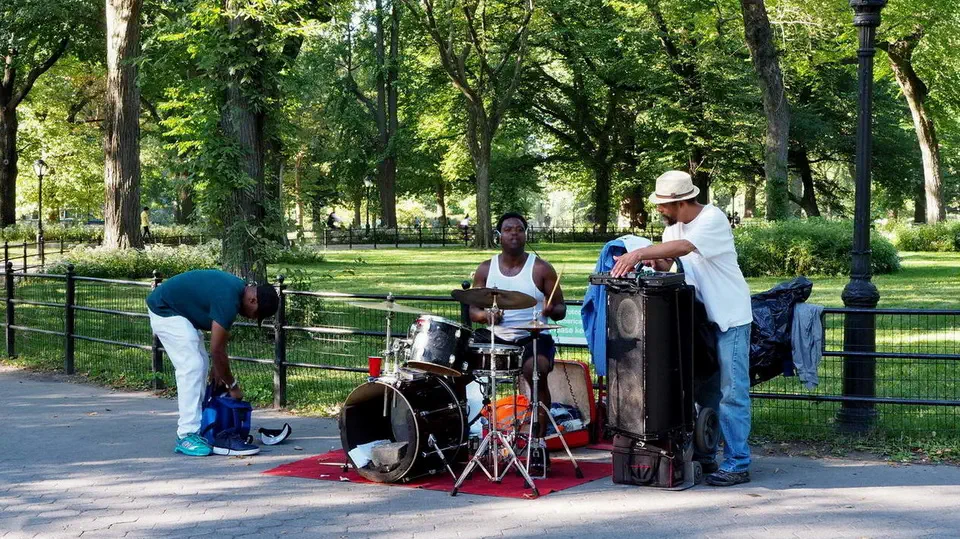
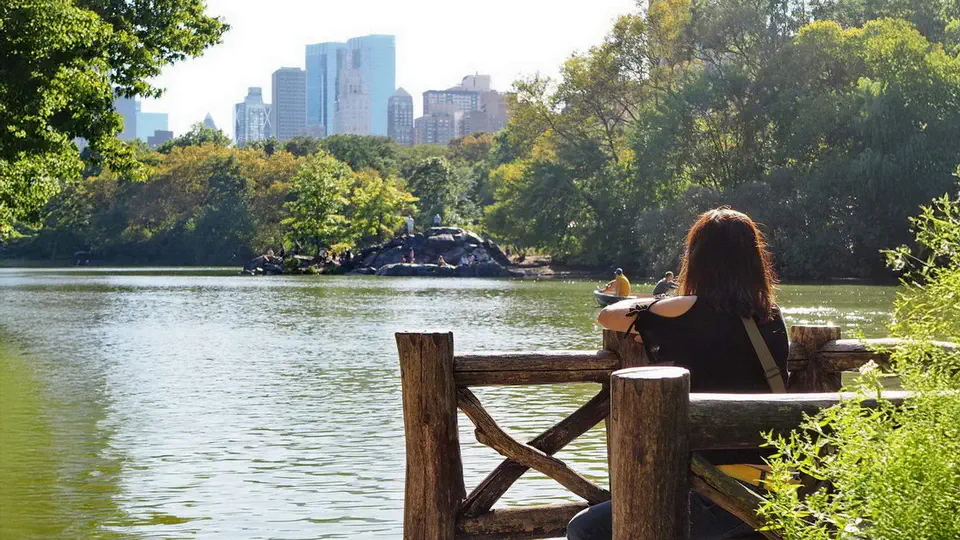
If logic dictates that there’s no room for a forest in the heart of a massive city, then what would you say about a small woodland pond we stumbled upon just a few steps further? It’s a little water body called Harlem Meer, offering a fantastic view of skyscrapers rising above the trees. Although Harlem has greatly improved and become more civilized, the part of the park bordering it is still the most neglected and least appealing. Many shady characters wander the pathways, and there’s noticeable activity in the bushes as well.
By the pond, there was a man playing melancholic jazz tunes on a well-worn banjo. He was quite tipsy but managed to keep the rhythm and played surprisingly well. So, I dug out a crumpled five-dollar bill from my pocket and dropped it into the hat lying in front of him. As we walked away, we were serenaded with a heartfelt jazz standard that we both thoroughly enjoyed.
Strolling leisurely along the paths, surrounded by birdsong and the murmur of streams, Magda and I wondered how such a place could have survived in the centre of one of the most crowded cities in the world. Every square meter of land is worth its weight in gold. And now, we transition to your favourite part of the article—the history.
Central Park in New York and its history
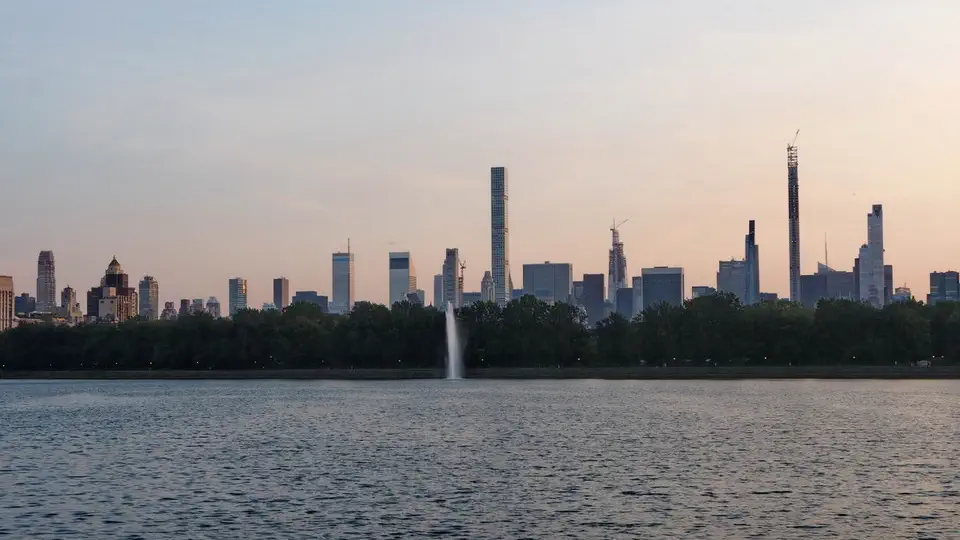
Central Park, much like New York City as a whole, has seen its moments of glory and decline. In the 1970s, it was a haven for drug dealers, the homeless, and those who preferred to avoid the city’s gaze during the day. With the shift in approach to crime during the 1990s, the park was cleaned up and restored. During his tenure, Mayor Rudolph Giuliani made it his mission to rid New York’s streets of criminals. This ambitious task began with Manhattan and Central Park.
With an investment of over $50 million, the area’s former splendour was brought back to life. As the new millennium dawned, Central Park was finally able to serve the purpose envisioned by its creators in the mid-19th century. The park was not only intended to be a place of relaxation for city residents, but also to bring together all the social groups inhabiting Manhattan at the time.
The Beginnings of an Urban Park in Manhattan, New York
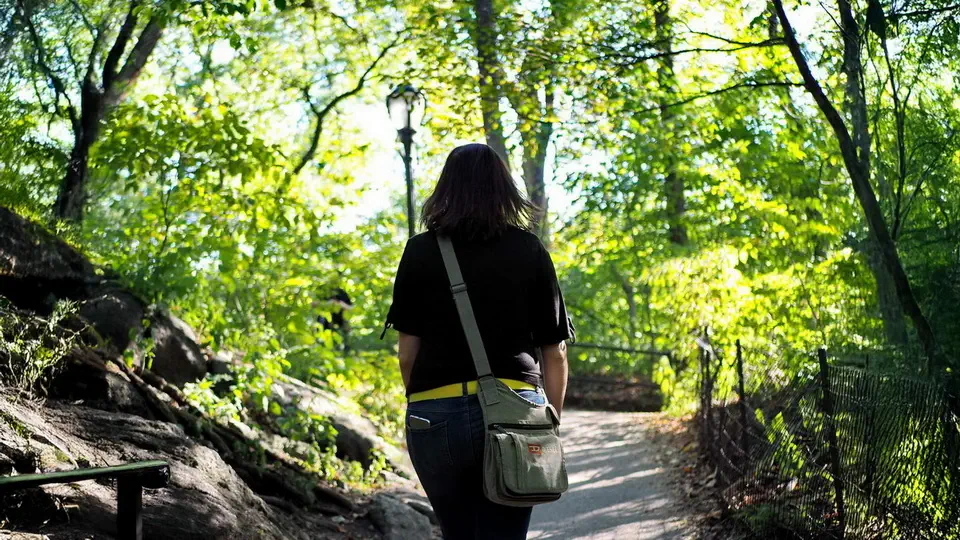
In the very beginning, centuries ago, the central part of Manhattan Island was a true wilderness. Dense forests stretched across the island from north to south. Only in the centre was there a small settlement founded by escaped Black slaves from the southern states. They named their community Harlem, which later became the foundation for the neighbourhood that still bears the same name today.
As the railroad and commerce developed, more people arrived on the island. Wealthy investors and large corporations followed, sparking rapid development, particularly in the southern part of the island. Buildings, streets, and shops began to spring up, leaving no room for parks. It wasn’t until the mid-19th century that poet William Cullen Bryant proposed the idea of creating a grand park for the more than 700,000 residents of New York City at the time. The idea appealed to city officials, and work began.
There was plenty to be done. Rocks were blasted, and rubble was cleared to make way for new land brought in from other parts of the city. This fresh soil was used to plant rich vegetation, including over twenty thousand trees. Alongside the trees, shrubs, flowers, and grass were added, transforming the barren area into a lush, green space.
Central Park in New York, a giant project
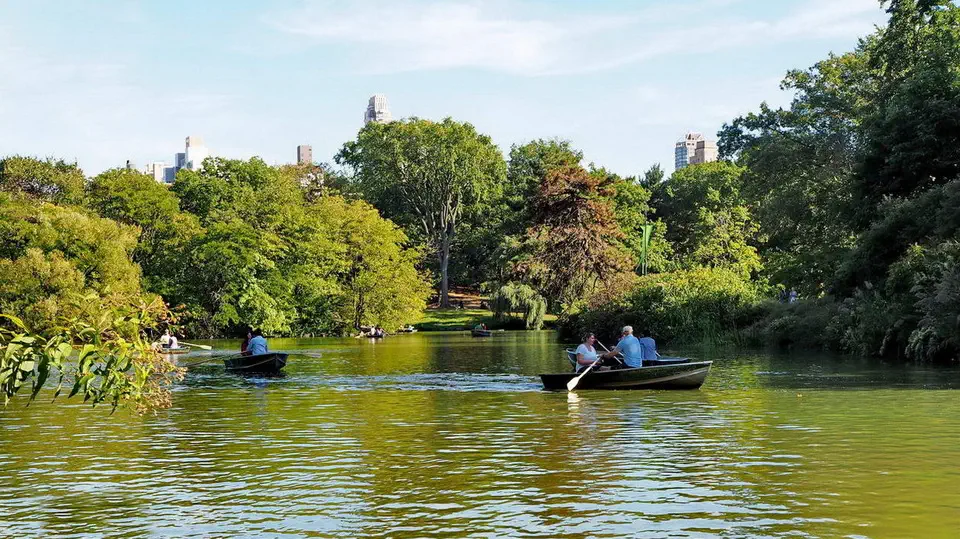
In the park, artificial hills, meadows, lakes, and rivers connected by stylish, beautiful bridges were created. Stone-paved paths, avenues, and gardens filled with benches and lanterns also appeared. The construction took nearly sixteen years to complete, and Central Park became the first municipal park of its kind in the world. Its chief architect, Calvert Vaux, earned lasting fame and the title of a great landscape architect.
Over the years, new gates, gardens, and a multitude of sculptures and statues were added to the park. The most famous of these is the statue of General William Sherman on horseback. This statue stands in the most popular part of the park, near the iconic Plaza Hotel, which belongs to the President of the United States.
Another attraction of Central Park, located not far away, is the Central Park Wildlife Center, a small but well-known Manhattan zoo. However, the statue closest to our hearts is the monument of King Władysław Jagiełło, located near Turtle Pond. The king is depicted on horseback just before the Battle of Grunwald, holding high the two swords presented to him by the arrogant Grand Master of the Teutonic Order. This statue has stood in the park since 1945 and is one of twenty-nine sculptures permanently residing in the heart of Manhattan.
Central Park in New York today
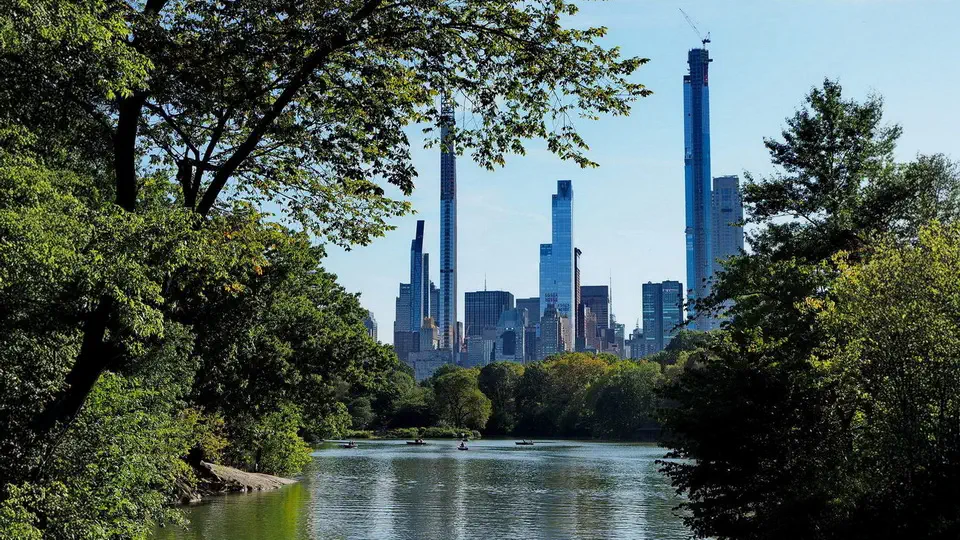
Today, after the transformations of the 1990s, Central Park is a place where entire families can safely and enjoyably relax. Most visitors are Manhattan residents, but not exclusively—people from other parts of New York City, including those from outside the island, also come here eagerly.
The park is an ideal spot for jogging, with the path around the Jacqueline Kennedy Onassis Reservoir being particularly popular among runners. In addition, there are over twenty playgrounds for children, just as many or more sports fields, tennis courts, and areas for horseback riding. You can also row a boat on the lakes and rivers or attend one of the many concerts held there.
Surrounding the park are some of New York’s most famous museums and art galleries. Among the most notable is the Museum of the City of New York on 5th Avenue. A bit farther is The Jewish Museum, and directly on the opposite side of the park stands my favourite—the American Museum of Natural History.
Additionally, the park hosts numerous concerts and exhibitions by the world’s most renowned artists. What I’ve described here is just a fraction of the attractions Central Park offers. There’s truly something for everyone here. In short, Central Park is a place that every great city should have.
Central Park in New York practical information
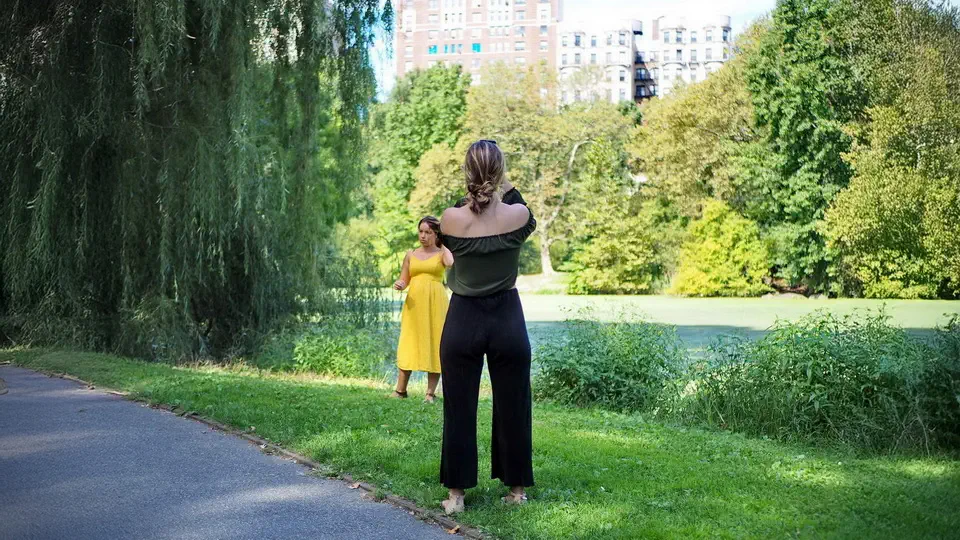
- Central Park is located between Fifth Avenue and Central Park West, and stretches from 59th Street to 110th Street.
- Almost every subway line has its stations near the park.
- The park is free to enter, although some attractions in the park require a fee.
- There are thousands of benches in the park, but sleeping on them and staying overnight is prohibited.
Central Park in New York information and interesting facts
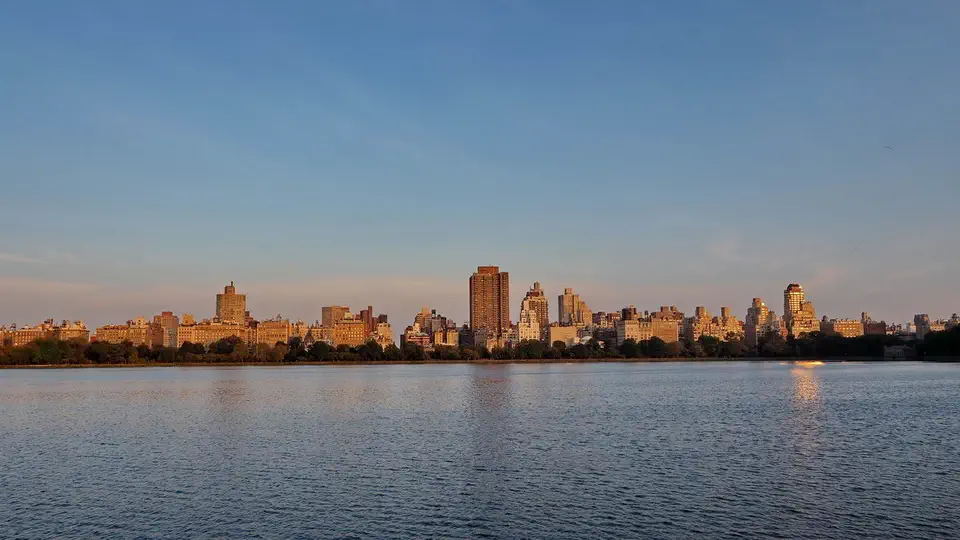
- The park covers almost 350 hectares of land, making it larger than the Vatican. It is also almost six times larger than Monaco. The park is over 4 kilometres long and less than a kilometre wide.
- Over 350 popular films and a lot of rubbish have been filmed in Central Park. This makes it the most frequently appearing park on screen in the world.
- There are 29 sculptures and statues permanently incorporated into the image of the park. They depict both famous people and fictional characters.
- Central Park was the first public park in the USA.
- Contrary to appearances, the construction of the park was a very complicated undertaking. Before the forestation, thousands of tons of rocks had to be blasted and the rubble had to be removed. Transporting the earth from nearby New Jersey took the builders several years. Supposedly, more explosives were used during the construction of the park than during the entire great Battle of Gettysburg.
- Before construction began, the town of Harlem, which was home to over 1,500 black refugees from the southern states, was relocated.
- The park cost more money to build than the entire state of Alaska received in a year.
- The world’s largest carousel is still in operation in Central Park. You can ride one of the 54 wooden horses.
- An obelisk brought from Egypt, called Cleopatra’s Needle, was placed in the park. It dates back to 1450 BC. It is covered with hieroglyphs describing life at the Egyptian court. Initially, a place was prepared for two twin obelisks, but before they could be loaded onto a ship, the British took one of them to London. It can be seen at the British Museum in London. There are still fierce arguments about who stole which of the needles from whom.
- Central Park is the most visited park in the USA. Over 40 million people walk its paths every year.
- There are almost 100 kilometres of paths and alleys running through the park. They surround seven lakes and ponds and dozens of sports and recreational areas.
- There are over 9,000 benches in the park. If they were placed side by side, they would stretch for over 11 kilometres.