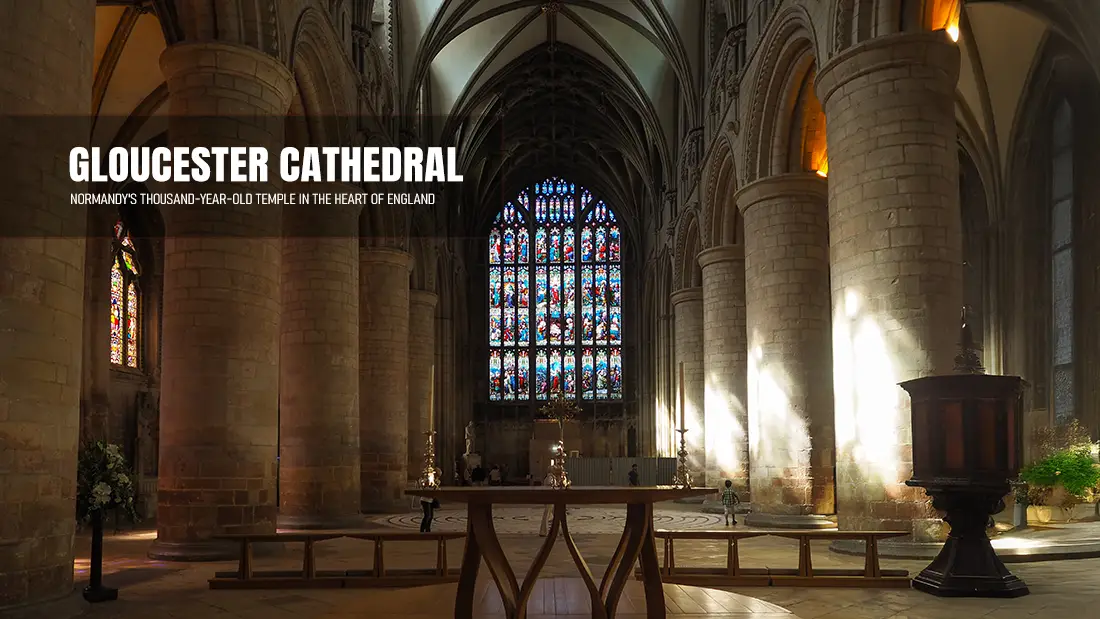
Gloucester Cathedral stands out with its 68-metre tower and the fact that it served as a filming location for Harry Potter and Sherlock Holmes.
Religious sites don’t often feature in Our Trails, and there’s a simple reason for that – most churches look quite similar and convey the same message. Besides, there are so many of them that, let’s be honest, one can get a bit bored. However, sometimes, places emerge that defy stereotypes or, at the very least, rise above mediocrity with their architecture or fascinating history.
In my humble opinion, the stunning Anglican Cathedral of Saint Peter in Gloucester can, with a clear conscience, be counted among such exceptional places. In this article, I’ll tell you about the cathedral’s history, the remarkable individuals associated with it, and I’ll throw in plenty of facts, insights, and fascinating titbits about this extraordinary monument.
Gloucester Cathedral and its history, which began with William the Conqueror himself
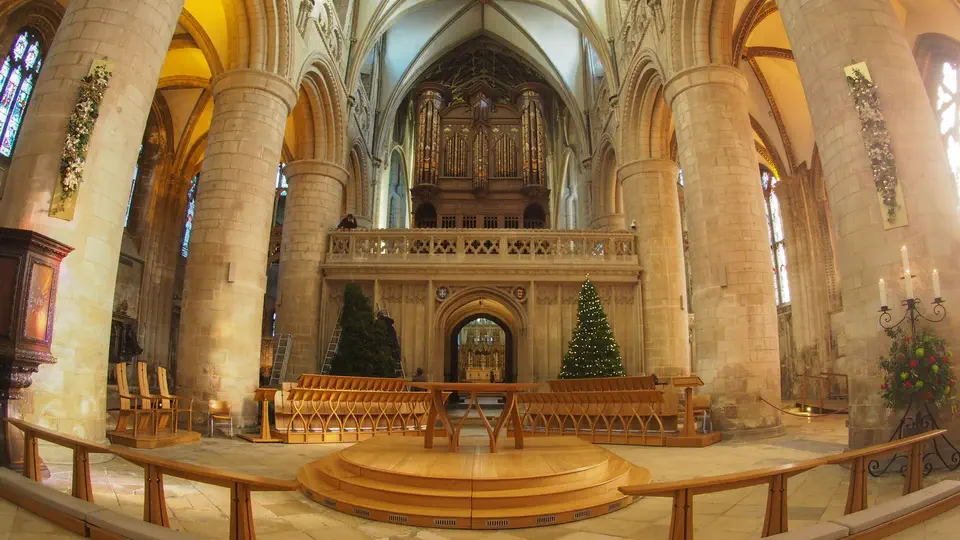
The Gloucester Cathedral was built in the first half of the 11th century, making it nearly a thousand years old. Its construction was commissioned by the famed Duke of Normandy, William the Conqueror. Yes, that clever fellow who invaded and conquered the British Isles in 1066, securing his coronation as King of England that December. With his ascent to the throne, the Anglo-Saxon dynasty was replaced by a new one from the continent. William’s story is a fascinating tapestry of adventures and events that shaped the fate of England for centuries. I’m certain we’ll be revisiting his exploits in future articles.
But I digress from the topic that’s kept me indoors, tapping away at the keyboard, instead of enjoying an evening stroll in the park. Yes, I know! History can be a bore. However, judging by the feedback we receive, it’s clear that not everyone feels this way. Some, perhaps even you, enjoy delving into tales of old. For those readers, the following paragraphs are dedicated. If historical facts aren’t your cup of tea, feel free to skip to the next chapter.
So, it all began in the 6th century when the first monastery in the area was established in Gloucester, on the site of today’s cathedral, under the auspices of the enigmatic Prince Osric. By the 9th century, Benedictine monks had built a church on the same site. According to legend, this land was strongly influenced by ancient Celtic religions, which the monks struggled to dispel. The construction of the church was intended to banish the old gods once and for all, replacing them with the emerging Church institution.
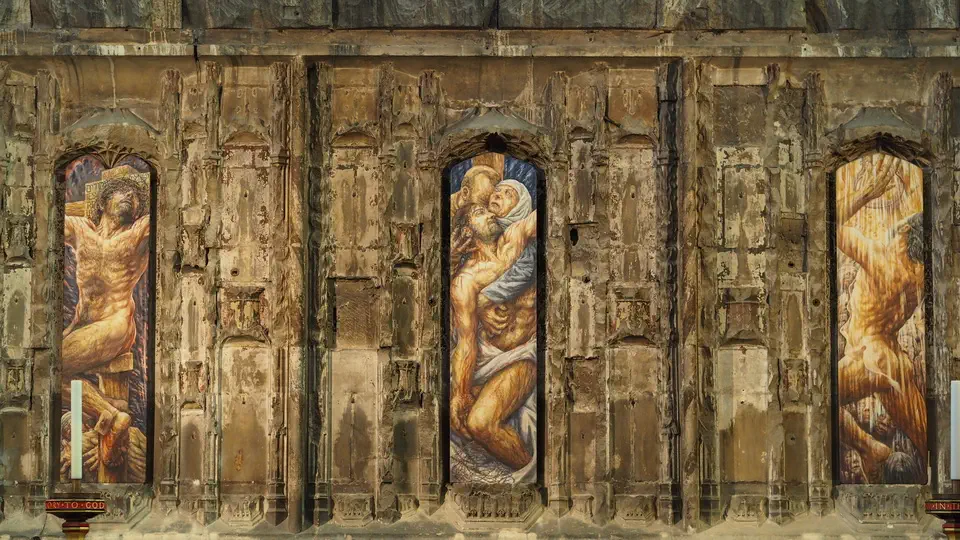
In the 11th century, the aforementioned William the Conqueror, a hardy newcomer from the continent, ordered the demolition of the old structures. In their place, he commanded the erection of a monumental, awe-inspiring edifice modelled on Norman churches from the continent. Thus, the magnificent Gothic cathedral we see today came into being.
Since the days when the sounds of stonemasons’ hammers and carpenters’ shouts echoed through Gloucester, nearly a millennium has passed. Over that time, the region has been shaken by wars, violence, and pillaging. Kings and local landowners have come and gone. Knights galloped through the countryside, chasing other knights, while powerful aristocrats fell in love and murdered each other in turn. Surrounding villages and towns were set ablaze or flooded, only to be rebuilt again. Throughout all this upheaval, it was the peasants who watched from the sidelines, shaking their heads in disapproval, as they continued to toil in the fields. After all, someone had to fund it all.
Gloucester Cathedral and Robert Curthose
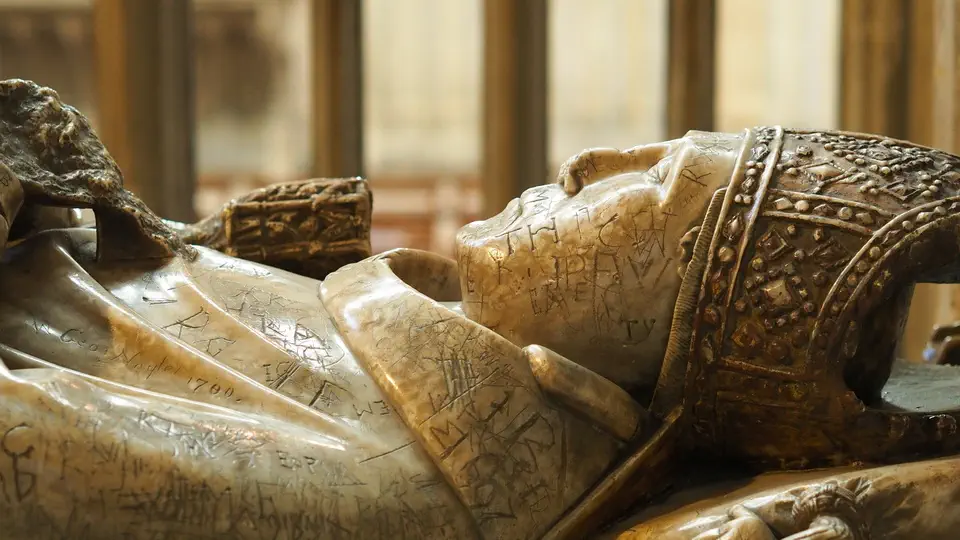
One of the historical figures whose tomb still stands in the catacombs of the great cathedral is Robert II, the eldest son of William the Conqueror, nicknamed “Curthose.” Don’t ask why—our research uncovered a few explanations from legends, and they all contradicted each other. Most likely, he simply had short thighs. Chronicles portray Robert as the epitome of a soldier—a soldier, not a knight, which in those days wasn’t the same thing. He was jealous, quarrelsome, easily swayed, drank heavily, and was reportedly on a first-name basis with most of the local prostitutes. These less-than-flattering traits led to open conflicts with his father and later with his brothers, which ultimately prevented him from ever sitting on the English throne.
In 1096, Robert set out on the First Crusade to the Holy Land, where he earned a reputation for exceptional bravery. However, upon returning to England, he found no crown awaiting him, as he had hoped. Disillusioned and humiliated, he waged several wars against his brother, Henry I, who had conveniently taken care of the crown during Robert’s absence. Ultimately, Robert was captured and spent the final years of his life in captivity. To ensure that Robert couldn’t escape and claim the throne again, Henry had him blinded—a prime example of brotherly love at the heights of power.
Bear in mind, this is just one of hundreds of fascinating figures and stories these ancient walls have witnessed. I’ll spare you a detailed recounting of the events that the Gloucester Cathedral has endured. What’s important for you to know is that, after centuries, the cathedral still stands as firmly as ever. Thanks to this resilience, you can visit, wander through its vast interior, and marvel at this beautiful and truly ancient church.
Gloucester Cathedral Tour
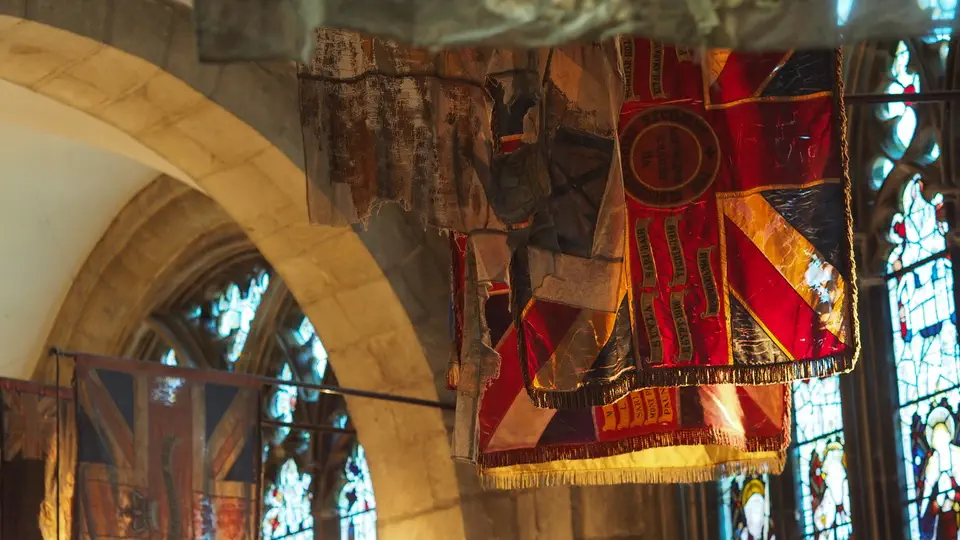
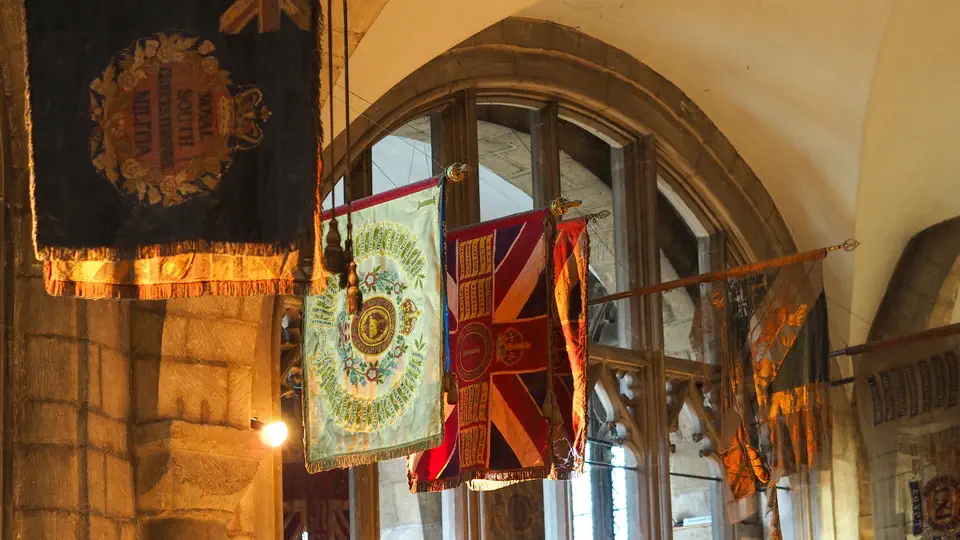
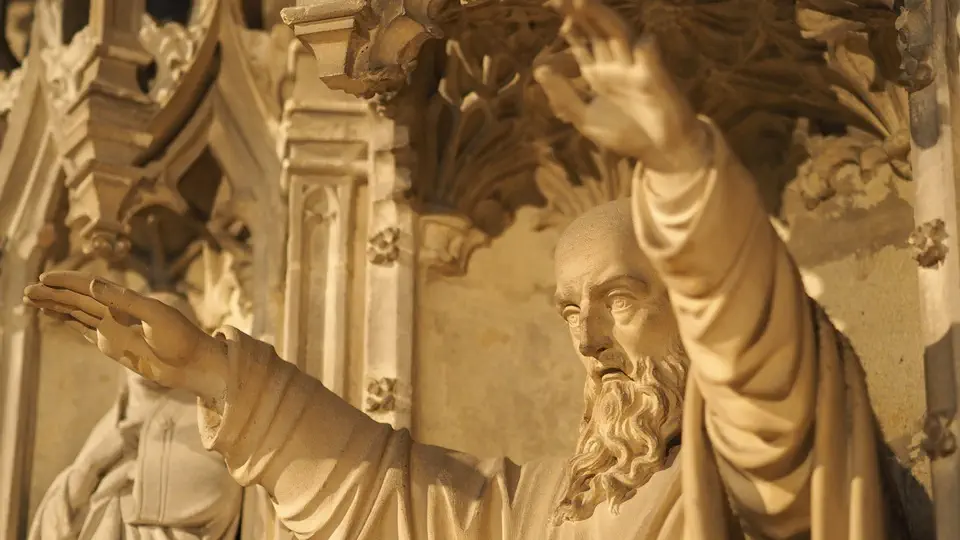
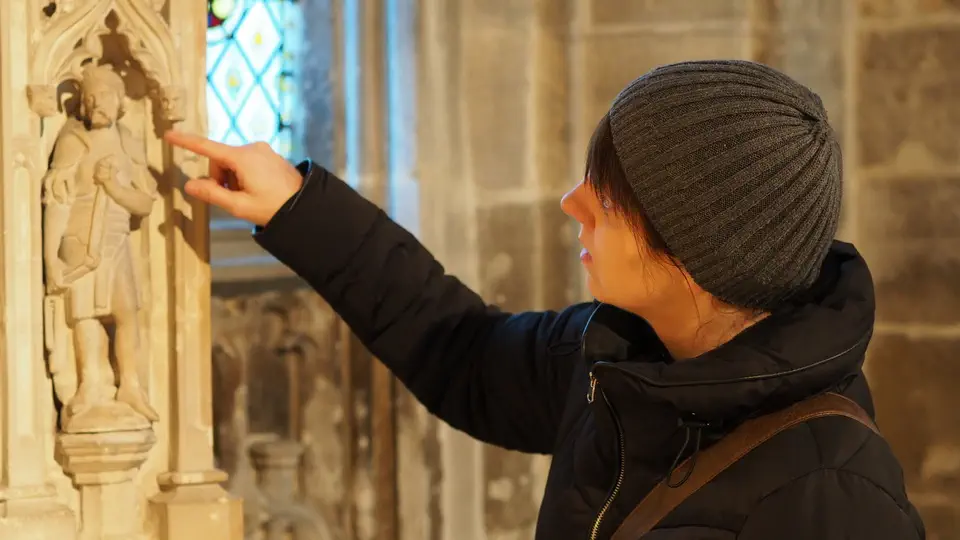
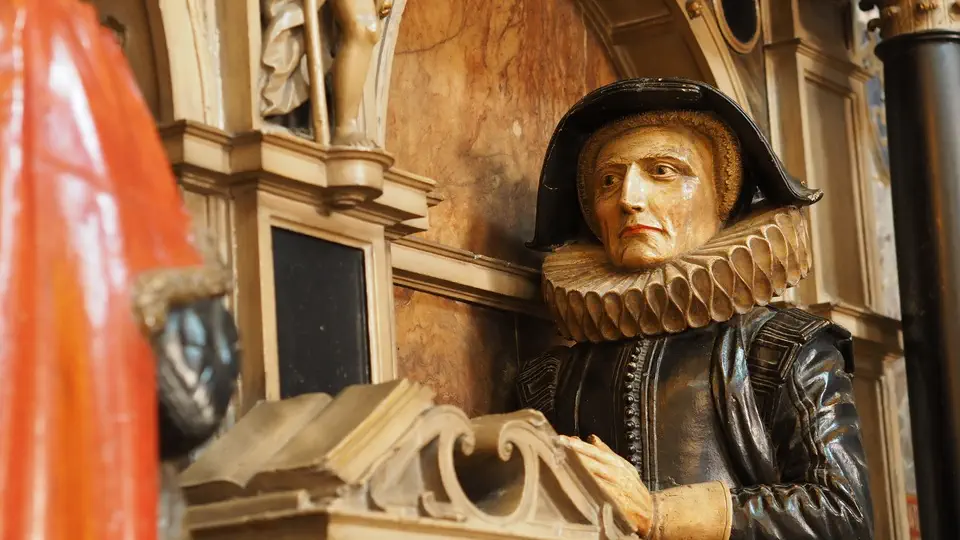
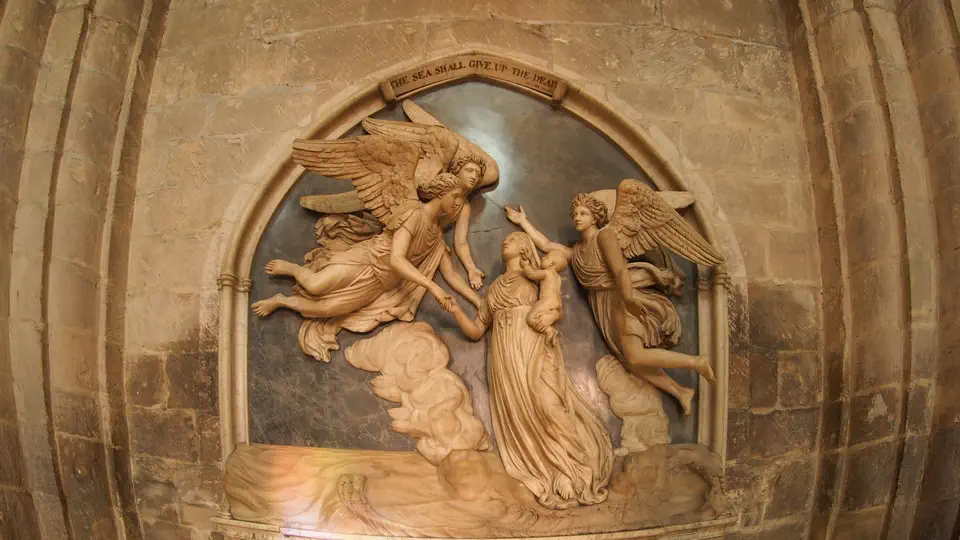
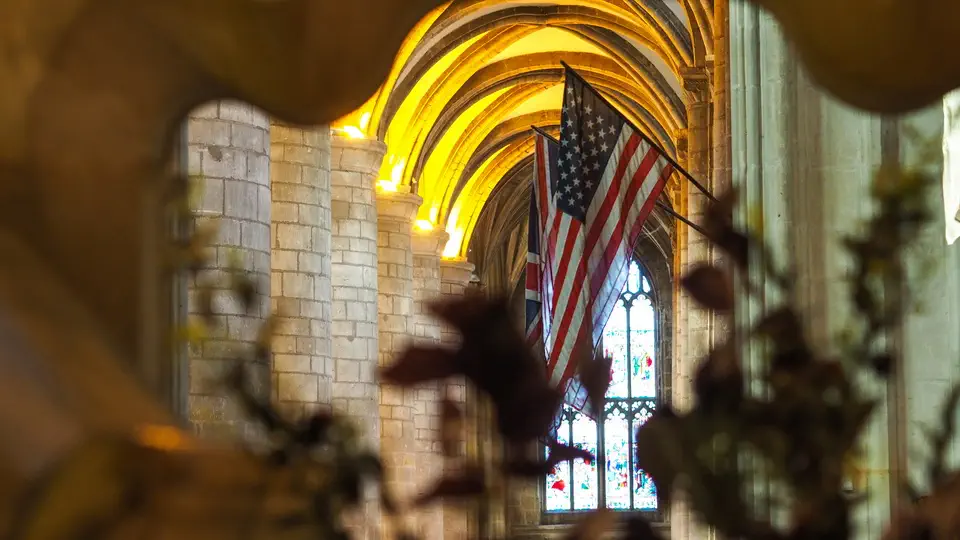
Stepping inside, I imagined William standing on a hill, pointing toward a small church in the valley. I could almost hear him speaking to his loyal barons:
“A great church shall be built here!” he commanded, and by thunder, he pulled it off! The cathedral is truly massive. This becomes especially evident when you stand within its vast interior. The ceiling seems to soar so high that, in the dim light, one might think it isn’t there at all. The thick supporting columns stretch the entire length of the main nave and culminate in a grand presbytery. The whole structure leaves an awe-inspiring impression, commanding respect.
If you’re intrigued by the history of the cathedral and the charming surroundings of Gloucester, I highly recommend a visit to the small shop located right by the main entrance. There, you’ll find historical materials, fascinating stories, and even light-hearted trivia about the area.
Gloucester Cathedral a walk around the interior of the church
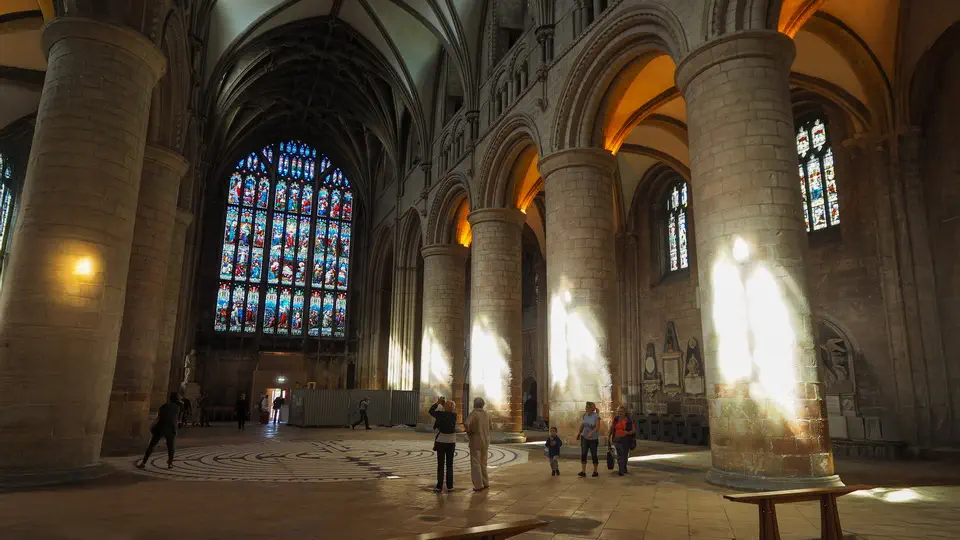
Of course, Gloucester Cathedral isn’t just about the main nave, transept, and presbytery with its apse. There are also sacristies, chapels, and countless mysterious corners. Some are sealed behind large oak doors that likely date back to the time of William the Conqueror himself. I’ve heard that there are certain days each year when all the rooms are open to visitors. Unfortunately, during our visit, most of the doors were closed. The majestic tower, which dominates the city skyline, was also inaccessible. At nearly 70 metres tall, I’ve heard the view from its summit is breathtaking. If you manage to climb it, do let me know about your experience!
The interior of the cathedral, true to the style of sacred Gothic architecture, is lavishly decorated. The space is filled with altars, intricately carved pulpits, richly adorned choir stalls, and countless fine details that could captivate one for weeks. There are also ancient baptismal fonts and dark, guilt-invoking confessionals. Moreover, the cathedral is so vast that you can genuinely tire yourself out just wandering through its immense interiors.
Harry Potter at Gloucester Cathedral
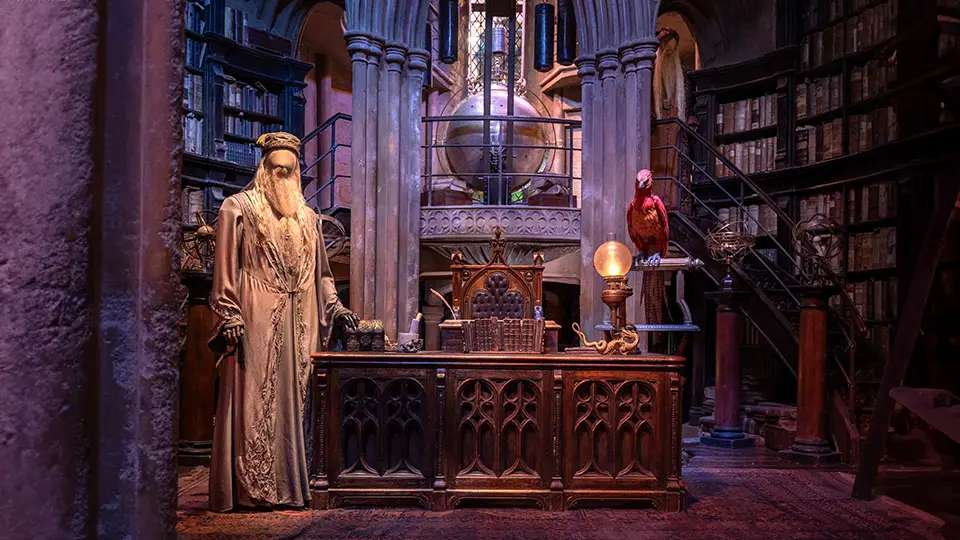
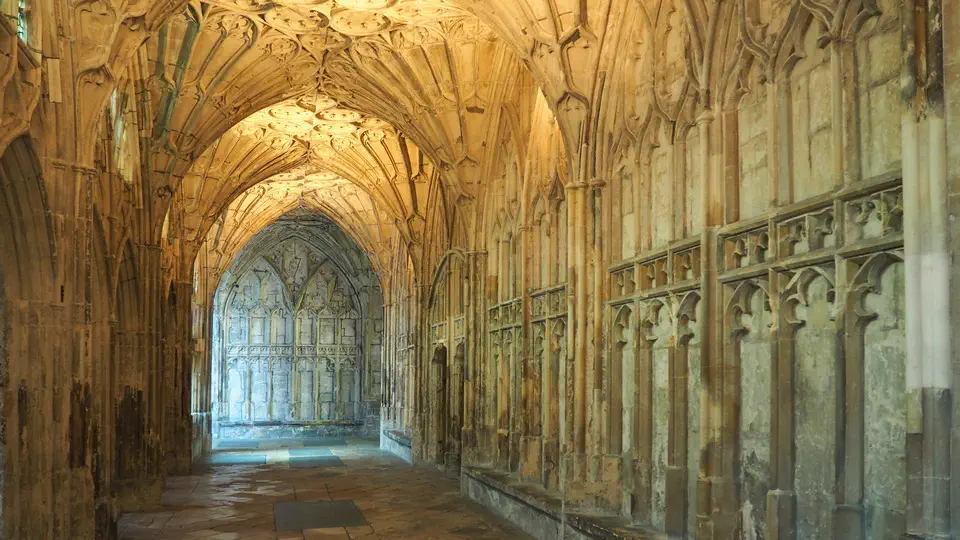
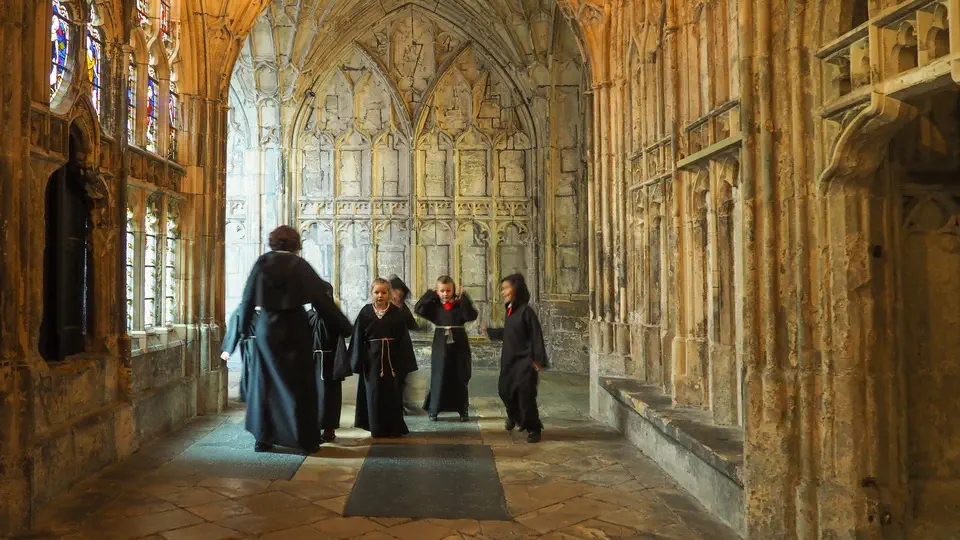
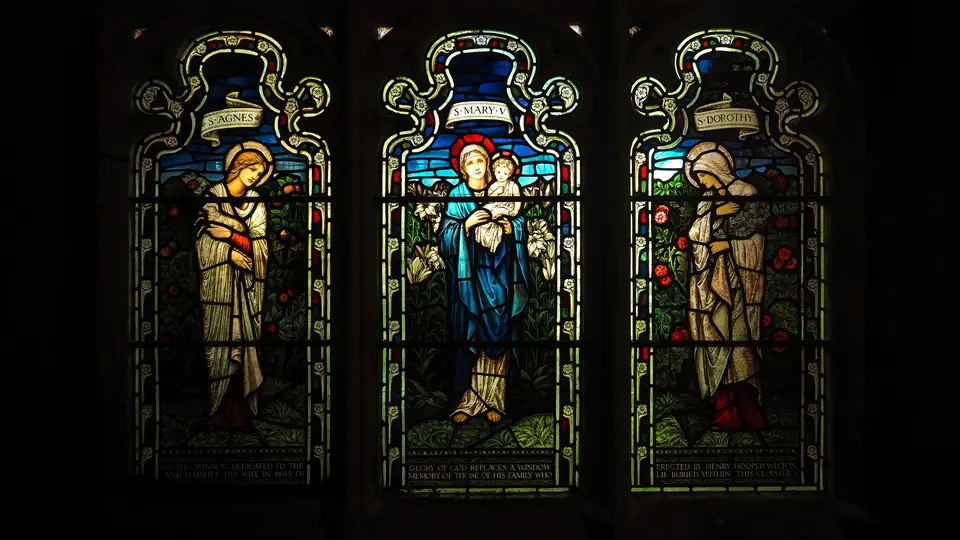
The real magic begins when you step out of the cathedral and into the surrounding cloisters. Built in the 14th century, these intricately decorated corridors, adorned with stained-glass windows, are, in my opinion, among the most captivating parts of the entire monument. Apparently, the screenwriters of the famous films about a certain young wizard—Harry Potter—thought so too. Some scenes from the magical school of witchcraft and wizardry, Hogwarts, were filmed right here.
Do you recall the scene in Harry Potter and the Philosopher’s Stone when Harry and his friends encounter a mountain troll in a school corridor near the bathroom where Moaning Myrtle resided? That very scene was filmed in the cloisters of Gloucester Cathedral. On a related note, I learned that Myrtle was called “Moaning” even during her lifetime—an intriguing little detail!
Dr. Who and Sherlock Holmes at Gloucester Cathedral
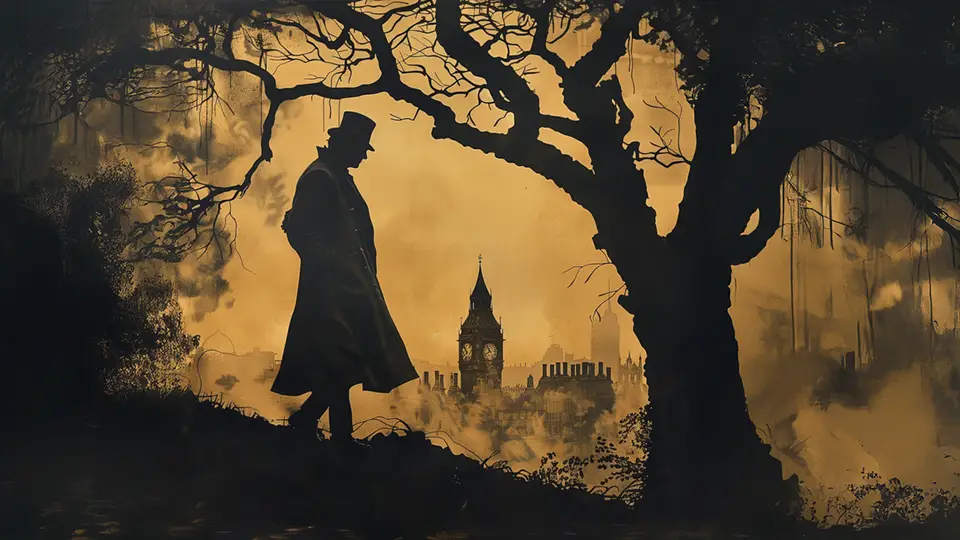
The beautiful interior of the cathedral attracted not only the scriptwriters from the Warner Bros film studio and the people responsible for the production of Harry Potter. Many films and series were shot in these old and powerful interiors. Among others, episodes of the famous Dr Who and Sherlock Holmes were filmed here.
We all had a great time during our visit to Gloucester. Of course, the cathedral is just one of the attractions of this old and beautiful city. If you have some time and energy left after leaving the church, I recommend a visit to the old 19th century port. I will write about it another time in an entirely different story.
Interesting facts and trivia about Gloucester Cathedral
- The construction of the temple began in 1084.
- The building was erected on the ruins of the church of St. Peter, which burned down in 1058.
- The completion of construction works falls in 1218.
- The cathedral has the largest window built in the Middle Ages. It is 23 meters high and decorated with beautiful coloured glass. Apparently, many churches collapsed when architects tried to break the record and install even larger windows in them.
- The cathedral is decorated with stained-glass windows famous for their beauty, showing, among others, the coronation of Henry III.
- The cathedral is very frequently used as a film set. Scenes from Harry Potter, Dr. Who and Sherlock Holmes were filmed here.
- The most valuable objects in the cathedral are the lead baptismal font from the 11th century and the coronation insignia of Queen Elizabeth.
- The length of the cathedral is 130 meters and the width 44, making it one of the largest cathedrals in medieval Europe.
- The cloisters surrounding the cathedral have been called the most beautiful of their kind in England.
- The cathedral is located at: Gloucester Cathedral, 12 College Green, Gloucester, GL1 2LX.
- The cathedral is open to visitors every day from 7.30am to 6pm.